
Introduction: Why Teaching “Stay” Is Important
If you are learning how to train a puppy to stay, you are teaching one of the most important obedience commands your dog will ever learn. The “stay” command helps control your puppy in many real-life situations.
For example, teaching your puppy to stay can help when:
• Opening the front door
• Crossing the street
• Greeting guests
• Preventing dangerous behavior
A reliable stay command builds patience and self-control. It also strengthens communication between you and your puppy.
The good news is that puppies can learn this command quickly when training is done correctly.
This guide will explain step-by-step how to train a puppy to stay using positive reinforcement and simple techniques that beginners can easily follow.
When to Start Stay Training
Most puppies can begin basic obedience training around 8 to 10 weeks of age.
However, before teaching stay, your puppy should already know the sit command.
The stay command builds on sit. A puppy that understands sit will learn stay much faster.
Training sessions should remain short, positive, and consistent.
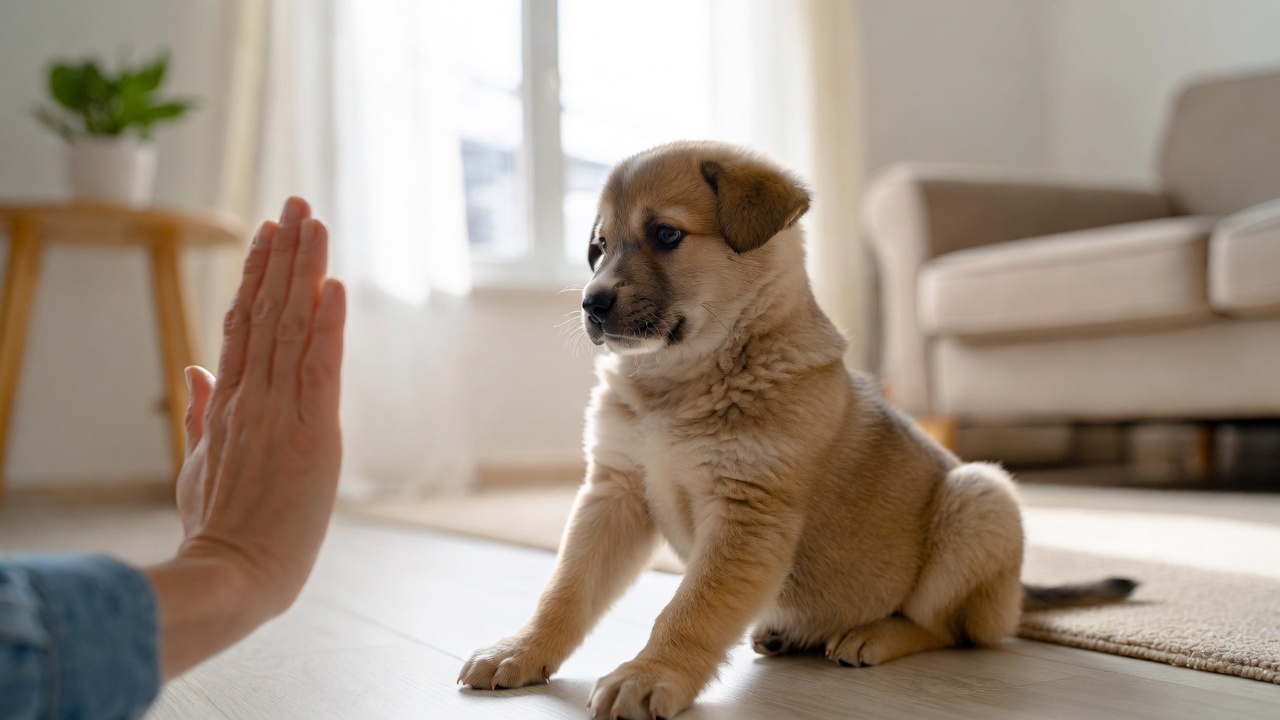
Step 1: Start With the Sit Position
The first step in how to train a puppy to stay is placing your puppy in a sitting position.
Training method:
-
Ask your puppy to sit
-
Stand directly in front of them
-
Hold your hand up like a stop sign
-
Say the word “Stay”
Wait one or two seconds.
If your puppy remains seated, reward immediately.
Short success builds understanding.
Step 2: Increase the Duration Slowly
Once your puppy understands the basic command, begin increasing the time.
Training progression:
• 2 seconds
• 5 seconds
• 10 seconds
• 15 seconds
Always reward calm behavior.
If your puppy stands up, calmly reset and try again.
Gradual progress helps avoid frustration.
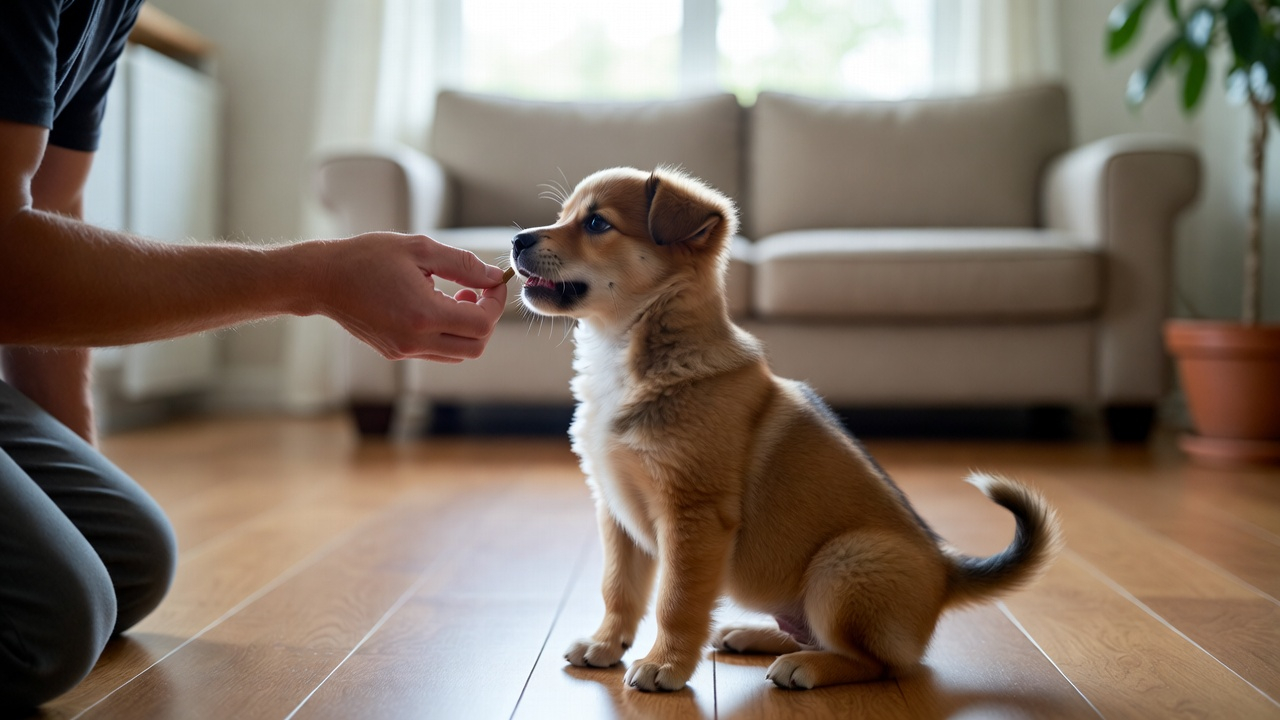
Step 3: Add Distance
After your puppy can stay for several seconds, begin adding distance.
Steps:
-
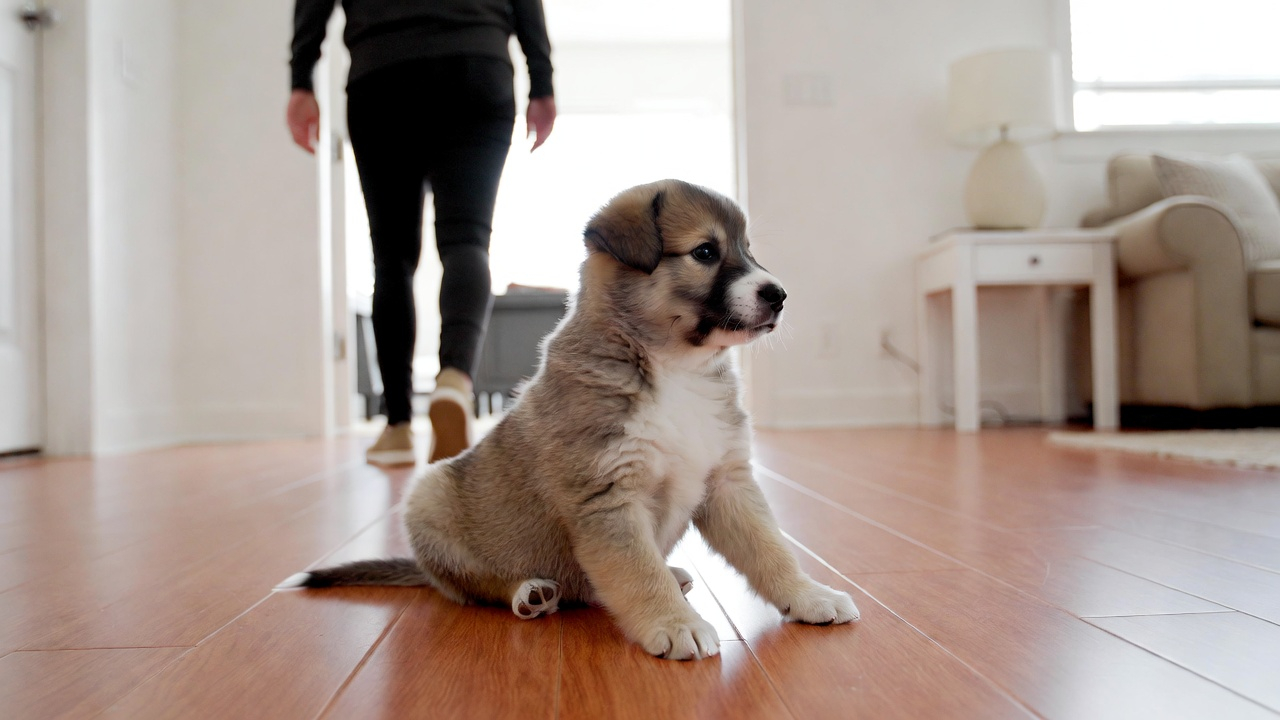
Ask puppy to sit
-
Say “Stay”
-
Take one step backward
-
Return and reward
Gradually increase the distance to several steps.
Your puppy learns to remain in position even when you move away.
Step 4: Introduce a Release Command
Puppies need to understand when the stay command ends.
Choose a release word such as:
• “Okay”
• “Free” confusion
• “Done”
After rewarding your puppy, give the release word.
This prevents confusion and teaches clear boundaries.
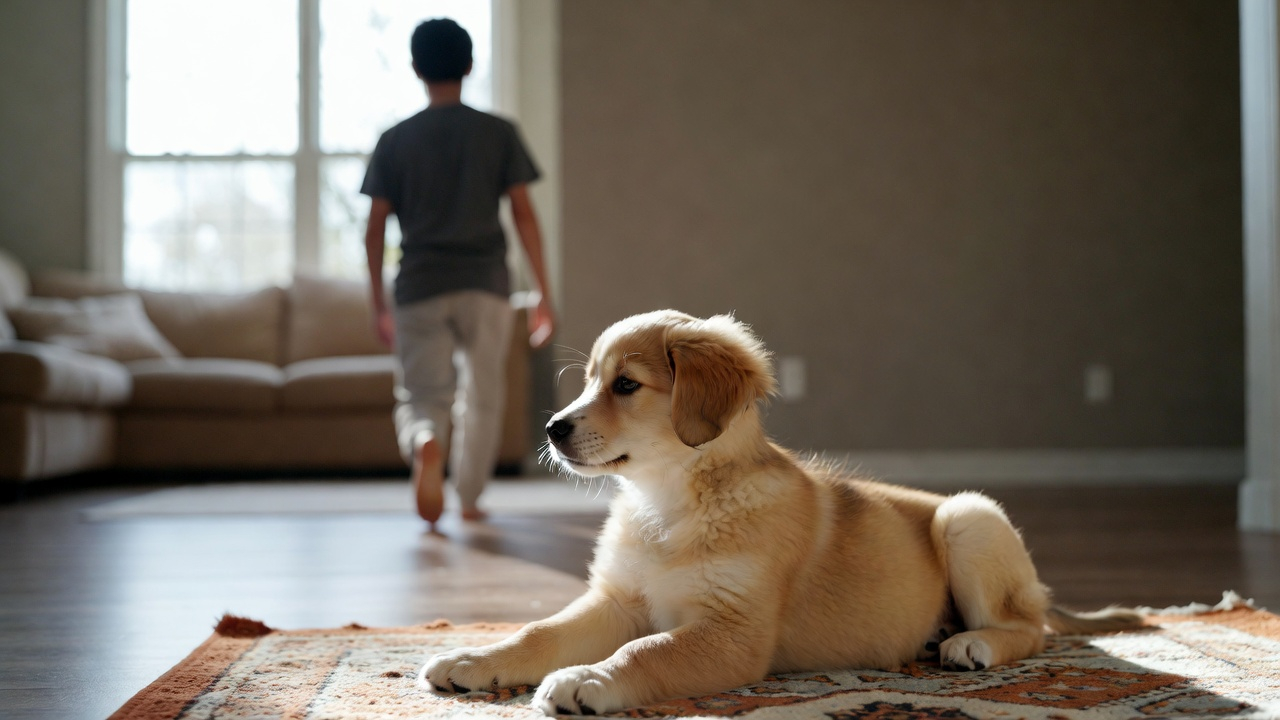
Step 5: Practice in Different Locations
Once your puppy understands the command at home, begin practicing in new environments.
Examples include:
• Backyard
• Quiet sidewalk
• Park with few distractions
Start with low-distraction areas first.
Gradual exposure helps your puppy maintain focus.
Step 6: Add Real-Life Distractions
Training becomes stronger when distractions are added.
Common distractions include:
• Toys
• Other people
• Other dogs
• Doorbells
Ask your puppy to stay while these distractions appear.
Reward success generously.
This builds reliability.
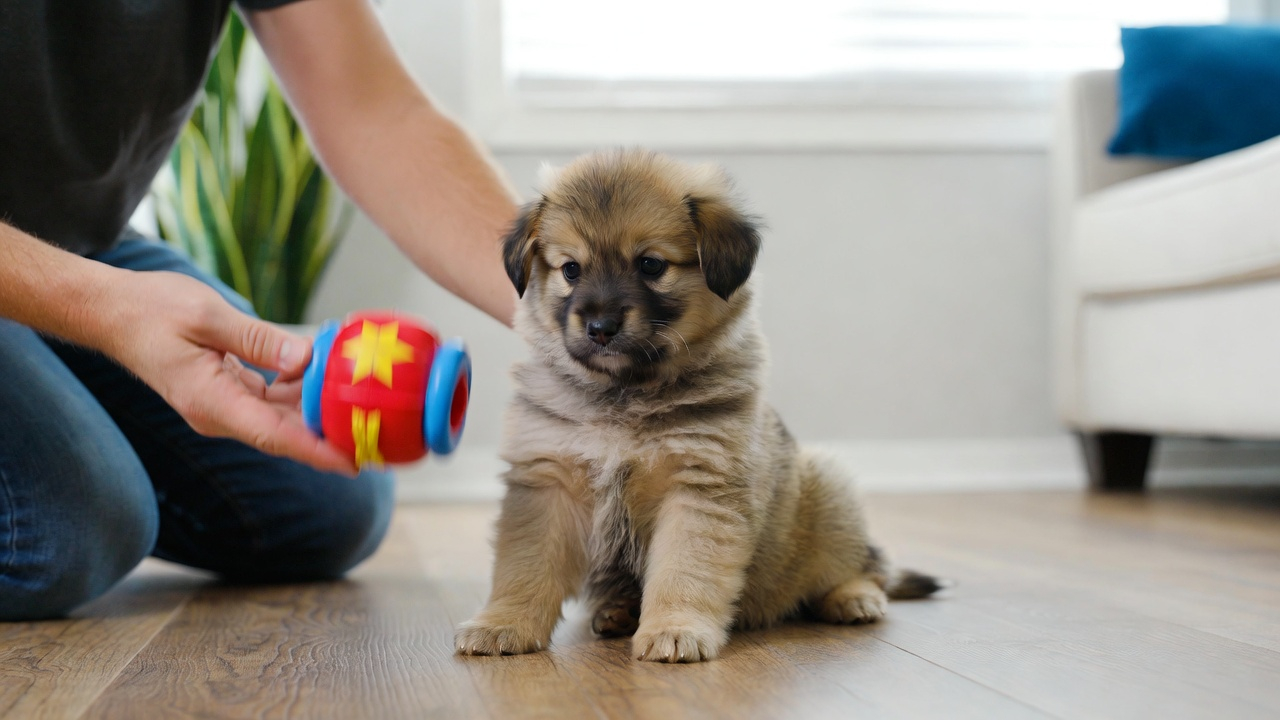
Step 7: Keep Training Sessions Short
Puppies have short attention spans.
Ideal training sessions:
• 5–10 minutes
• Several times daily
Frequent short sessions work better than long training periods.
End each session on a positive note.
Common Mistakes in Stay Training
Avoid these common errors:
• Repeating the command multiple times
• Expecting long stays too early
• Punishing mistakes
• Training in distracting environments too soon
• Skipping rewards
Consistency and patience are key.
How Long Does It Take to Teach Stay?
Most puppies show progress within:
3–5 days → Understanding command
2 weeks → Reliable short stays
1 month → Longer controlled stays
Every puppy learns at a different pace.
Regular practice builds reliability.
Why Positive Reinforcement Works Best
Positive reinforcement strengthens learning.
When your puppy stays successfully:
• Offer praise
• Provide treats
• Show affection
Dogs repeat behaviors that lead to rewards.
Punishment creates confusion and fear.
Long-Term Training Tips
To maintain strong obedience:
• Practice daily
• Train in different environments
• Continue rewarding occasionally
• Combine stay with other commands
Stay training improves with ongoing practice.
Emotional Perspective: Stay Builds Self-Control
Teaching your puppy to stay helps develop patience and impulse control.
These skills improve many other behaviors such as greeting visitors, waiting at doors, and walking calmly on leash.
Stay training strengthens trust and communication between you and your dog.
Conclusion: Stay Is a Foundational Command
Learning how to train a puppy to stay helps create a calm, well-behaved dog. By starting with sit, increasing duration gradually, adding distance, and practicing in different environments, you can build reliable obedience.
With patience and consistency, your puppy will learn to stay calmly in many situations.
Read More Dogs News

