
You clip on the leash, step out the door full of optimism — and three houses down, your puppy turns into a statue. Four paws planted. Body rigid. Won’t budge. You coax, you tug gently, you wave a treat — nothing. Congratulations: your puppy has discovered the freeze.
If your puppy freezes on walks, you’re dealing with one of the most common — and most misunderstood — puppy behaviors. And here’s the good news: it’s almost always fixable in days to weeks, if you stop doing the one thing most owners do instinctively. In this guide, you’ll learn why puppies freeze, the 4-step fix plan trainers use, and the 5 mistakes that make freezing worse.
Why Puppies Freeze: It’s Not Stubbornness
Let’s reframe this first, because it changes everything: your puppy is not being stubborn, defiant, or “dominant.” A puppy who freezes is a puppy whose brain has hit the overwhelm button. The world outside is enormous to a 12-week-old — roaring cars, flapping flags, strange dogs, garbage cans that smell like mysteries. Freezing is the canine equivalent of a person freezing on a stage: it’s fear and sensory overload, not attitude.
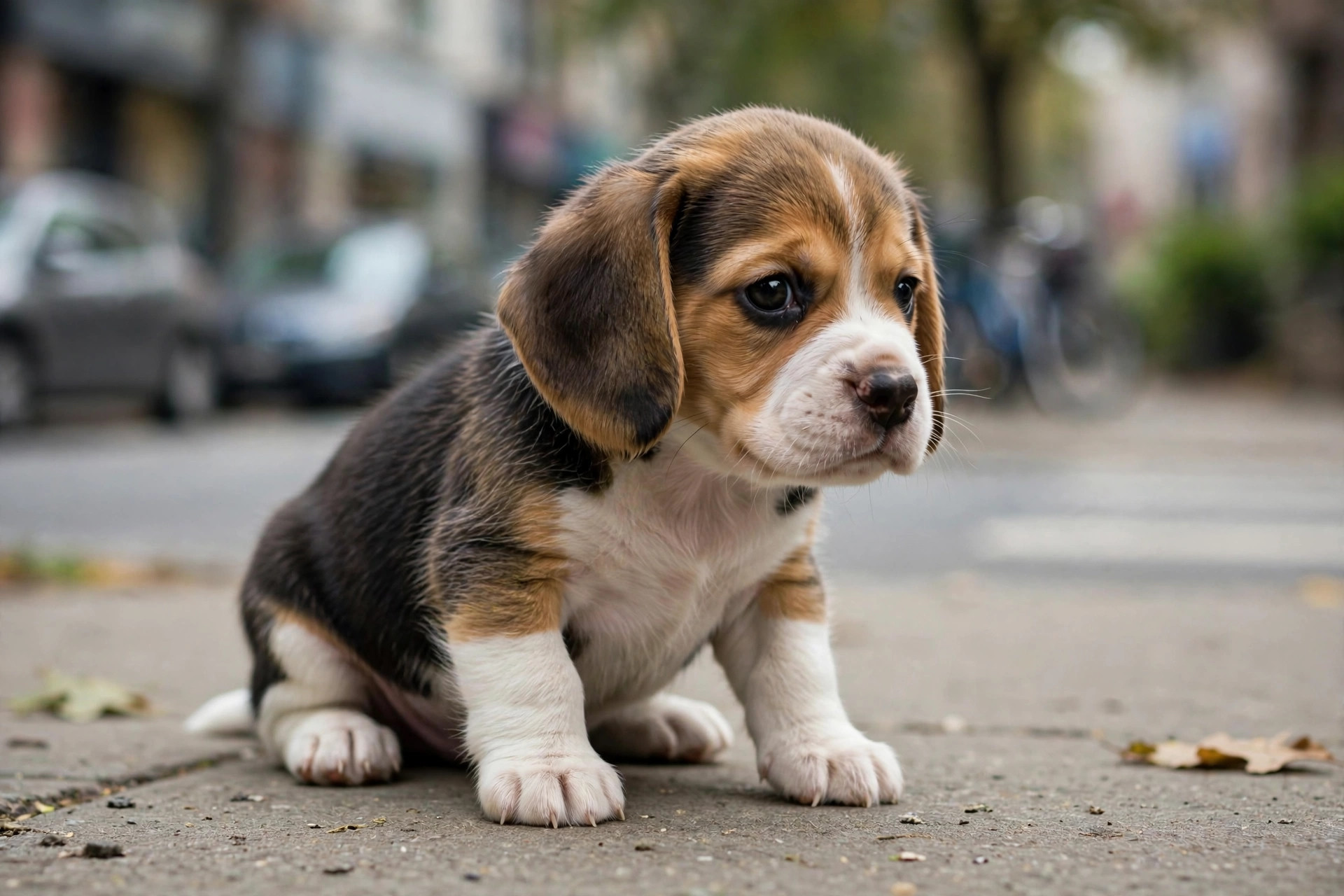
Understanding this matters because your response has to match the real emotion. You wouldn’t drag a terrified child through a haunted house to “toughen them up” — and the same logic applies here. The freeze is communication: “I’m not ready for this yet.” Our job is to make the world feel safe at the puppy’s pace, not ours.
There’s real biology behind the statue act. When animals face something overwhelming, the nervous system picks from an ancient menu: fight, flight, or freeze. Puppies on a leash can’t fight (they’re babies) and can’t flee (they’re attached to you) — so freeze is what’s left. It’s not a choice or a strategy; it’s an involuntary stress response. That’s actually encouraging news: since it’s emotional rather than deliberate, it responds beautifully to confidence-building. You’re not battling willpower; you’re filling a courage cup, one positive experience at a time.
Common freeze triggers include: sudden noises (trucks, construction, skateboards), unfamiliar objects (statues, trash bins, flapping tarps), other dogs or people approaching, new surfaces (grates, wet pavement), and simply too much newness at once. Many puppies also freeze during fear periods — developmental windows where normal things suddenly seem scary. If the freezing started abruptly around 8–11 weeks or 6–14 months, a fear period may be amplifying everything.
First: Rule Out Pain
Before treating this as a behavior problem, rule out a medical one. A puppy who suddenly starts freezing — especially one who used to walk happily — may be hurting. Sore paws (hot pavement, a thorn, a cracked nail), growing pains, hip or joint discomfort, or an injury from rough play can all make a puppy refuse to move.
Red flags that mean vet first, training second: freezing that appeared overnight, limping or stiffness, yelping when touched, reluctance on stairs as well as walks, or any change in appetite or energy. A quick vet check costs little and rules out the one cause that training can never fix.
The 4-Step Fix Plan
Assuming your vet gives the all-clear, here’s the plan. Work the steps in order — each one builds the foundation for the next. Most puppies show real progress within a week.
Step 1: Get the Gear Right + Desensitize Indoors
Mistake #1 is going straight to the sidewalk. Start inside your home, where everything is familiar. First, check the equipment: a well-fitted harness beats a collar for nervous puppies (no pressure on the throat, more control for you). Let your puppy wear the harness around the house with treats appearing — harness = good things. Then clip on the leash and let them drag it around indoors under supervision. Boring? That’s the point. The leash becomes furniture, not a signal that scary things are about to happen.
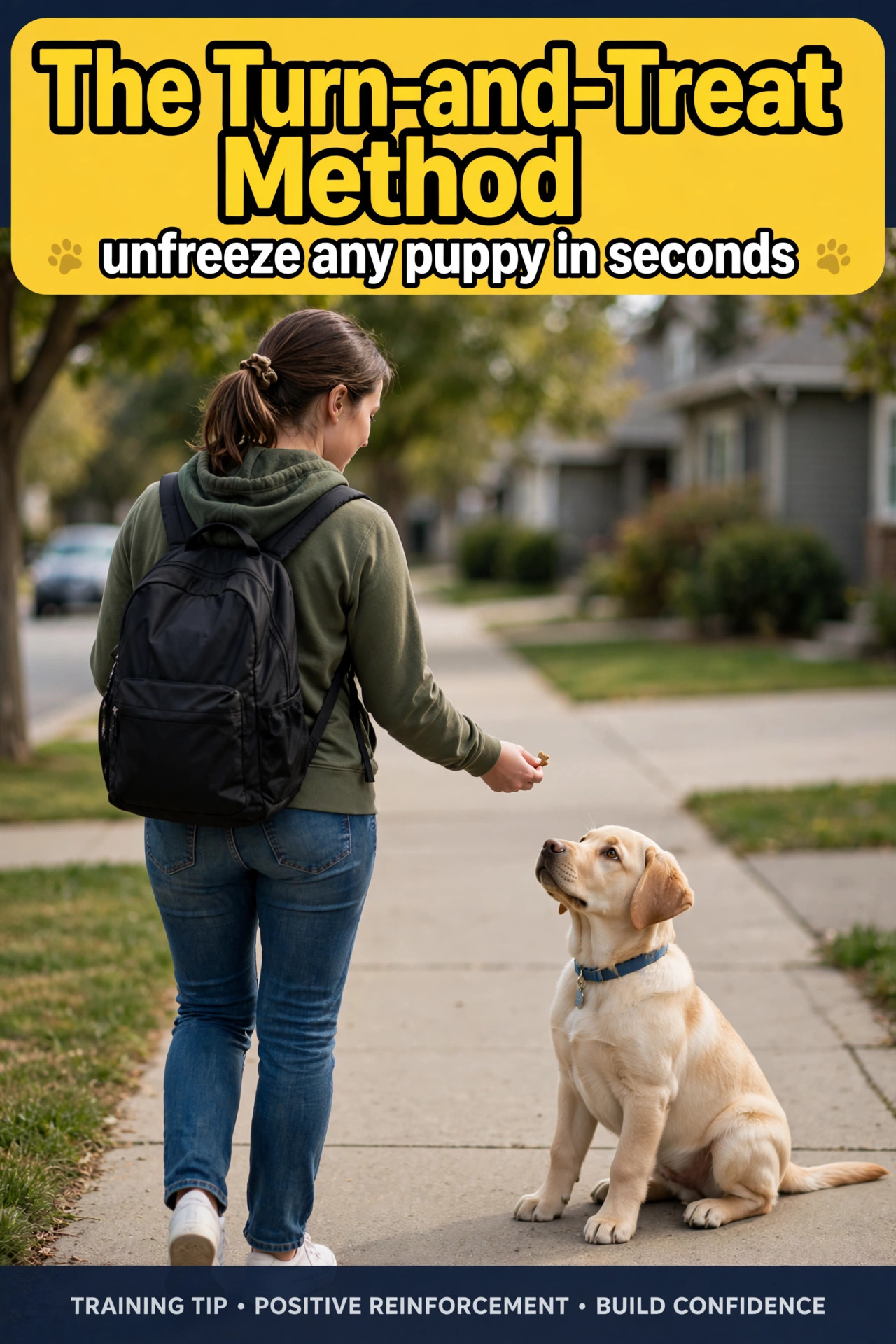
Practice gentle leash pressure indoors too: when the leash goes taut, reward your puppy for yielding to it softly (one step toward you = treat). This teaches the core skill — pressure means “come this way,” not “fight it” — in a zero-stress setting. If your puppy also chews the leash, that’s a separate habit worth fixing alongside; see our guide on why puppies bite the leash.
Step 2: The Turn-and-Treat Technique
This is the money technique for an active freeze. When your puppy plants their feet: don’t pull. Instead, hold a treat between your fingers, walk calmly to the end of the leash, turn your back to your puppy, and lure them to follow you. The moment they take one step — mark it (“yes!”) and reward while they’re moving. Movement itself gets rewarded, which is the whole secret: you’re paying for motion, not position.
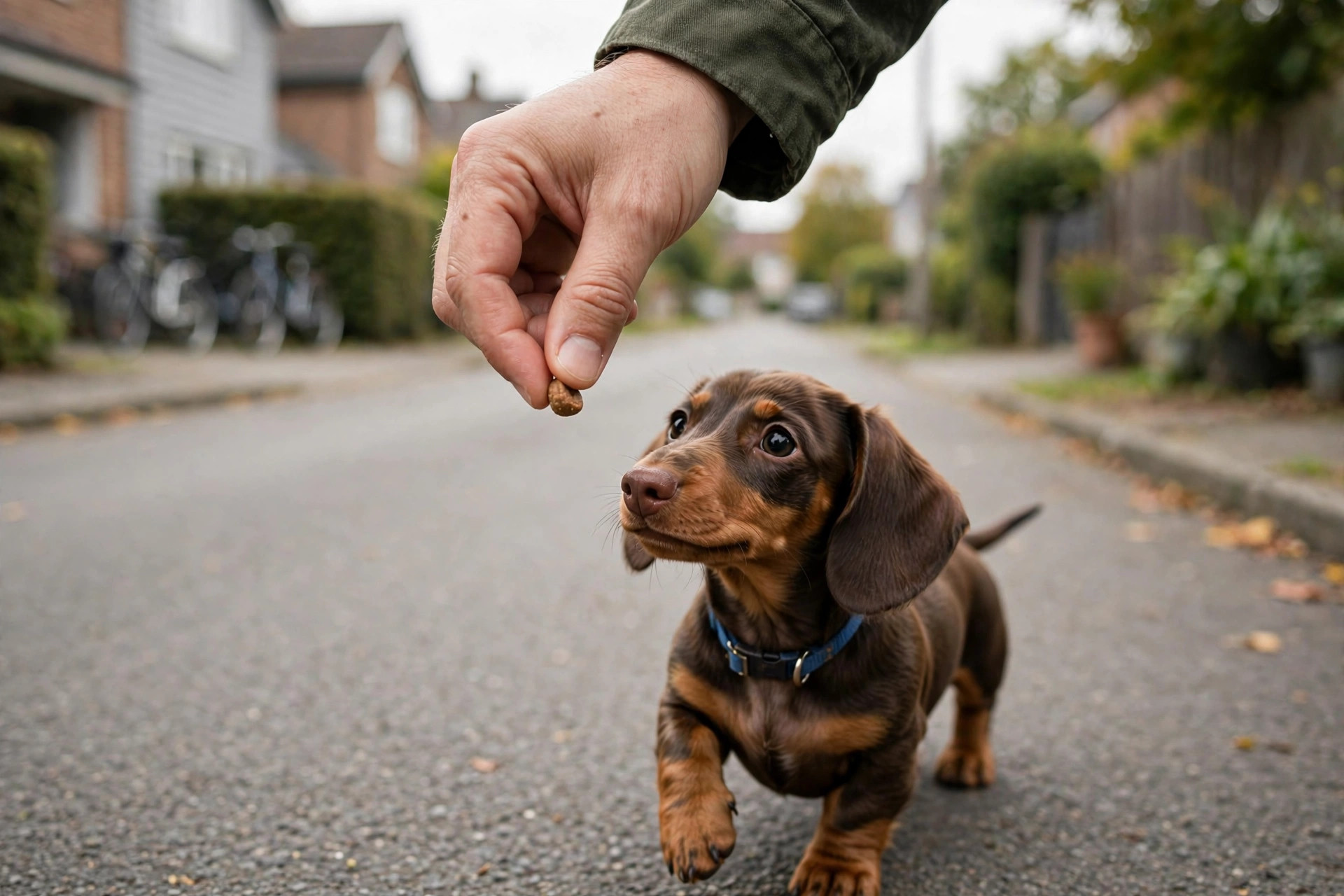
Repeat a few times, then start phasing out the lure: use the hand motion without the visible treat, then just your cheerful voice and body language. Within days, most puppies start unfreezing themselves — one step becomes three, three become a whole block. The key insight: you never dragged them through the fear. They chose to move, and choosing builds confidence that lasts.
A few pro details that make this technique work better: keep your body language big and happy — crouch slightly, use an excited voice, be the most interesting thing on the street. Reward while moving, not after stopping — you want motion itself to feel like winning. And if your puppy freezes again 20 feet later, that’s fine — just run the technique again. You’re not failing; you’re doing reps. Every successful unfreeze is one more piece of evidence in your puppy’s brain that moving forward leads to good things.
Step 3: Become a Trigger Detective
Freezes aren’t random — they’re responses. Start noting where and when your puppy freezes. Is it always near the same barking dog’s fence? The construction site? The metal grate? Once you identify the trigger, you can desensitize it properly: approach at a distance where your puppy notices but doesn’t freeze, reward calm behavior, and retreat. Gradually decrease distance over sessions. This is the same gradual-exposure principle behind good socialization — new challenges one at a time, always winnable.
For truly scary triggers, pair them with amazing things: the scary garbage can predicts chicken. The scary statue predicts cheese. You’re not just getting used to the trigger — you’re changing how it feels. Counter-conditioning like this is slow but permanent.
Step 4: Short, Quiet Walks First — Build Gradually
Forget the 30-minute neighborhood loop for now. Your puppy’s first “walks” should be 5-minute adventures on the quietest street you can find — or even just your driveway and back. End every walk before your puppy gets overwhelmed, while they’re still happy. Short successful walks build a bank of good experiences; one terrifying walk can bankrupt it.
Increase distance gradually: 5 minutes this week, 8 next week, and so on. Let your puppy sniff — sniffing is how dogs decompress, and a “sniff walk” where the puppy leads with their nose is legitimate training, not wasted time. As confidence grows, you’ll have a puppy who walks nicely beside you — and when you’re ready for the next skill, our loose-leash guide picks up right where this one leaves off.
One more thing about walk structure: always end on a win. If your puppy walked bravely for four minutes and starts looking worried at minute five, turn home happily and throw a little party. The last thing that happens on a walk colors how your puppy remembers the whole thing — trainers call this the “recency effect,” and you can use it deliberately. A walk that ends with joy teaches “walks are great”; a walk that ends in a meltdown teaches “walks are scary.” You get to choose the ending every single time.
5 Mistakes That Make Freezing Worse
- 1. Dragging or pulling. The big one. Dragging teaches your puppy that the leash predicts force and fear — it deepens the freeze and damages your trust. Never drag. Not once, not “just a little.”
- 2. Using a retractable leash. The constant tension teaches puppies to pull against pressure, the thin cord is dangerous, and you have zero real control. Use a fixed 6-foot leash while training.
- 3. First walks that are too long or too busy. Taking a nervous 10-week-old to a bustling street fair is flooding, not training. Match the environment to your puppy’s current courage level.
- 4. Bribing forever without phasing out the lure. Treats are tools, not permanent crutches. If you’re still visibly luring every step after two weeks, start fading — intermittent rewards build stronger habits than constant ones.
- 5. Punishing the freeze. Scolding, leash pops, or “correcting” a frozen puppy punishes fear itself. A puppy punished for freezing doesn’t become brave — they become a puppy who’s afraid and afraid of you.
Troubleshooting
“My puppy lies down flat and won’t get up.” The full pancake — belly on the ground, all four legs splayed. Same treatment as freezing: don’t drag. Use turn-and-treat, or try jogging backward a few steps excitedly (movement is contagious). Some puppies pop up for a short chase game faster than for a treat.
“He walks fine in the morning but freezes at night.” Very common — darkness amplifies everything scary (shadows move, sounds carry). Walk earlier, bring high-value treats after dark, and consider a slightly lit route. Most puppies outgrow night nervousness with positive reps.
“She only freezes heading away from home, not toward it.” Classic! Home = safety, away = unknown. The fix: drive or carry your puppy a short distance away, then walk back home (the easy direction), gradually extending the “away” portion. You’re expanding the comfort zone from the safe side.
“My puppy was fine for weeks, then started freezing.” Check for a fear period first, then pain, then a scary incident you might have missed (a loud truck, an off-leash dog rushing up). Treat it like a fresh start: drop back to Step 1 for a few days and rebuild.
Frequently Asked Questions
How long until my puppy walks normally?
Most puppies improve noticeably within 1–2 weeks of consistent work, and walk confidently within a month. Deeply fearful puppies may need 6–8 weeks. There is no “too slow” — only “too rushed.”
Harness or collar for a puppy who freezes?
Harness, without question. It avoids throat pressure (which adds to the scary experience), gives you safer control, and can’t slip off a panicking puppy the way a collar can.
Should I carry my puppy past the scary thing?
Occasionally, yes — carrying past one overwhelming trigger to reach a calm stretch is smart management, not cheating. Just don’t carry the whole walk every time, or your puppy never learns.
What age can I start leash training?
Start indoors as early as 8 weeks — harness on, treats flowing, zero pressure. Outdoor walks begin after vaccinations allow, but the indoor foundation can start day one.
My puppy freezes AND barks at the trigger. What then?
That’s fear plus arousal — increase your distance from the trigger until the barking stops, then work there. Our guide on walking beside you covers focus exercises that help reactive moments.
Is it okay to just skip walks for now?
Absolutely. A young puppy gets plenty of exercise and enrichment at home. Skipping scary walks while you build confidence indoors is wise, not lazy — bad walks set you back, good ones move you forward.
The Bottom Line
A puppy who freezes on walks isn’t giving you a hard time — they’re having a hard time. Put down the urge to drag, pick up the turn-and-treat, and work at your puppy’s pace. Short wins stack into real confidence.
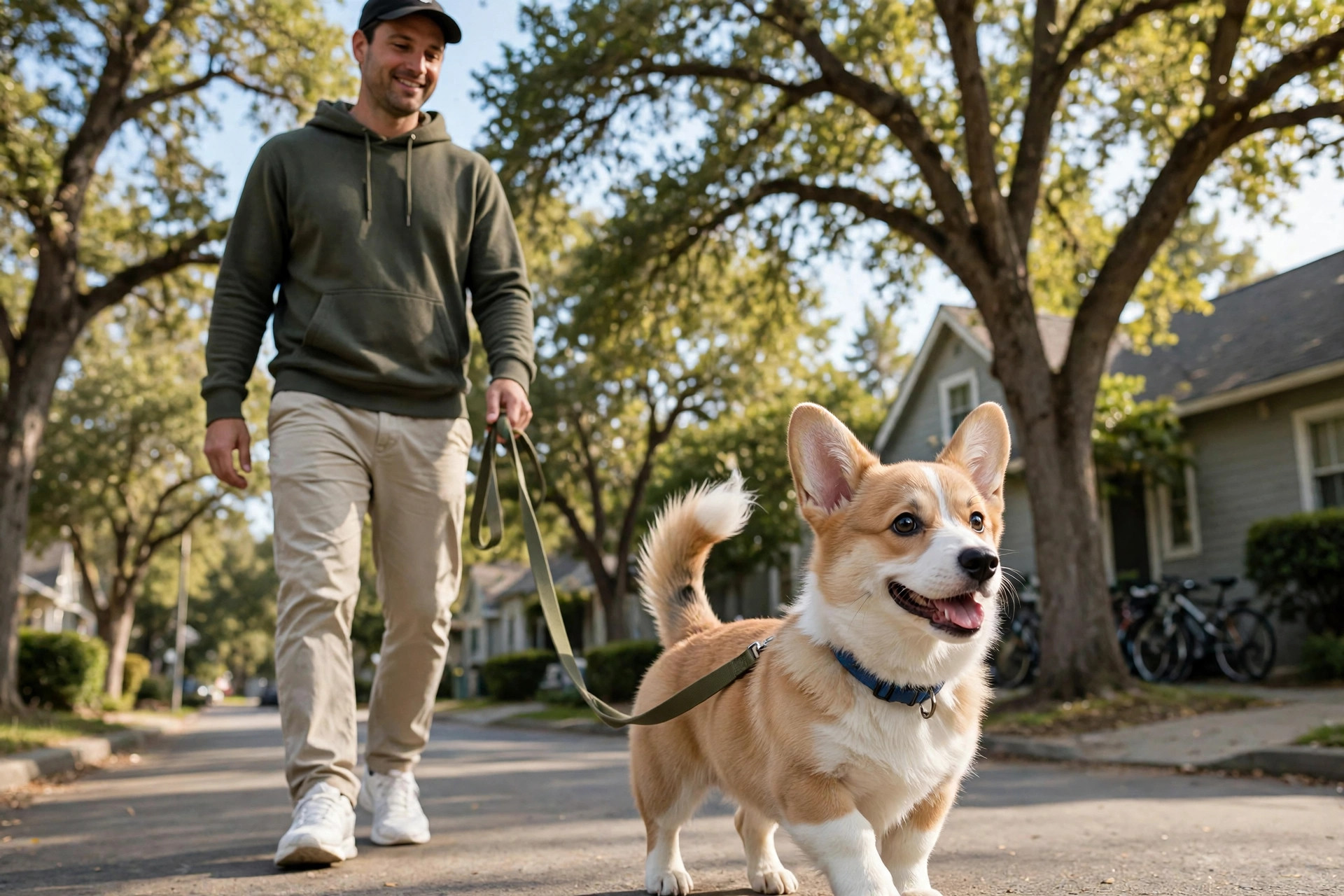
In a few weeks, you’ll look back at the statue days and laugh — while your puppy trots beside you, nose up, ready for whatever’s around the next corner.
Related Reads
- Leash Training a Puppy Without Pulling
- Puppy Fear Periods: What Every Owner Should Know
- How to Socialize a Puppy Properly

, the 4-step turn-and-treat fix plan, and 5 mistakes that make freezing worse.)