
If your puppy is peeing every 10 minutes, you’re probably feeling exhausted — and quietly wondering if something is seriously wrong. Many new puppy parents spend the first weeks following their pup around with paper towels instead of actually playing with them.
Here’s the good news first: in most cases, frequent peeing in young puppies is completely normal. Their bladders are tiny, their control is almost nonexistent, and excitement or nerves can empty them in seconds. But sometimes it’s not normal, and knowing the difference matters. This guide will help you tell which one you’re dealing with, what to do about it, and exactly when to call your vet.
Quick disclaimer: This guide is for general information only and is not veterinary advice or a diagnosis. When in doubt, call your vet — that’s always the right move.
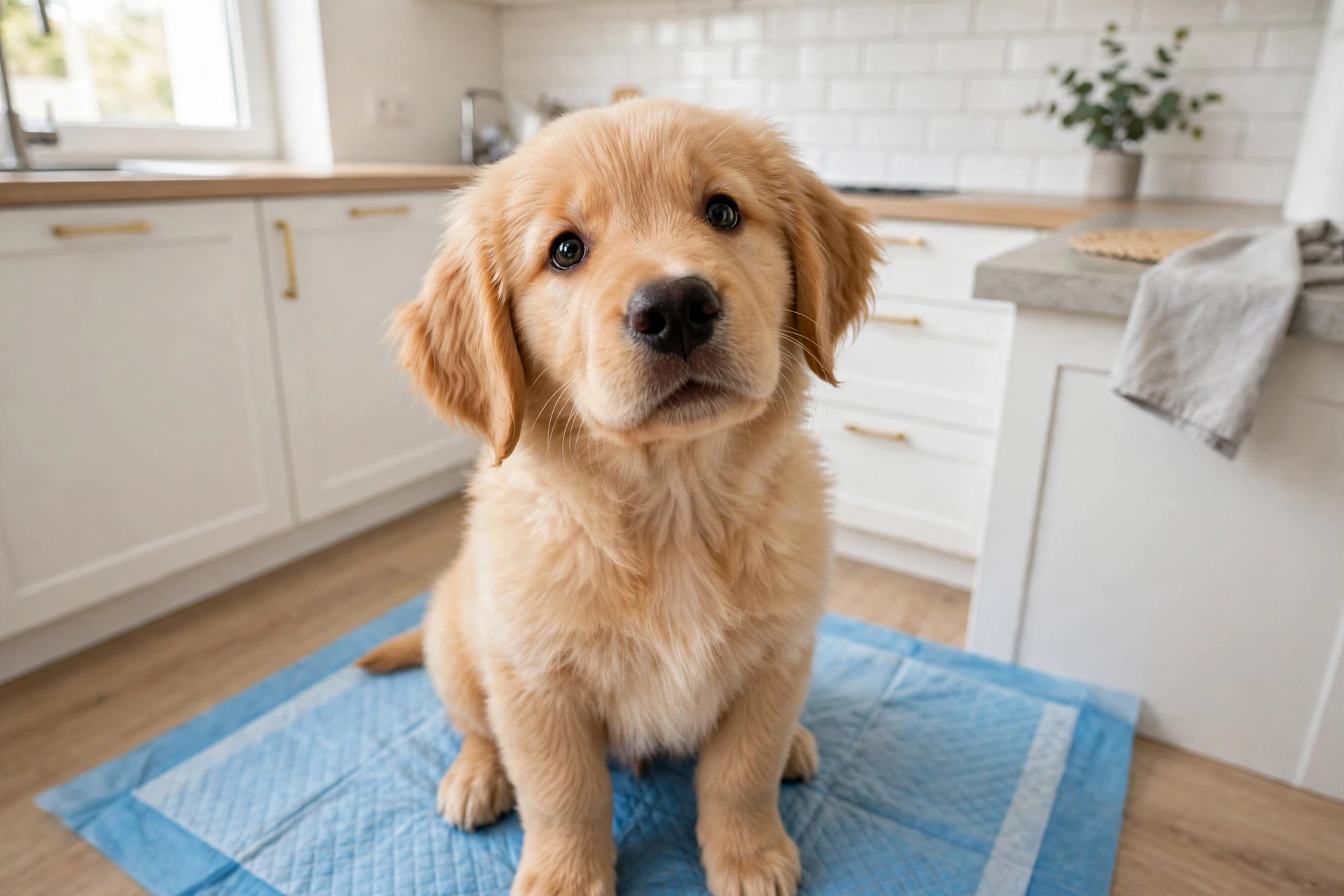
Frequent peeing is normal for young puppies — but it’s important to know the warning signs.
Why This Happens: Tiny Bladders, Big Feelings
A young puppy’s bladder is about the size of a walnut, and the muscles that control it are still developing. The general rule of thumb is that a puppy can hold their bladder for roughly one hour per month of age (so a two-month-old puppy manages about two hours, max). At 8–10 weeks, that control is fragile and easily overwhelmed.
Add in the triggers that make puppies pee on the spot: excitement, nervousness, play sessions, drinking water, waking from a nap, even cold weather. Any of these can cut that already-short hold time down to minutes.
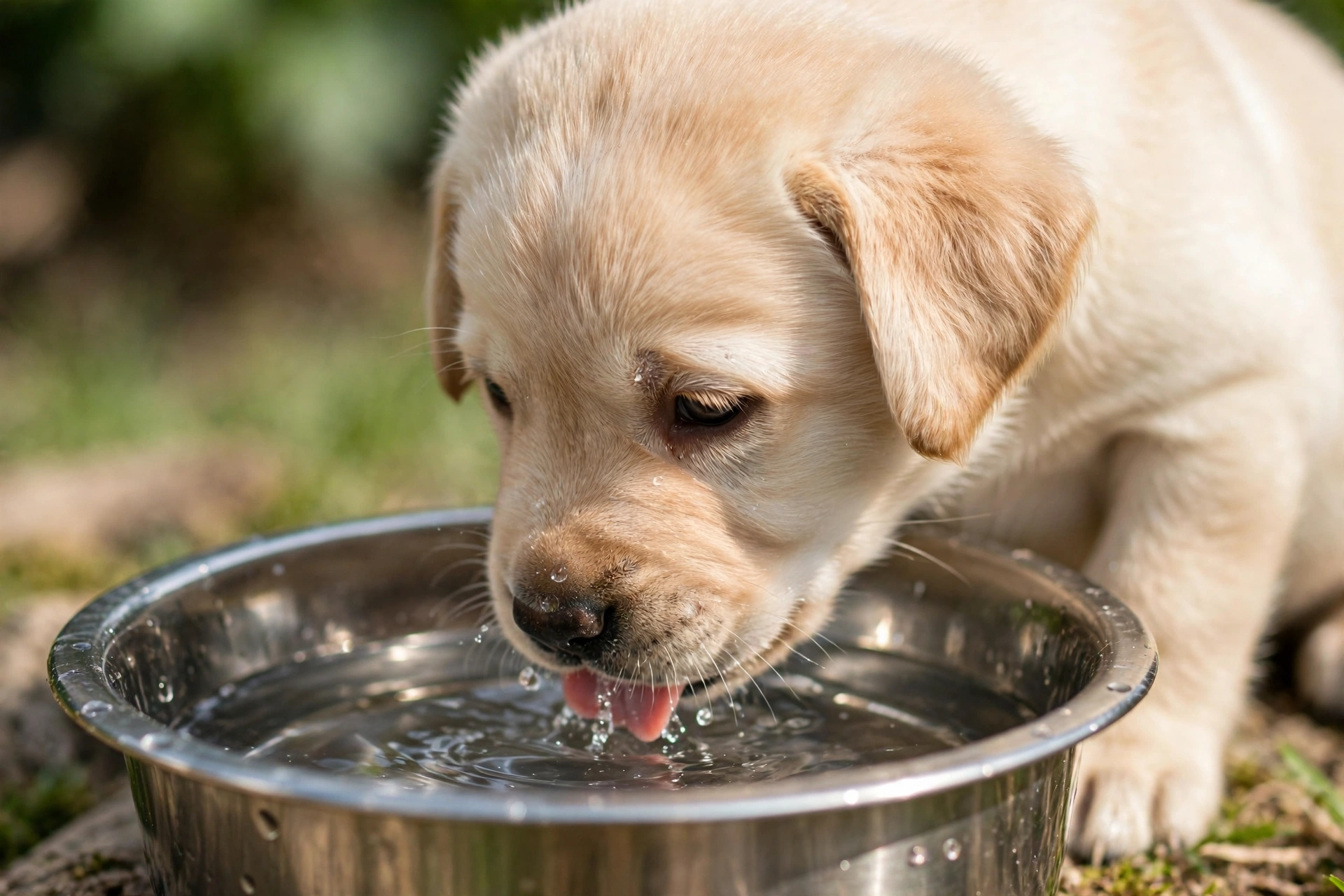
A young puppy’s bladder is about the size of a walnut — and it fills up fast.
That said, frequent urination is also one of the classic signs of a urinary tract infection (UTI), which is fairly common in puppies — especially females. So the real question isn’t just “how often,” but “how often, and what else is going on?”
What To Do: A Step-by-Step Plan
Step 1: Track it for 24–48 hours before you worry
Grab your phone and start a simple log: time of each pee, where it happened, how much (tiny dribble vs. full pee), and what was happening right before (waking up, playing, drinking, excitement). Patterns tell the story. Random, constant dribbling with no pattern tells a different one.
Step 2: Rule out the normal triggers first
Go through this checklist, because most cases end here:
- Age: Under 12 weeks? Tiny bladder, minimal control — frequent peeing is expected.
- Water intake: Puppies drink a lot, especially after play or in warm weather. More in = more out.
- Excitement or submissive urination: Does it happen when greeting people, during rough play, or when startled? That’s excitement peeing, not a medical issue.
- Incomplete emptying: Young puppies often pee a little, get distracted, and pee again two minutes later. Give them a full 5 minutes to finish.
- Schedule gaps: Are you taking them out after every nap, meal, drink, and play session? If not, the “accidents” might be a scheduling problem, not a puppy problem.
Step 3: Tighten up your potty routine
Whether it’s normal or not, a rock-solid routine helps everything. Take your puppy out:
- First thing in the morning
- After every nap
- After every meal and big drink
- After every play session
- Every 30–60 minutes in between (yes, really, for young pups)
- Right before bed
Praise and treat calmly the moment they finish peeing outside.
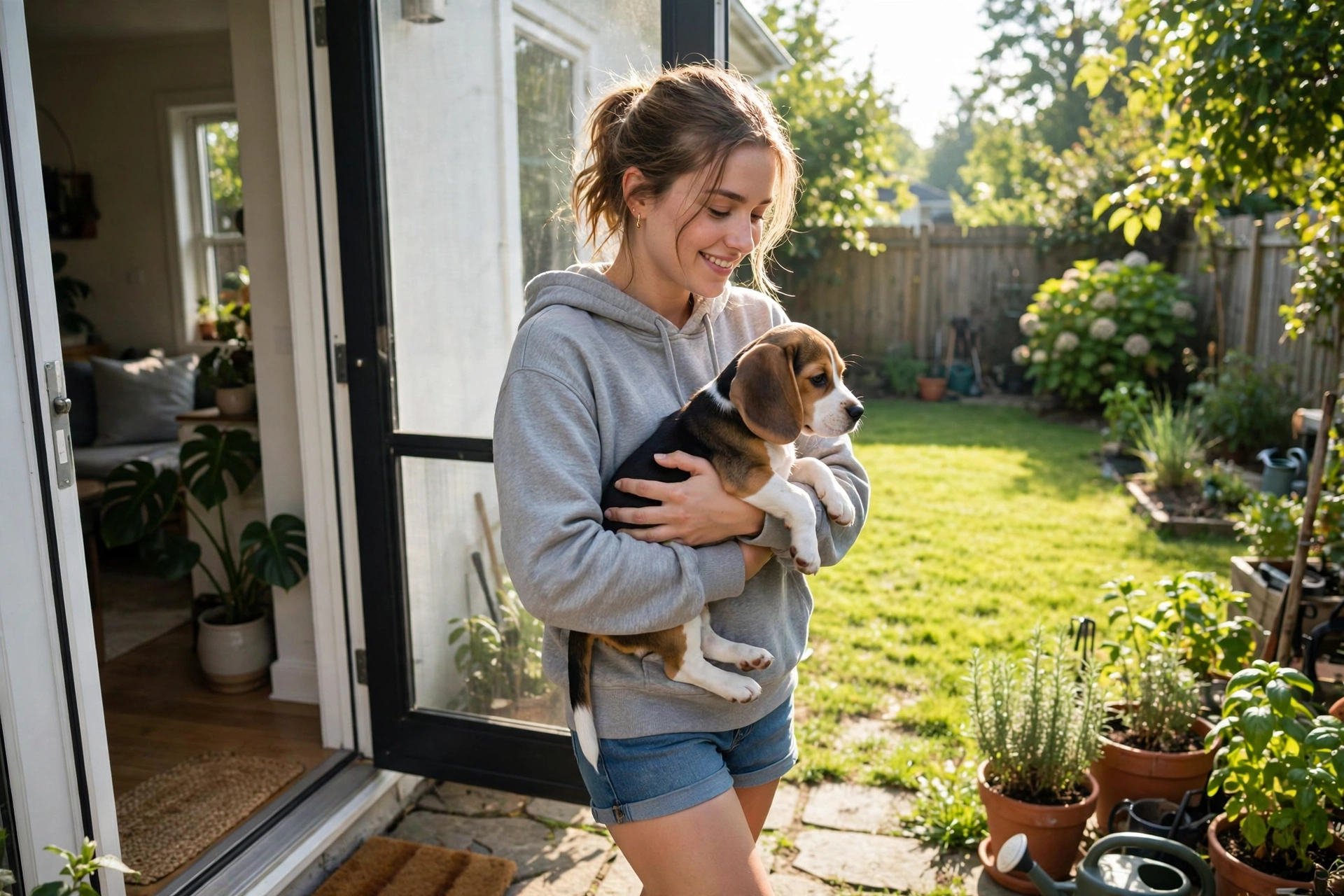
Take your puppy out after every nap, meal, drink, and play session — plus every 30–60 minutes in between.
Step 4: Manage the environment while you’re training
Set your puppy up to succeed: limit access to one puppy-proofed room, use a crate appropriately sized (just big enough to stand, turn, and lie down), and clean every accident with an enzymatic cleaner. Regular soap leaves behind proteins your puppy can still smell. Never punish accidents.
Step 5: Watch for the warning signs (and act on them)
Call your vet promptly if you notice any of these:
- Straining or crying while peeing — pain is never normal.
- Blood in the urine (pink, red, or brown-tinged pee).
- Constant dribbling or leaking while walking, sleeping, or resting.
- Foul-smelling or cloudy urine.
- Excessive licking of the genital area.
- Sudden change — a puppy who was holding it fine for weeks suddenly can’t.
- Lethargy, loss of appetite, vomiting, or fever alongside the frequent peeing.
- Drinking far more water than usual.
Any one of these warrants a call to your vet — don’t wait to see if it passes.
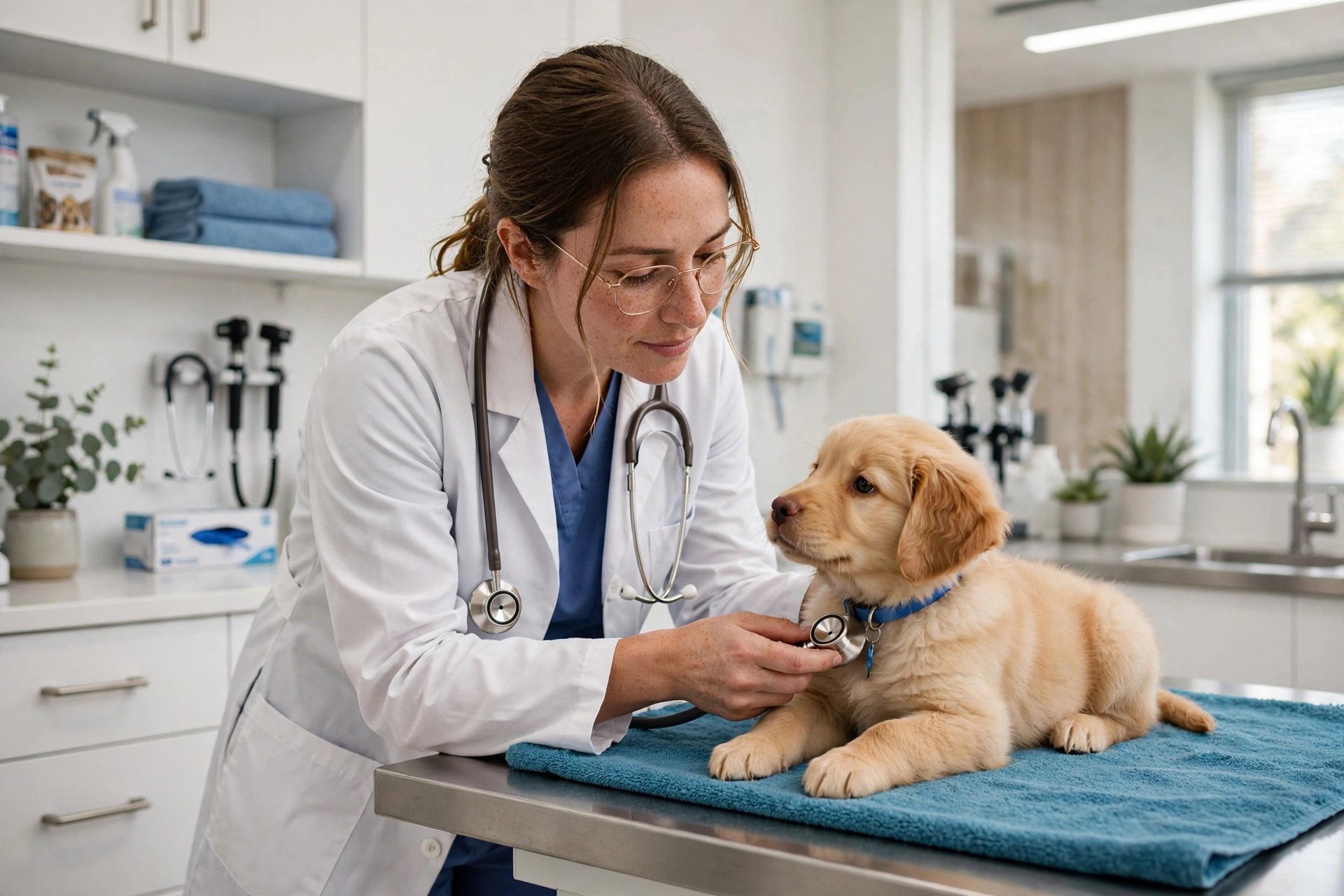
Straining, blood in the urine, or sudden changes in peeing habits warrant a prompt vet visit.
When to Call Your Vet: The Clear-Cut Guide
Call your vet soon (next available appointment) if your puppy is peeing very frequently but is otherwise happy, eating, playing, and the urine looks normal — especially if the pattern has lasted more than a couple of days.
Call your vet urgently (same day) if you see blood, crying/straining, lethargy, vomiting, or your puppy suddenly can’t pee at all (straining with nothing coming out can be an emergency, especially in male puppies).
Relax and keep training if your young puppy pees often around excitement, play, naps, and drinks, but is otherwise thriving and improving week by week. That’s just puppyhood.
Common Mistakes Puppy Parents Make
- Assuming it’s “just a phase” when warning signs are present. Normal puppy peeing doesn’t involve pain, blood, or lethargy.
- Punishing accidents. Yelling or rubbing their nose in it will not improve bladder control — it just damages trust.
- Waiting too long between potty breaks. If your 9-week-old is having accidents every hour, the schedule needs to be every 30–45 minutes.
- Using the wrong cleaner. Anything without enzymes leaves a scent marker. Invest in a proper enzymatic pet cleaner.
- Comparing to adult dogs or other puppies. Every puppy develops bladder control at their own pace.
- Limiting water to reduce peeing. Never restrict a puppy’s water intake — dehydration is dangerous.
How Long Does It Take for the Constant Peeing to Stop?
For most puppies, you’ll see real improvement between 12 and 16 weeks as bladder capacity grows. By 4–6 months, most puppies can hold it for several hours during the day. Full, reliable house training typically lands between 4 and 8 months. If you’re not seeing gradual improvement by 16–20 weeks despite a consistent routine, that’s worth a conversation with your vet.
For a structured approach, follow a day-by-day house training plan and build a reliable house training routine. Remember that stress can also trigger accidents when left alone — see our tips for getting through the first week with your new puppy, plus calming an overexcited puppy before potty breaks.
FAQ
My 8-week-old puppy pees every 10–15 minutes. Is this normal?
Very often, yes — especially during play, excitement, or after drinking. At 8 weeks, bladder control is minimal. Track the pattern for a day or two, tighten your potty schedule to every 30–45 minutes, and watch for warning signs like straining, blood, or lethargy.
How do I know if it’s a UTI or just puppy behavior?
You can’t diagnose this at home — only your vet can, usually with a simple urine test. Clues pointing toward a vet visit: straining or crying while peeing, blood or cloudy urine, constant dribbling, excessive licking, or sudden worsening.
Should I wake my puppy up at night for potty breaks?
For very young puppies (under 10–12 weeks), one middle-of-the-night break is often wise. Most puppies naturally start sleeping longer stretches by 12–16 weeks. Keep nighttime outings boring: no play, dim lights, straight back to the crate.
My puppy pees when greeting people. Will they grow out of it?
Excitement and submissive urination are extremely common and most puppies outgrow them by 6–12 months. Keep greetings low-key and never scold — punishment makes submissive peeing worse.
Now tell us: what was your puppy’s funniest (or most exasperating) potty-training moment? Drop it in the comments below.

