
If you have ever found a tiny white tooth on the living room rug, you know the puppy teething phase has begun. Between roughly three weeks and six months of age, a puppy’s mouth goes through two complete sets of teeth: 28 baby teeth arrive, and then all 28 are replaced by 42 permanent adult teeth. It is a lot of change packed into a short window, and it explains the chewing, the drooling, and the sudden attachment to your favorite shoes.
This guide walks through the complete puppy teething timeline week by week, explains the symptoms to expect, and shares safe, vet-approved ways to soothe sore gums. It also covers the warning signs that mean a trip to the veterinarian is in order.
Puppy Teething Timeline: Birth to Six Months
Every puppy follows roughly the same schedule, though small breeds may run slightly ahead of or behind larger ones. Here is what happens at each stage.
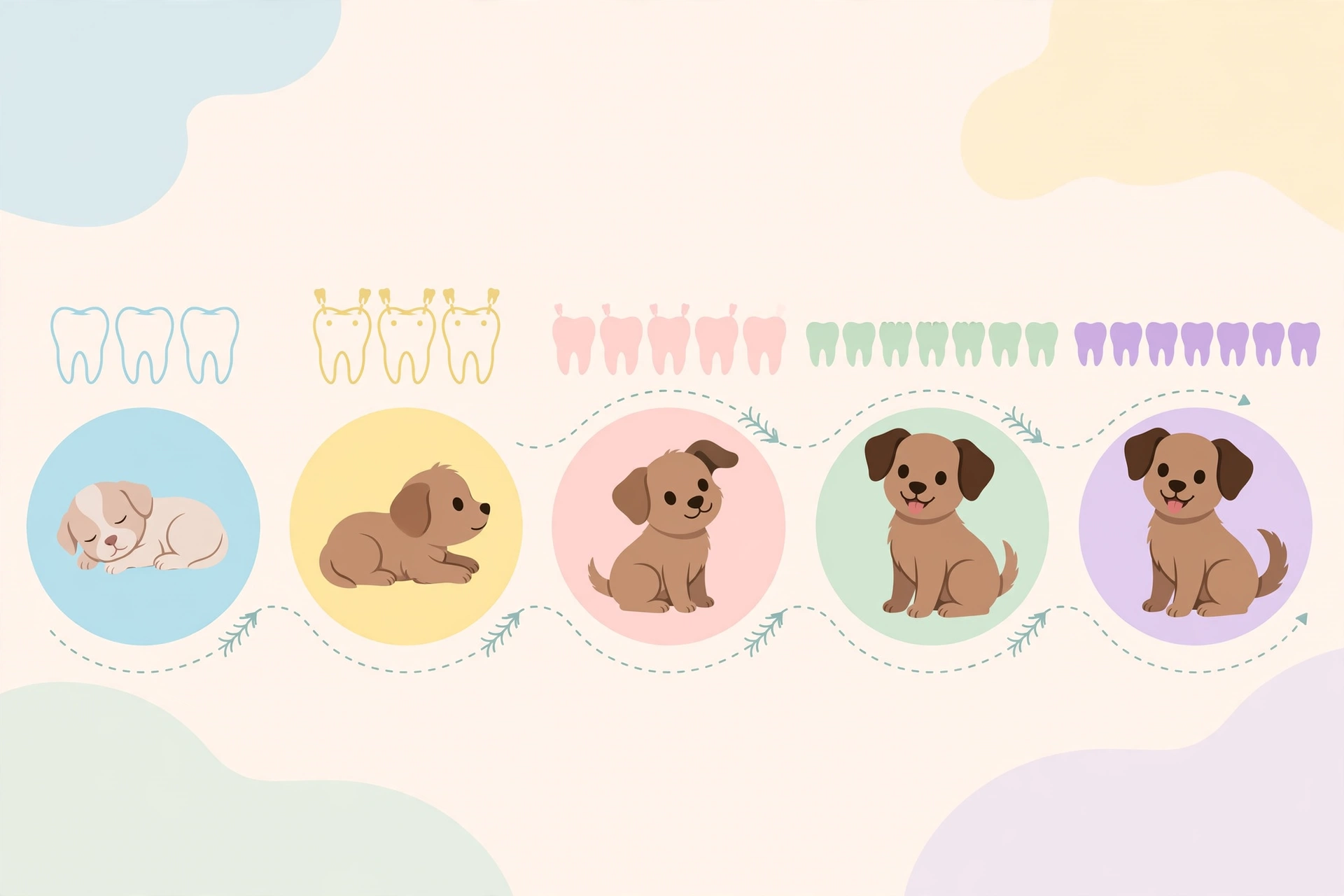
Birth to 2 Weeks: No Teeth Yet
Puppies are born completely toothless. During the first two weeks of life, their eyes are still closed, and nutrition comes entirely from nursing. There is nothing to do or watch for yet where teeth are concerned; the gums are smooth, and the jaw is still developing beneath them.
3 to 4 Weeks: Baby Teeth Begin to Erupt
Around the third week, the first deciduous (baby) teeth start pushing through the gums. The incisors — the small front teeth — almost always appear first, followed closely by the canines, those longer pointed teeth on either side. By the end of the fourth week, many puppies also have some premolars emerging behind the canines.
These early teeth are often called “milk teeth” or “needle teeth,” and the nickname is well earned: they are razor-sharp for their size. This is also the stage when breeders typically begin introducing soft, mushy food, since nursing becomes increasingly uncomfortable for the mother.
6 to 8 Weeks: A Full Set of Baby Teeth
By six to eight weeks of age, most puppies have their complete set of 28 baby teeth: 14 in the upper jaw and 14 in the lower jaw. The full baby set includes incisors, canines, and premolars, but no molars — those arrive later with the adult set.
This is the age when most puppies go to their new homes, which means many new owners meet the full force of those needle teeth right away. Playful mouthing at this stage is normal exploratory behavior, not aggression. It is also the ideal time to begin gently handling the puppy’s mouth — lifting the lips, touching the gums — so that future tooth brushing and vet dental exams are accepted calmly.

12 to 16 Weeks: Baby Teeth Start Falling Out
Around twelve weeks, the adult teeth begin developing beneath the gums and pushing the baby teeth out. This is the stage most people mean when they say “my puppy is teething,” and it is when the chewing intensifies noticeably.
The incisors are usually the first to fall out, and owners sometimes find them on the floor or in a toy. Canines tend to hang on the longest. It is common to see a little blood on chew toys during this period, and the gums may look slightly red or puffy — both are normal parts of the process. Most puppies swallow their lost baby teeth without any issue, so finding only a few (or none) is perfectly normal.
Around 6 Months: The Adult Set Is Complete
By roughly six months of age — sometimes a little earlier in small breeds, a little later in giant breeds — the full set of 42 permanent adult teeth should be in place. This includes molars at the back of the mouth that the puppy never had as baby teeth. Once the adult set is complete, the intense urge to chew everything in sight usually begins to fade, though adolescent dogs still enjoy a good chew session for months to come.
Signs Your Puppy Is Teething
Teething discomfort shows up in several recognizable ways. The most obvious is chewing: a teething puppy will gnaw on toys, furniture legs, shoes, hands, and just about anything else within reach. This is not misbehavior — chewing counter-pressure genuinely relieves the ache in their gums.
Other common signs include increased drooling, mildly swollen or reddened gums, small spots of blood on toys, a temporary dip in appetite (crunchy kibble can hurt), and general crankiness or restlessness, especially in the evening. Some puppies also become reluctant to have their mouths touched during the sorest days.
One thing teething does not cause is a high fever, vomiting, or diarrhea. These symptoms are sometimes blamed on teething, but they are not part of it. If a puppy develops a fever or digestive symptoms, the cause is something else, and a veterinarian should be consulted.
How to Soothe a Teething Puppy
The goal is simple: give the puppy safe things to chew and redirect the chewing away from everything else. Cold is especially soothing, because it numbs sore gums.

Safe Chews and Cooling Treats
A sturdy rubber chew toy designed for puppies is the single best investment during this phase. For extra relief, try these vet-approved options:
- A frozen wet washcloth: Soak a clean washcloth, wring it out, twist it into a rope shape, and freeze it. The cold texture is wonderfully soothing. Always supervise, and discard it if the puppy starts shredding it.
- Frozen carrots or apple slices: Cold, crunchy, and safe in moderation. Cut them to an appropriate size for the puppy so they cannot be swallowed whole.
- A frozen stuffed Kong: Fill a puppy-sized Kong with peanut butter (make sure it contains no xylitol, which is toxic to dogs), plain yogurt, or mashed banana, then freeze it overnight. It keeps a teething puppy busy for a long time.
- Puppy-specific dental chews: Soft, digestible chews made for puppies can help. Choose the correct size and always supervise chewing sessions.
Redirection matters as much as the chew itself. When the puppy starts gnawing on furniture or hands, calmly swap in an approved chew toy. Over time, this teaches the puppy what is acceptable to chew — a lesson that lasts far beyond the teething months.
What to Avoid
Not everything marketed for chewing is safe for a teething puppy. Avoid cooked bones of any kind — they splinter and can cause serious internal injuries. Rawhide is risky because large swallowed pieces can cause choking or intestinal blockage. Very hard chews such as antlers and hard nylon bones can crack a puppy’s teeth, which are softer than adult teeth.
Also skip human teething gels and painkillers: products containing benzocaine, ibuprofen, or acetaminophen are dangerous for dogs. And never try to pull out a loose baby tooth yourself — it will fall out on its own, and pulling can damage the developing adult tooth underneath or cause unnecessary pain.
Red Flags: When to See the Vet

Most teething proceeds without any problems, but a few situations call for professional attention:
- Retained baby teeth: If a baby tooth is still in place after six months — especially a canine sitting alongside its adult replacement (“double teeth”) — see the vet. Retained teeth trap food and bacteria and can push adult teeth out of alignment.
- Bleeding that will not stop: A few drops of blood on a toy are normal; steady or heavy bleeding is not.
- Refusal to eat for more than a day: A mild appetite dip is expected, but a puppy that will not eat at all needs to be examined.
- Broken or discolored teeth: A tooth that breaks on a hard chew, or one that turns gray or pink, may have a damaged nerve.
- Severe swelling, bad breath, or facial swelling: These can signal infection or an abscess.
- Lethargy or fever: As noted above, these are not teething symptoms and warrant a vet visit on their own.
Many veterinarians recommend a dental check around six months of age, when the adult set should be complete. It is a quick exam that can catch retained teeth or bite problems early, when they are easiest to correct.
Puppy Teething FAQs
When do puppies lose their baby teeth?
Most puppies begin losing baby teeth around 12 weeks of age, and the process usually wraps up by 6 months. The incisors fall out first, followed by the premolars, with the canines typically the last to go. If any baby teeth remain past six months, have a veterinarian take a look.
Is it normal to find blood on my puppy’s chew toys?
Yes, small amounts of blood on toys are a normal part of teething — the gums are tender as teeth loosen and new ones push through. The key word is “small.” If bleeding is heavy, continuous, or the puppy’s mouth is bleeding without any chewing, contact your veterinarian.
Can I give my puppy ice cubes for teething?
Plain ice cubes are generally safe for most puppies and many enjoy crunching them, but they are very hard and can be a choking hazard for enthusiastic chewers. Softer frozen options — a frozen wet washcloth, frozen carrot pieces, or crushed ice — provide the same numbing relief with less risk. Always supervise.
Should I pull out my puppy’s loose tooth?
No. Let loose baby teeth fall out on their own. Pulling a tooth that is not ready can cause pain, bleeding, and potentially damage the adult tooth developing beneath it. If a tooth looks loose for an unusually long time or seems to be causing distress, a vet can assess it safely.
How many teeth do puppies and adult dogs have?
Puppies have 28 deciduous (baby) teeth. Adult dogs have 42 permanent teeth: 20 in the upper jaw and 22 in the lower jaw, including molars that puppies never have as baby teeth.
When should a puppy see the vet about their teeth?
Schedule a dental check around six months of age, when the adult teeth should be fully in. Go sooner if you notice retained baby teeth, persistent bleeding, a broken or discolored tooth, refusal to eat for more than a day, facial swelling, or unusually bad breath.
Conclusion
The puppy teething timeline runs from the first tiny incisors at three weeks to a full set of 42 adult teeth by about six months. The middle of that journey — roughly 12 to 16 weeks — is when chewing peaks and when your puppy needs safe outlets the most. Stock up on puppy-appropriate rubber toys, keep a few frozen treats ready, redirect consistently, and watch for the red flags that merit a vet visit.
Teething is temporary, but the chewing habits formed during these months are not. Puppies that learn what is okay to chew — and have their dental health checked as the adult teeth arrive — grow into adult dogs with healthy mouths and good manners. A little patience now pays off for years.
Related reads
- How to Train a Puppy Not to Bite | Fast Beginner Guide
- How to Calm a Hyper Puppy Naturally: 8 Proven Tips
- Crate Training a Puppy at Night | Easy Beginner Guide

