
Bring home an eight-week-old puppy and the first surprise is usually not the chaos — it is the stillness. One minute your puppy is ricocheting around the living room; the next, they are out cold on the rug, twitching mid-dream. Is it normal for a puppy to sleep this much?
Yes — completely normal. Young puppies log far more rest per day than most new owners expect, and that sleep is not laziness: while a puppy naps, the brain is wiring itself, bones are lengthening, and the morning’s lessons are being filed away.
This guide breaks down how much sleep puppies need at every age, what a healthy daily schedule looks like, how to spot an overtired puppy, and the steps that help the whole household sleep better.
Why Puppies Sleep So Much
Sleep looks like doing nothing, but for a puppy it is full-time work — and understanding it makes rest time easier to protect.
1. The brain is under construction
In the first months, a puppy’s brain forms neural connections at an extraordinary rate. During sleep — especially REM sleep, marked by twitching paws or soft whimpers — the brain processes and consolidates the day’s experiences. In plain terms, a puppy is “saving” what it learned while awake: the sit cue from the morning gets locked in during the afternoon nap.
2. The body is growing fast
Bones, muscles, and organs are all developing fast, and much of that growth is supported during deep sleep. This is one reason large breeds, with more growing to do, often sleep even more than smaller ones.
3. The immune system is maturing
A young puppy’s immune defenses are still developing, especially in the weeks after leaving the mother. Rest supports immune function — one reason veterinarians emphasize calm, low-stress routines during early puppyhood, not just vaccinations.
4. Sleep keeps behavior on track
A well-rested puppy learns faster, handles frustration better, and settles more easily. Relentless biting, wild evening zoomies, and an inability to calm down are classic signs of missed naps — not excess energy. Protecting sleep is, in a real sense, a training strategy.
How Much Sleep Puppies Need by Age
There is no official hour-by-age standard, but veterinary and trainer guidance converges on consistent ranges — treat them as patterns that vary by breed and individual, not exact targets.
| Age | Total sleep per day | What it looks like |
|---|---|---|
| 8–12 weeks | 18–20 hours | Many short naps; rest every 1–2 hours awake; overnight potty breaks |
| 3–4 months | 16–18 hours | Naps consolidate; scheduled daytime rest still needed |
| 4–6 months | 14–16 hours | Longer nights; most sleep through by around 16 weeks |
| 6–12 months | 12–14 hours | Adult-like pattern; one or two daytime naps |
| 12+ months (adult) | 12–14 hours | Settled routine; senior dogs later trend back upward |
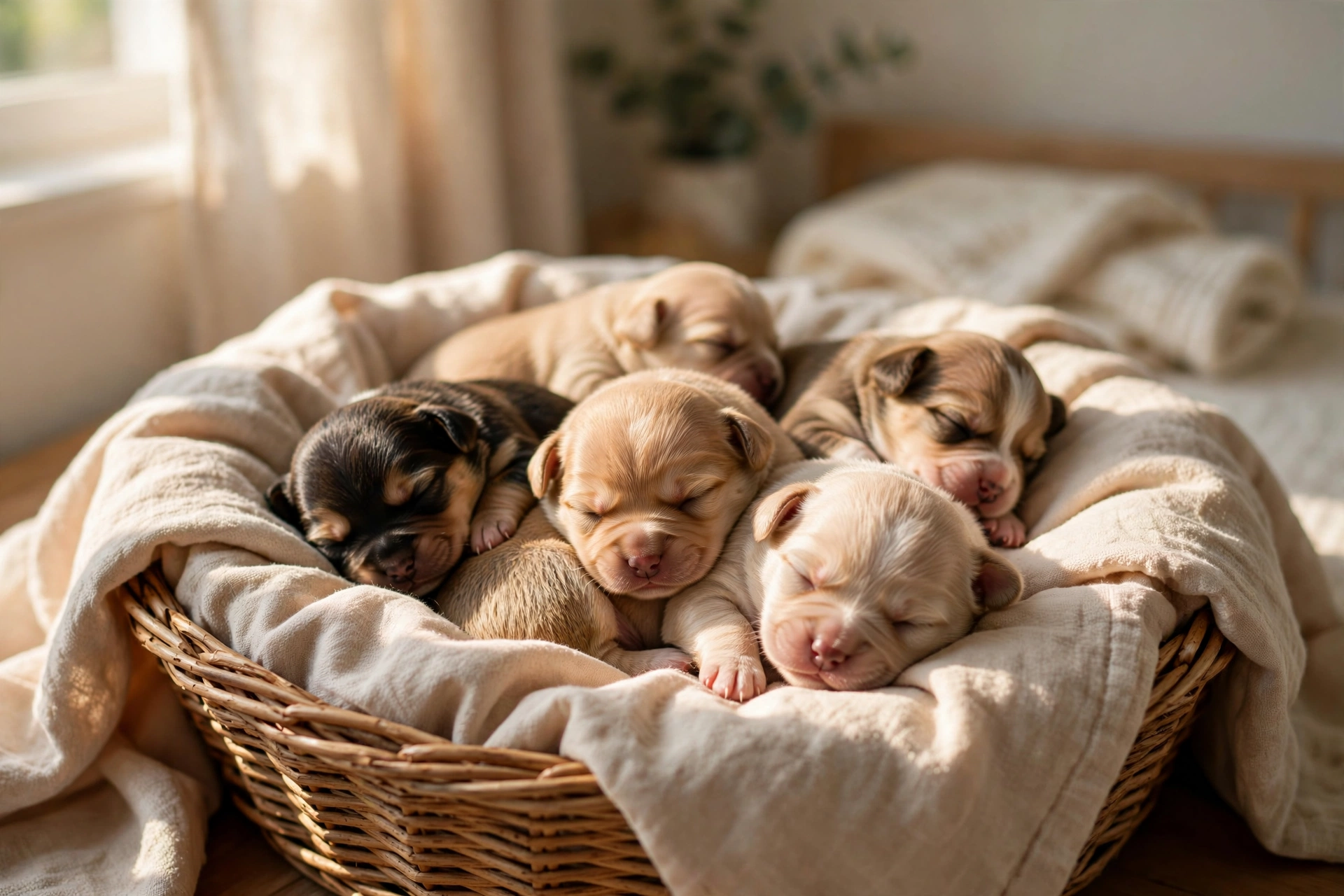
8–12 weeks: the newborn phase at home
Peak sleep: an eight-week-old may stay awake only an hour or two, with nights split by two or three potty breaks. The day runs on short cycles: wake, potty, eat, play, sleep, repeat.
3–4 months: naps consolidate
Total sleep dips slightly as naps lengthen and nights extend. Consistent schedules pay off visibly now: predictable routines mean faster settling and fewer night wakings. Scheduled daytime naps remain essential — most still will not rest on their own.
4–6 months: approaching through-the-night sleep
Around 16 weeks, bladder control usually allows sleeping through the night, and daytime sleep drops to a couple of solid naps. Adolescent energy can make puppies seem like they need less rest — they still need it. Overtired teenagers are just as bitey as overtired babies.
6–12 months and beyond: the adult pattern
By six months, most puppies follow an adult-like rhythm: a long night plus one or two daytime naps, roughly 12–14 hours total. Large and giant breeds may keep sleeping more than average while they finish growing.
A Sample Daily Sleep Schedule
What does a healthy day look like? A sample schedule for an 8-week-old — adjust times to your household; consistency matters more than exact clock times.
- 7:00 AM — Wake up, immediate potty break, then breakfast
- 7:30 AM — Gentle play, exploration, two-minute training session
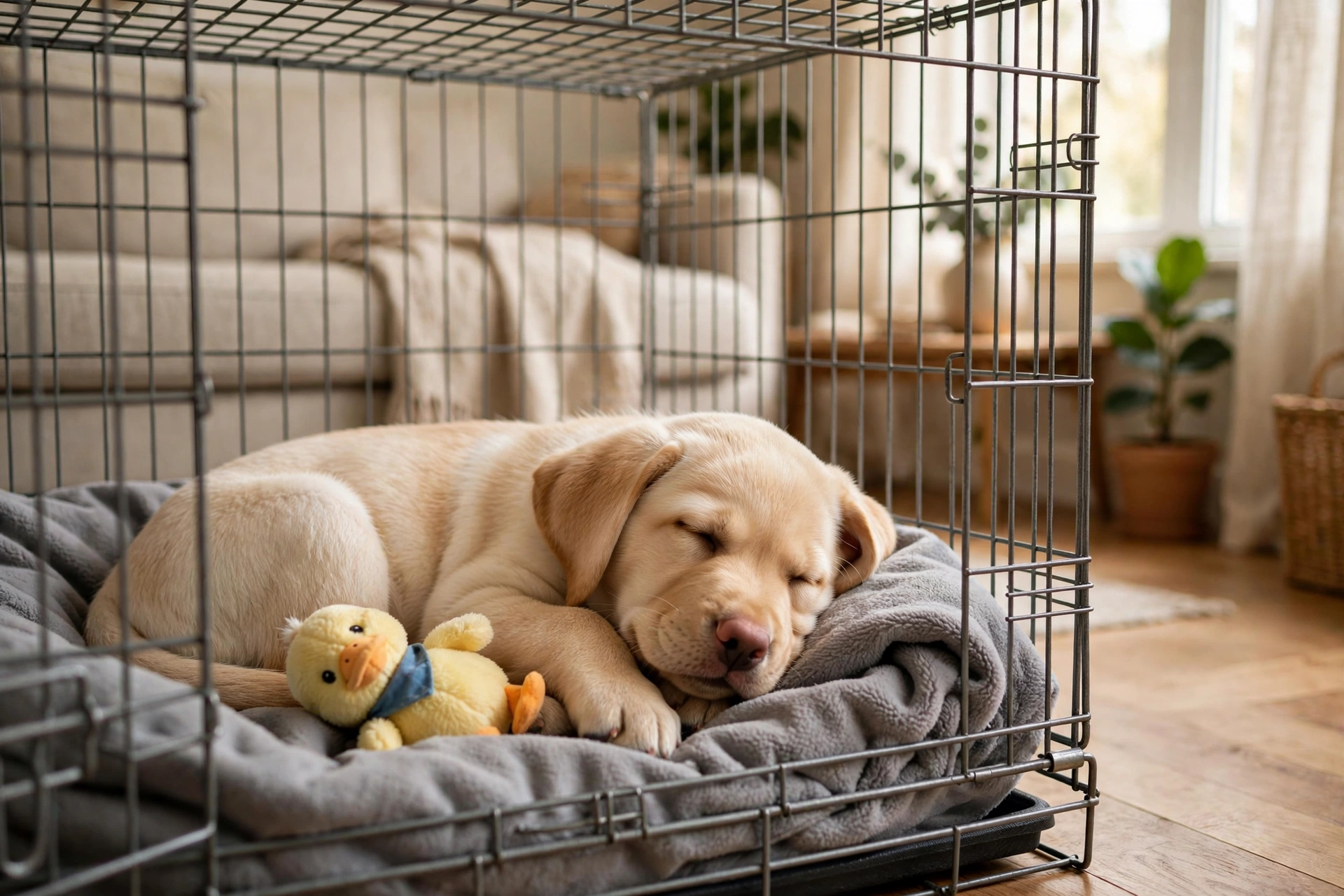
- 8:30 AM — Morning nap (1–2 hours, crate or pen)
- 10:30 AM — Wake, potty break, playtime
- 11:30 AM — Midday nap
- 1:00 PM — Lunch, potty break, play and short training
- 2:30 PM — Afternoon nap (often the longest one of the day)
- 4:30 PM — Wake, potty break, play and socialization
- 6:00 PM — Dinner
- 7:00 PM — Calm evening: gentle play, chew toy, no wild games
- 8:30 PM — Final potty break and wind-down
- 9:00 PM — Bedtime in the crate
- Overnight — Expect one to three potty breaks (e.g., 12:30 AM and 3:30 AM); keep them quiet and boring
As the puppy grows, naps merge and shorten while night sleep lengthens — by four to five months, usually two daytime naps and an unbroken night.
7 Signs Your Puppy Is Overtired
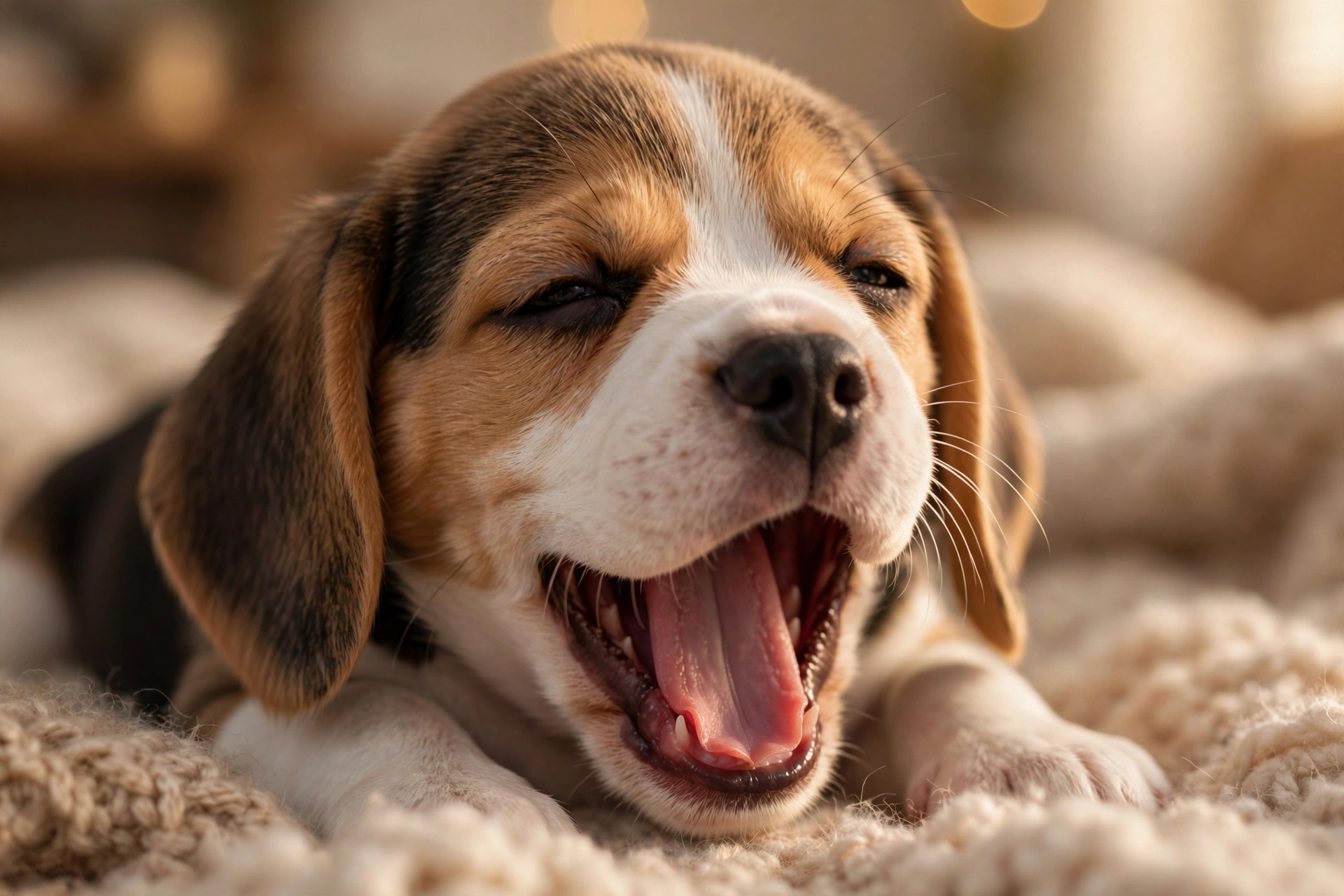
The paradox: a tired puppy rarely looks sleepy. Instead of yawning politely, an overtired puppy gets wilder — each sign below means “needs a nap,” not “needs more play.”
- Biting harder than usual. Mouthing that turns rough, especially in the evening, is the number-one overtired signal.
- The zoomies. Frantic sprinting around the house often follows missed naps, not excess energy.
- Cannot settle. Pacing, circling, flopping down then popping up — the puppy wants rest but cannot switch off.
- Barking or whining at nothing much. Vocalizing with no clear trigger means the puppy is past its limit.
- Forgetting known cues. A puppy that knew “sit” this morning but cannot focus now is not stubborn — the tired brain cannot work.
- Overreacting to small things. Startling at ordinary sounds or getting cranky about gentle handling are classic tired-puppy signs.
- A wild “second wind.” The most confusing sign: the more exhausted the puppy, the more hyper it acts — a stress response, not genuine energy.
If your evenings look like this list, the fix is almost always more structured daytime sleep — not more exercise.
6 Tips for Better Puppy Sleep
1. Enforce naps — do not wait for them
Most young puppies will not settle on their own, even when exhausted. The most effective sleep habit is the enforced nap: after one to two hours awake, place the puppy in the crate or pen with a chew toy and let them rest. Behavior usually improves fast once naps become non-negotiable.
2. Keep the day predictable
Puppies thrive on rhythm: similar wake, meal, play, and bedtimes teach the body when to be alert and when to rest. An erratic schedule produces an erratic sleeper.
3. Build a wind-down routine
In the 30–45 minutes before bed, shift down a gear: dim lights, trade wild play for a calm chew toy, end with a final potty break. A repeated sequence signals sleep is coming.
4. Exercise the body and the brain — at the right times
Daytime activity builds healthy sleep pressure: short play sessions, sniff walks, and two-minute training games all count. But avoid intense play right before bed — excitement makes settling harder. Front-load the wildness; end the day calmly.
5. Set up a proper sleep spot
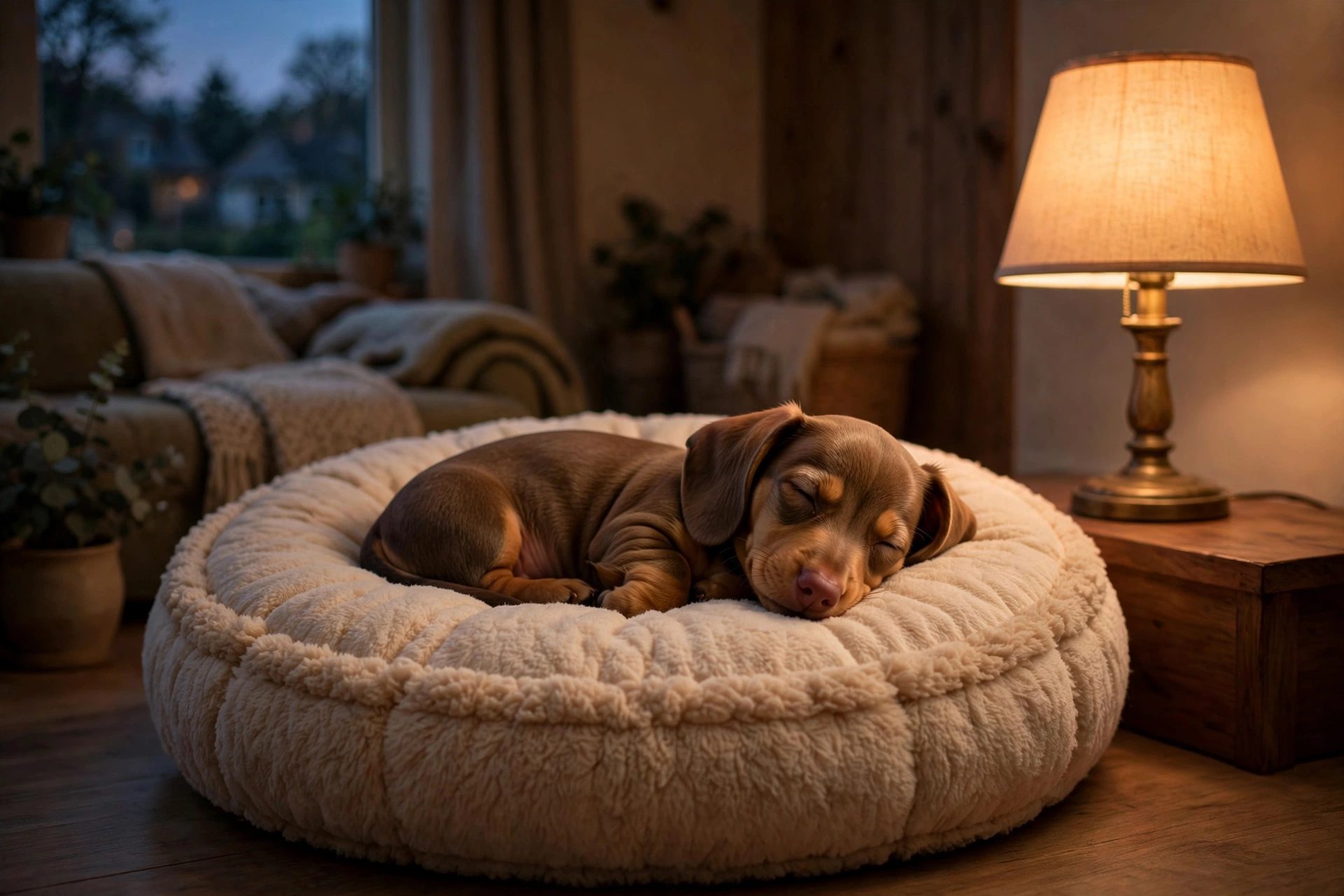
The ideal sleep area is quiet, dim, draft-free, comfortable, and always in the same place. A crate’s den-like feel helps puppies relax, but a pen or consistent corner bed works too. What matters: the spot is boring, safe, and reserved for rest.
6. Time food and water sensibly
Feed the last meal a few hours before bedtime, then take the puppy out for a final potty break immediately before crating. A comfortable, empty bladder is one of the simplest foundations of an unbroken night.
Crate Training and Night Sleep
The crate is one of the most effective sleep-training tools — if introduced the right way.
- Start the crate near your bed. For the first weeks, keep the puppy close enough to hear you. This eases post-littermate anxiety and catches genuine potty needs. Moving the crate away too early is a common cause of prolonged night crying.
- Size it correctly. The crate should fit the puppy standing, turning, and lying down — but not be so large that one end becomes a bathroom. Many crates include dividers for this reason.
- Make it a good place. Feed meals in the crate, hide treats inside during the day, and offer a safe chew toy at bedtime. The crate should predict good things — never use it as punishment.
- Handle night waking calmly. When the puppy cries at night, check for genuine need: a quiet, boring potty trip — no lights, no play, no conversation — then straight back to the crate. Nights must never feel like party time.
- Know the timeline. Expect two to three breaks a night at 8–10 weeks, one or two by 12–14 weeks, and full nights around 16 weeks; smaller breeds may take a little longer.
For a full step-by-step night-training plan, see the related guide linked below.
When to Ask Your Vet About Sleep
Most puppy sleep patterns need no medical attention — but changes in pattern sometimes do. This is general information, not medical advice; your veterinarian is the right judge for your puppy.
Call your vet about a sudden, dramatic change — abruptly sleeping far more than usual, or suddenly unable to rest at all — especially with lethargy, appetite loss, vomiting or diarrhea, limping, coughing, or unusual difficulty waking. When in doubt, a quick clinic call can catch the rare cases where “just tired” is something more.
Frequently Asked Questions
How much sleep does an 8-week-old puppy need?
About 18–20 hours daily — night sleep plus many short naps. Expect rest after every one to two hours awake, plus two or three overnight potty breaks.
Is my puppy sleeping too much?
Almost certainly not — 18–20 hours daily is normal, and new owners routinely underestimate it. Worry only about sudden change, or sleep paired with lethargy, appetite loss, or difficulty waking.
Why does my puppy get hyper instead of sleeping when tired?
The overtired paradox: an exhausted puppy’s stress response looks like wild energy — biting, zoomies, inability to settle. It signals a missed nap window: enforce rest, not more play.
How do I get my puppy to sleep through the night?
Build a consistent bedtime routine, crate near your bed, keep night potty breaks quiet and boring — then be patient: most puppies cannot hold it all night until around 16 weeks.
Should I wake my puppy up from naps?
Generally no — let sleeping puppies lie, except for scheduled needs: a planned potty break, a mealtime, or a nap so long it threatens night sleep.
Do puppies really need enforced naps?
Yes — most will not settle themselves even when exhausted. Scheduled crate or pen rest after one to two hours awake prevents the overtired cycle and teaches calm settling for life.
The Bottom Line
Puppy sleep is not downtime — it is development. Young puppies need 18–20 hours of rest daily, tapering to 12–14 hours by the end of the first year. Protect that sleep with enforced naps, a predictable rhythm, a calm wind-down routine, and a properly introduced crate. Read the overtired signs — biting, zoomies, the mysterious second wind — for what they are: a puppy asking for rest. Get sleep right, and almost everything else about raising a puppy gets easier.
Related reads
- Puppy Feeding Schedule by Age: How Often & How Much to Feed
- Puppy Teething Timeline: Week-by-Week Guide for New Owners
- How to Train a Puppy to Sleep Through the Night: Easy Guide

