
Your puppy is panting. Hard. Tongue out, sides heaving, that rapid huh-huh-huh that fills the room. It’s not hot, they haven’t been running — and suddenly you’re Googling “why is my puppy panting so much” at 11 p.m., convinced something is terribly wrong.
Take a breath (slower than your puppy’s). Panting is one of the most common puppy behaviors owners panic about — and most of the time, it’s completely normal. Dogs don’t sweat like we do; panting is their built-in cooling system, their excitement outlet, and occasionally their way of saying “something’s wrong.” The trick is knowing which one you’re looking at.
But sometimes it isn’t normal, and knowing the difference matters — because the same panting that means “I’m warm” on a summer afternoon
can mean “I need a vet” at midnight with no heat in sight. Context is everything, and this guide will teach you to read it like a pro.
In this guide, you’ll learn the 7 reasons puppies pant, a 30-second home check to tell normal from worrisome, the red flags that mean “vet now,” and what to do for each cause.
Quick Self-Check: The 30-Second Breathing Count
Before anything else, let’s get a number. When your puppy is resting calmly (not right after play), count their breaths for 30 seconds and double it. A normal resting respiratory rate for puppies is 15–35 breaths per minute. Within that range? Almost certainly fine. Consistently above 40 at rest, with no obvious cause? That’s worth a vet call.
This single number is the most useful diagnostic you can do at home. Write it down when your puppy is healthy and calm — that’s their personal baseline. Everything below becomes much easier to judge once you know what’s normal for your puppy.
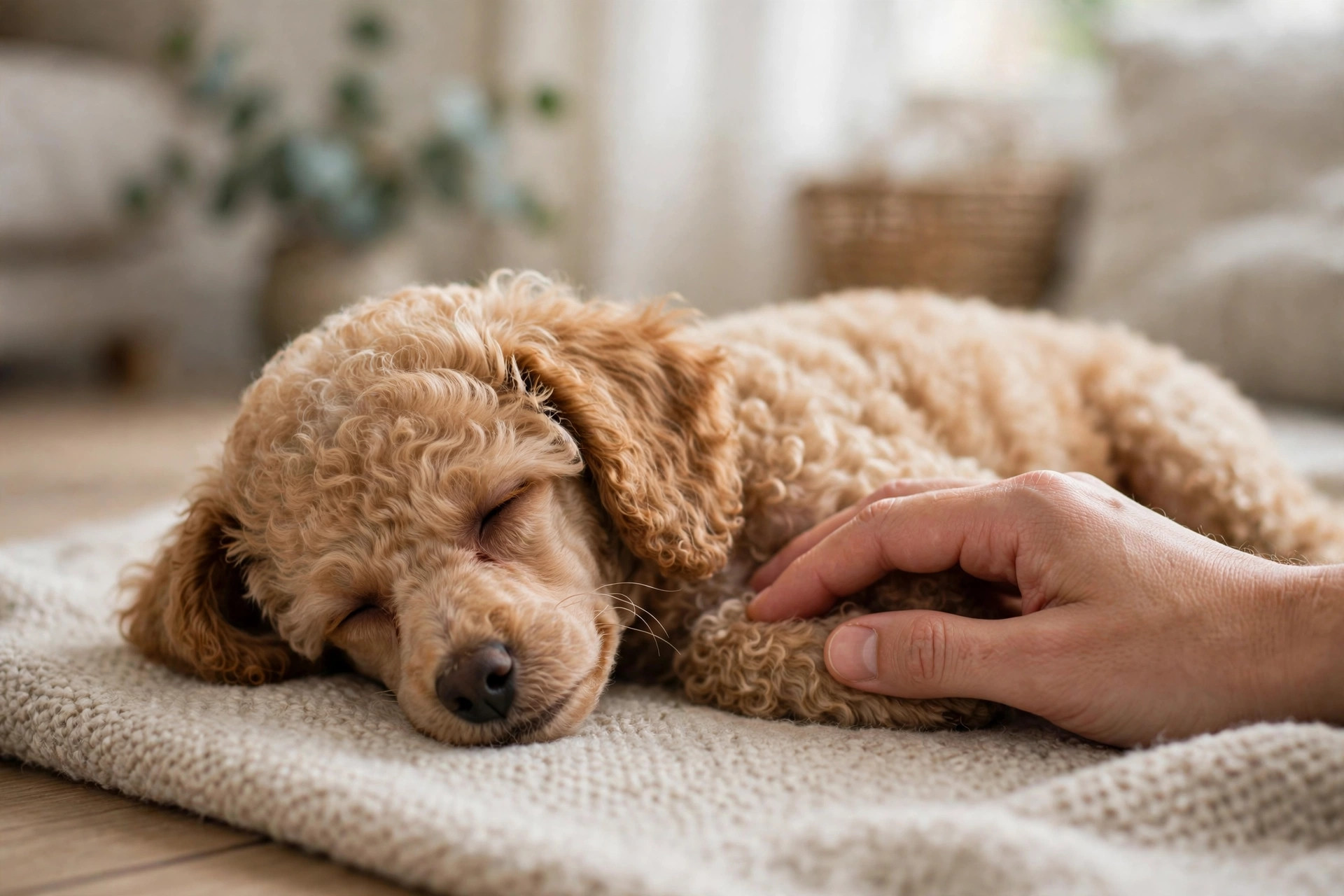
How to do it right: wait until your puppy has been resting quietly for at least 10 minutes (not right after play, meals, or excitement). Watch the chest rise and fall — one rise-and-fall is one breath. Count for 30 seconds, double it. Do it twice to be sure. Pro tip: check it once a month and jot it in your phone notes. If you ever need to call the vet about breathing, “his resting rate is usually 22 and now it’s 55” is infinitely more useful than “he’s panting a lot.”
7 Reasons Your Puppy Pants So Much
1. Heat — The #1 Cause
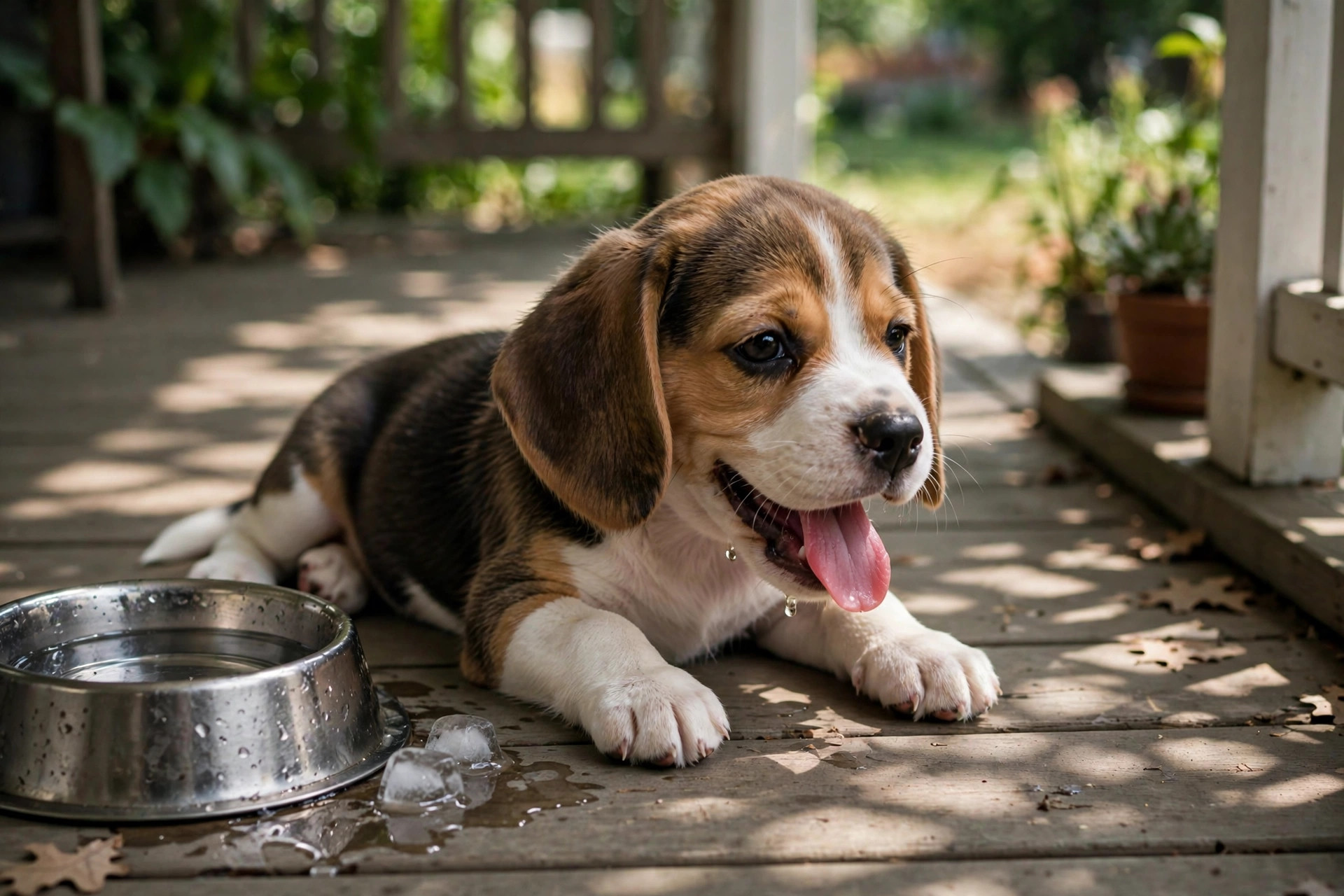
Dogs barely sweat — they cool themselves almost entirely by panting, evaporating moisture from their tongue and airway. Puppies are worse at this than adult dogs: they’re smaller (heat up faster), often fluffier, and their thermoregulation is still developing. A puppy panting on a warm day, after being in a sunny room, or under a blanket is usually just running their air conditioner.
Help them out: fresh water always available, a cool floor to lie on, shade over direct sun. On hot days, walk early morning or late evening — and learn the heatstroke warning signs below, because heat is the one panting cause that can turn dangerous fast.
A special note on puppies vs. adult dogs here: puppies dehydrate faster and overheat faster, but they’re also worse at self-regulating — an excited puppy will keep playing in dangerous heat long past the point an adult dog would quit and find shade. That’s why you have to be the thermostat. Enforce shade breaks, bring water on every outing, and when in doubt, cut the session short. No game of fetch is worth a heat emergency.
2. Play and Excitement
A puppy who just finished zoomies, a wrestling match, or greeting their favorite human will pant hard — that’s the body dumping the heat and oxygen debt of exertion. Excitement panting should ease within 5–10 minutes of calming down. If your puppy is otherwise bouncy and happy, this is just a body doing its job. A good calm-down routine after play helps the transition.
3. Stress and Anxiety
Panting is one of the classic canine stress signals — along with yawning, lip-licking, and pacing. A puppy panting in the car, at the vet’s waiting room, during thunderstorms, or when left alone is likely anxious, not hot. Context is everything: same panting, different meaning depending on where it happens. If anxiety is the pattern, our separation anxiety guide covers the full approach for the most common trigger.
4. Pain
This is the reason most owners don’t know about — and the most important one to respect. Dogs in pain often pant: restlessness + panting + drooling with no heat or excitement to explain it can be the only visible sign something hurts. Teething pain, a sore belly, growing pains, or an injury can all present as mysterious panting. Dogs are famously stoic — in the wild, showing pain invited predators, so they evolved to hide it. Heavy panting at rest is sometimes the one signal that leaks through the stoicism.
Rule of thumb: panting you can’t explain + behavior change = vet check. Never try to wait out panting that might be pain. And note the pattern: pain panting tends to be persistent rather than episodic — it doesn’t come and go with activity or temperature the way normal panting does. That persistence is your clue.
5. Fear (Loud Noises, New Places)
Thunderstorms, fireworks, construction noise, a chaotic new environment — fear triggers the same adrenaline cascade as anxiety, and panting comes with it. Fear panting often pairs with trembling, hiding, or clinginess. Many puppies go through fear periods where normal sounds suddenly seem terrifying; panting during these windows is common and usually passes with patient, positive exposure.
6. Teething Discomfort
A teething puppy (roughly 3–7 months) dealing with sore, inflamed gums may pant more than usual — low-grade chronic discomfort raises the baseline. If the panting started alongside drooling, chewing everything, and crankiness, teething is a likely contributor. Cold chews and gum massage help; the phase passes.
7. Breed Factors (Brachycephalic Breeds)
Flat-faced breeds — Bulldogs, Pugs, Shih Tzus, Boxers — pant more than other dogs, full stop. Their shortened airways make breathing less efficient and cooling harder, so what looks alarming in a Pug would be a red flag in a Labrador. If you own a brachycephalic puppy, learn their normal early, keep them cool aggressively in summer, and keep your vet in the loop about any breathing changes.
Red Flags: When Panting Means Call the Vet
<
Most panting is harmless. But some signs need a vet today — and a few mean right now. Know which is which:
🔴 Emergency — get to the vet immediately:
- Collapse, staggering, or inability to stand
- Labored breathing — sides heaving, elbows out, neck stretched
- Blue, white, or very pale gums (check by lifting the lip — healthy gums are bubblegum pink)
- Vomiting alongside heavy panting (especially with heat exposure — see the heatstroke box below)
🟡 Call your vet today (not next week):
- Panting that won’t stop after 10+ minutes of rest in a cool place, with no excitement or heat to explain it
- Panting paired with lethargy, weakness, or refusal to play/eat
- Coughing or wheezing with the panting
- Sudden excessive drooling
- Brick-red gums
Trust the combination more than any single sign. One odd symptom can be nothing; a cluster is a message. And when in doubt, err on the side of the emergency column — vets would far rather see a false alarm than a late arrival.
Heatstroke Emergency Box
Heatstroke kills in minutes. Know this cold. Signs: bright red gums and tongue, thick drool, vomiting or diarrhea, staggering, collapse, body temperature above 104°F (40°C). If you suspect heatstroke: move your puppy to shade immediately, offer cool (not ice-cold) water, wet their belly and paw pads with cool water, aim a fan at them — and get to the vet immediately, even if they start looking better. Cooling at home is first aid, not treatment. Never leave any dog in a parked car, not for “just a minute” — interior temperatures turn lethal in under 10 minutes on a warm day.
What to Do for Each Normal Cause
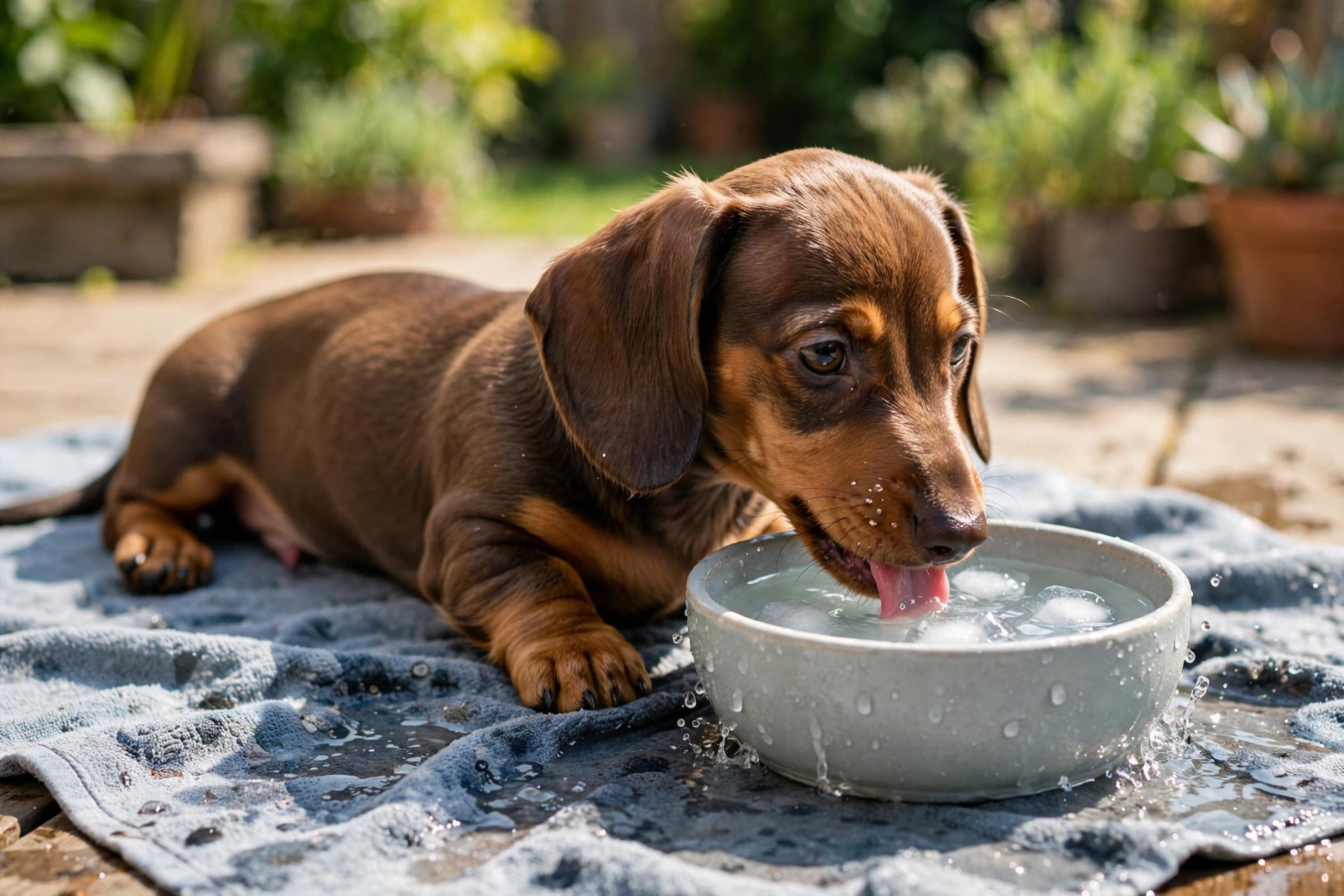
For heat: cool space, fresh water, shade. A damp towel on the floor, a frozen water bottle wrapped in cloth to lie against, and curtailed midday exercise in summer. Prevention beats treatment.
For excitement: build a settle routine — after play, guide your puppy to a mat with a chew and let the arousal drain. The panting should fade as the heart rate drops.
For stress/anxiety: address the feeling, not the panting. Desensitize the trigger gradually, provide safe spaces, and keep departures/arrivals boring. Learning your puppy’s full stress signal vocabulary helps you catch anxiety before it peaks.
A useful test for anxiety panting: remove the suspected trigger (or move the puppy to a calm familiar room) and watch. Anxiety panting typically eases within 10-15 minutes once the trigger is gone; heat panting eases with cooling; pain panting doesn’t ease with either. That simple observation — what makes it stop — is often more revealing than the panting itself.
For teething: frozen carrots, broth popsicles, gum massage — cold + pressure = relief.
For breed factors: know your puppy’s baseline, keep them lean (extra weight worsens breathing), and discuss any changes with your vet early.
Frequently Asked Questions
Why is my puppy panting at night?
Common causes: a warm sleeping spot, dreaming (puppies dream vividly — twitching + soft panting in sleep is normal), or mild anxiety. If the room is cool and it happens every night with restlessness, mention it at the next vet visit.
My puppy pants after eating. Normal?
Usually yes — eating is mild exertion plus excitement, especially in enthusiastic eaters. It should settle within minutes. Persistent heavy panting after every meal deserves a vet mention.
Is panting in their sleep dangerous?
Almost never. Puppies cycle through dream sleep frequently, and you’ll see twitching, soft barks, and light panting. It’s only concerning if the panting is heavy, labored, or paired with restlessness when awake.
Do some breeds pant more?
Yes — brachycephalic (flat-faced) breeds pant significantly more due to their airway structure. What’s normal for a Pug would worry you in a Border Collie. Learn your breed’s baseline.
When is panting an emergency?
When it’s paired with collapse, vomiting, brick-red or pale gums, or won’t stop after rest in a cool place. Heatstroke signs (above) mean minutes matter — don’t wait.
My puppy pants and drools in the car. What helps?
Usually motion anxiety or mild carsickness. Cool air, short trips building gradually, an empty-ish stomach, and a calm setup. Most puppies improve hugely with gradual exposure over a few weeks.
The Bottom Line
Panting is your puppy’s Swiss Army knife — cooling system, excitement valve, stress signal, and occasional cry for help, all in one behavior. Your job isn’t to stop the panting; it’s to read it. Count the breaths, check the context, watch for the red flags.
Do that, and the midnight-Google panic turns into something better: a calm owner who knows exactly when to relax — and exactly when to call the vet.
And remember the simplest rule of all: you know your puppy. If the panting looks wrong to you — different from their usual, paired with a gut feeling that something’s off — call the vet. Vets would far rather reassure you about normal panting than see you a day late. Trust the bond; it’s data too.
Related Reads
- Puppy Separation Anxiety: Training Guide
- How to Calm a Hyper Puppy Naturally
- Puppy Fear Periods: What Every Owner Should Know

