
Introduction: What to Expect in the First Week With New Puppy
The first week with new puppy is exciting, emotional, and sometimes overwhelming. Many new dog owners feel unprepared because puppies cry at night, have accidents, bite frequently, and demand constant attention.
But here is the truth: this adjustment period is completely normal.
Your puppy has just left its mother, siblings, and familiar environment. Everything around them is new — smells, sounds, people, and routines. During the first week, your main goal is not strict training, but helping your puppy feel safe, secure, and comfortable.
If you handle this week correctly, you will build trust, reduce anxiety, and create a strong foundation for lifelong training success.
This complete guide will show you exactly what to do during the first week with new puppy so you can avoid common mistakes and make the transition smooth.
Why the First Week Is the Most Important Period
The first week shapes your puppy’s behavior for months ahead.
This period determines:
• Trust level with owner
• Confidence in new environment
• Early training habits
• Emotional stability
• Socialization success
Puppies that feel safe in the first week become calmer, easier to train, and less anxious later.
That is why patience is critical.

Day-By-Day Plan for First Week With New Puppy
Day 1: Bringing Your Puppy Home
The first day is the most stressful for your puppy.
Everything is unfamiliar.
Your goal on Day 1:
• Keep environment calm
• Limit visitors
• Introduce one room at a time
• Show sleeping area
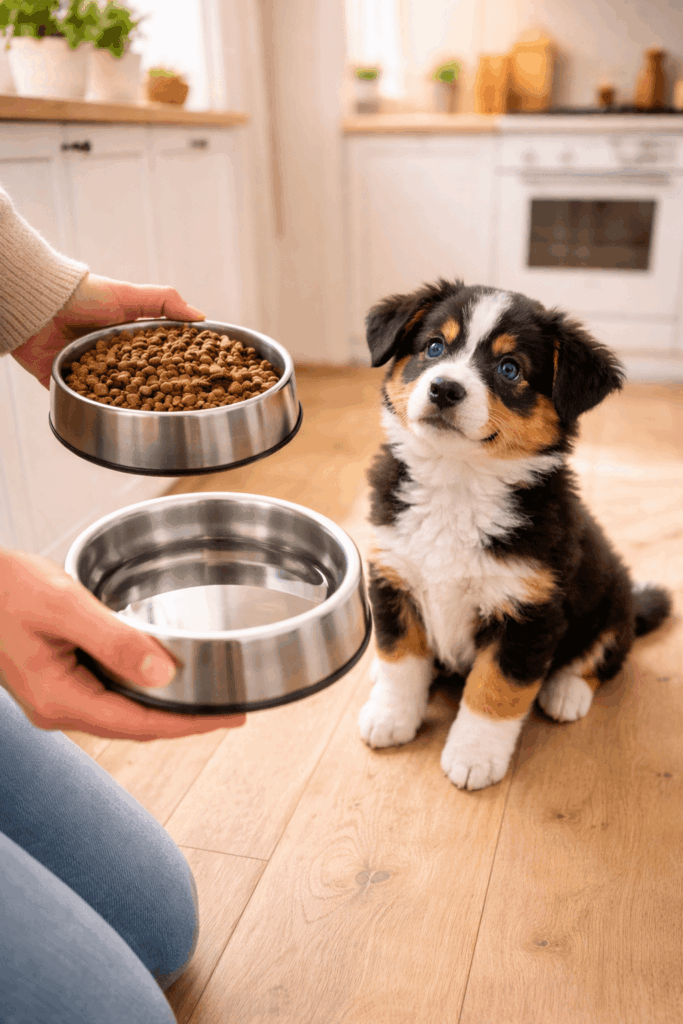
• Provide water and food
Avoid overwhelming your puppy with too much excitement.
Let them explore slowly.
Day 2: Establish a Simple Routine
On the second day, start building structure.
Introduce:
• Feeding schedule
• Potty breaks
• Sleep times
• Short play sessions
Consistency reduces anxiety quickly.
Puppies learn patterns faster than commands.
Day 3: Start Gentle Potty Training
Potty training should begin immediately but gently.
Take your puppy outside:
• After waking
• After eating
• After playing
• Before sleeping
Reward successes with praise.
Never punish accidents.
Early positive experiences build strong habits.
Day 4: Introduce Basic Training
Training should be simple and fun.
Start with:
• Name recognition
• Come when called
• Sit command
Keep sessions short (5 minutes).
Always use rewards.
Training should feel like a game.

Day 5: Begin Socialization
Socialization is critical during the first week.
Introduce your puppy to:
• Household sounds
• Different rooms
• Family members
• Gentle handling
Avoid crowded places.
Focus on positive experiences.
This prevents fear later.
Day 6: Build Independence Slowly
Puppies must learn to stay alone calmly.
Start with short separation:
• Leave room briefly
• Return calmly
• Avoid emotional greetings
This prevents separation anxiety.
Gradual independence builds confidence.

Day 7: Strengthen Routine and Bond
By day seven, your puppy should feel comfortable.
Focus on:
• Consistent schedule
• Calm bonding time
• Gentle training
• Regular potty breaks
This day confirms your puppy’s adjustment.
Trust grows rapidly during this stage.
Essential Supplies Needed in First Week
Preparation makes the first week easier.
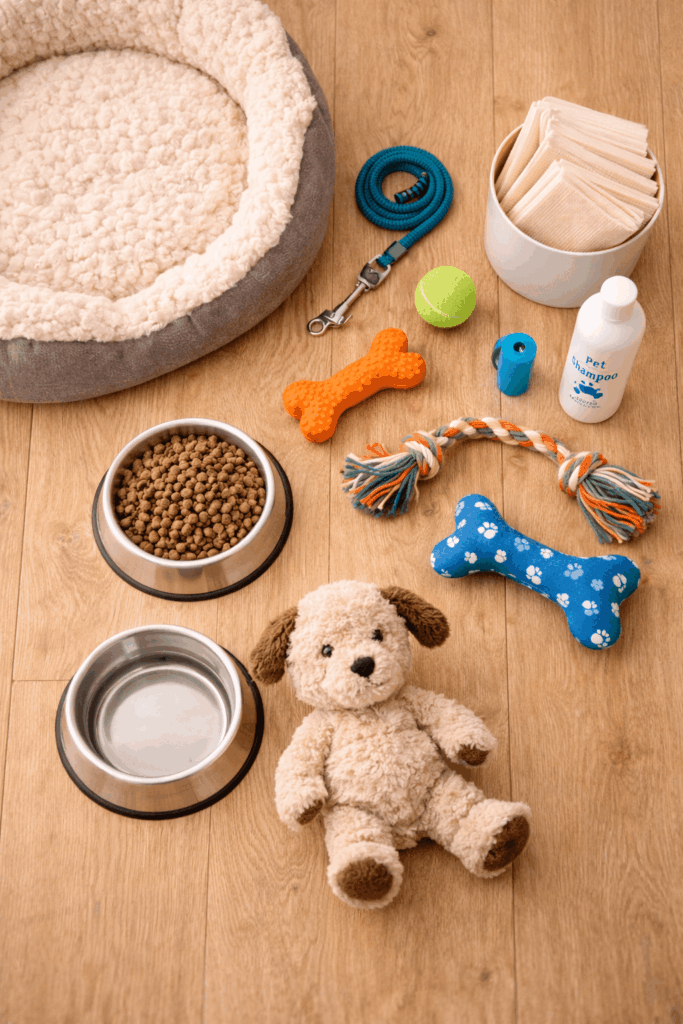
Must-have items:
• Food and water bowls
• Comfortable bed
• Crate
• Chew toys
• Training pads
• Leash and collar
These items help create a secure environment.
Common First Week Puppy Problems (And Solutions)
Problem 1: Night Crying
Cause: Separation anxiety.
Solution:
• Keep crate near bed
• Use soft bedding
• Provide comfort toy
Never ignore excessive distress.
Problem 2: Frequent Biting
Cause: Teething and curiosity.
Solution:
• Provide chew toys
• Redirect biting
• Avoid rough play
Consistency reduces biting quickly.
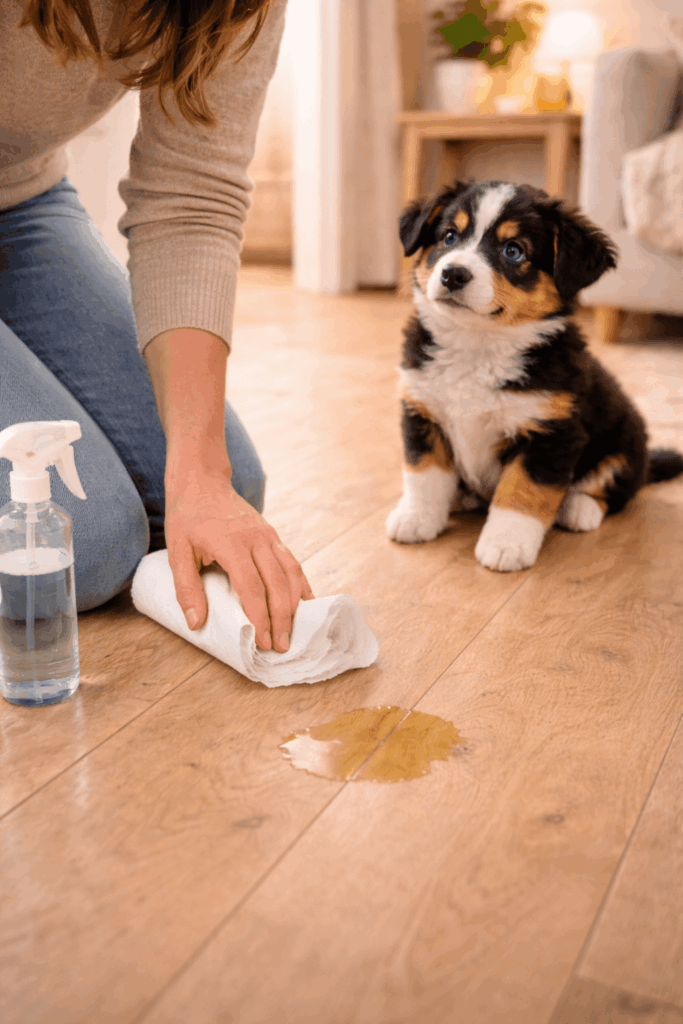
Problem 3: Accidents Inside Home
Cause: Lack of routine.
Solution:
• Increase potty breaks
• Supervise closely
• Clean properly
Routine solves most accidents.
Mistakes to Avoid in the First Week
Avoid these common errors:
• Overwhelming puppy with visitors
• Punishing accidents
• Inconsistent schedule
• Too much training too soon
• Lack of patience
These mistakes increase anxiety and slow learning.
Benefits of Handling First Week Properly
A smooth first week leads to:
• Faster training success
• Strong owner bond
• Lower stress levels
• Better behavior long-term
• Confident personality
The effort you invest now pays off for years.
Frequently Asked Questions
Is it normal for a puppy to cry at night during the first week?
Yes, completely normal — your puppy has just left its mother and everything familiar. Keep the crate near your bed, use soft bedding and a comfort toy, and never ignore genuine distress.
Should I start training my puppy in the first week?
Yes, but keep it gentle and fun — name recognition, “come” and “sit” in 5-minute sessions with rewards. This week’s real goal is trust and routine, not strict obedience.
How long does it take a puppy to adjust to a new home?
Most puppies settle within 7–14 days with a consistent routine. Limit visitors, introduce one room at a time, and let your puppy explore at its own pace.
What supplies do I need before bringing my puppy home?
The essentials are food and water bowls, a comfortable bed, a crate, chew toys, training pads, and a leash and collar. Having everything ready makes the first week far calmer for everyone.
Conclusion: A Calm First Week Creates a Happy Puppy
The first week with new puppy is the foundation of your entire dog-training journey. By focusing on comfort, routine, and gentle guidance, you can help your puppy feel safe and confident.
Remember:
Your puppy is not being difficult — they are learning a new world.
Patience, love, and consistency will transform your puppy into a loyal companion.
To set yourself up for success, start gentle potty training from day 3. Follow our puppy socialization guide for safe early exposure — and teach the first command: sit in short fun sessions. Crate training basics also help with night crying from day one.

