
Introduction: Crate Training a Puppy at Night Made Simple
Crate training a puppy at night can feel overwhelming for new dog owners. Many puppies cry, bark, or refuse to sleep in their crate during the first few nights. This often leads to frustration, sleep deprivation, and confusion.
But here’s the truth: night crate training is not about forcing your puppy to stay inside. It is about creating a safe, comfortable environment where your puppy feels secure.
When done correctly, crate training helps with potty training, reduces anxiety, prevents destructive behavior, and builds independence.
In this guide, you’ll learn how to make crate training a puppy at night easy, gentle, and effective — even if you are a first-time dog owner.
Why Crate Training at Night Is Important
Crate training at night provides structure and safety.
Benefits include:
• Faster potty training
• Reduced night accidents
• Lower separation anxiety
• Better sleep routine
• Safer environment
Dogs naturally avoid soiling their sleeping space, which makes crates powerful tools for training.
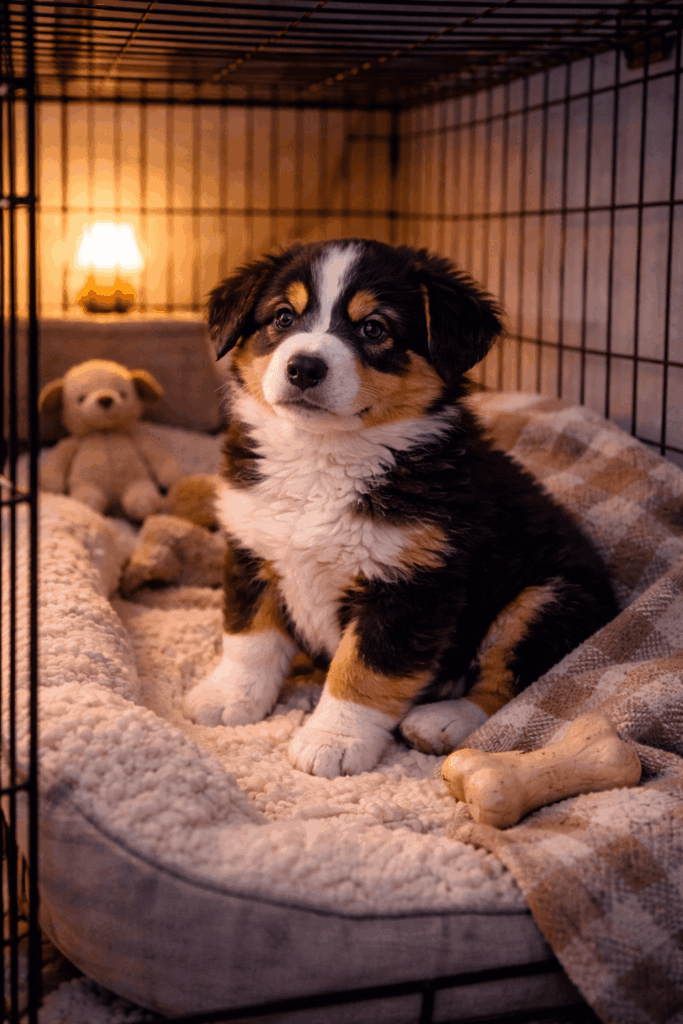
Step 1: Choose the Right Crate Size
The crate should be:
• Large enough to stand and turn
• Not too big
• Comfortable
If the crate is too large, your puppy may potty inside one corner.
Add soft bedding but avoid too many toys at night.
The crate should feel like a calm sleeping area — not a play zone.
Step 2: Introduce the Crate During the Day
Never start crate training only at night.
First:
• Let puppy explore crate during day
• Place treats inside
• Leave door open
• Reward calm entry
Make the crate a positive place before bedtime.
This reduces fear and crying.

Step 3: Create a Calm Bedtime Routine
Routine helps puppies relax.
Before bedtime:
• Short walk
• Final potty break
• Calm play only
• No excitement
After potty, place puppy gently inside crate.
Avoid emotional goodbyes.
Calm energy = calm puppy.
Step 4: Handle Night Crying the Right Way
Some crying is normal in the first few nights.
If puppy cries:
• Wait a few minutes
• Check if potty is needed
• Keep interaction calm
Do NOT:
• Immediately pick up
• Shout
• Reward barking
Respond calmly and consistently.
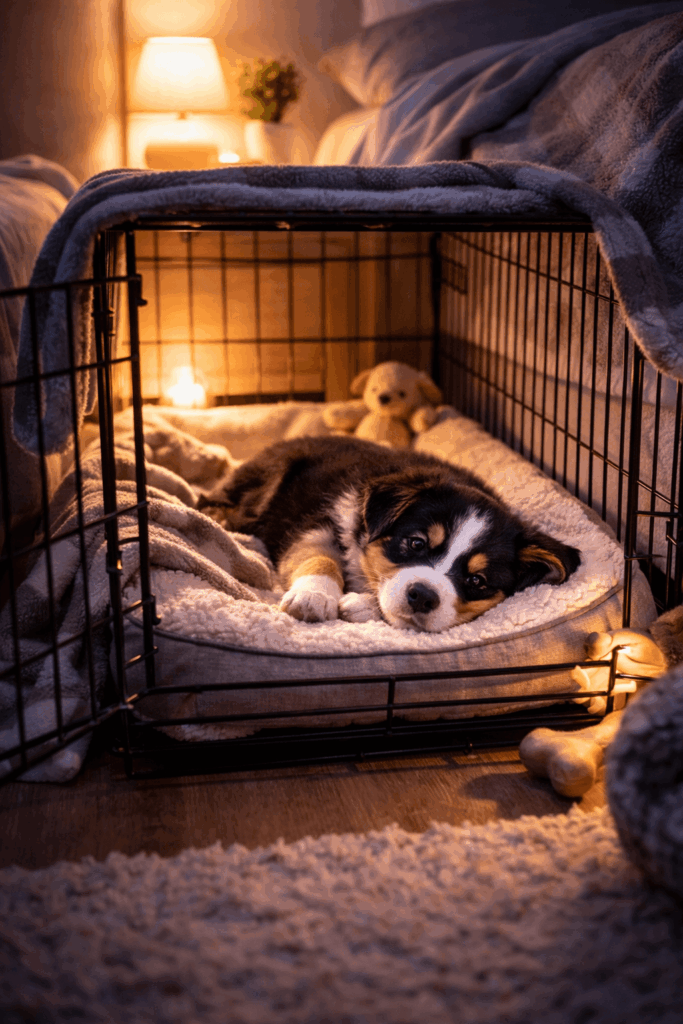
Step 5: Position the Crate Smartly
In early days, keep crate:
• Near your bed
• In quiet room
• Away from noise
Hearing you nearby makes puppies feel secure.
Gradually move crate if needed.
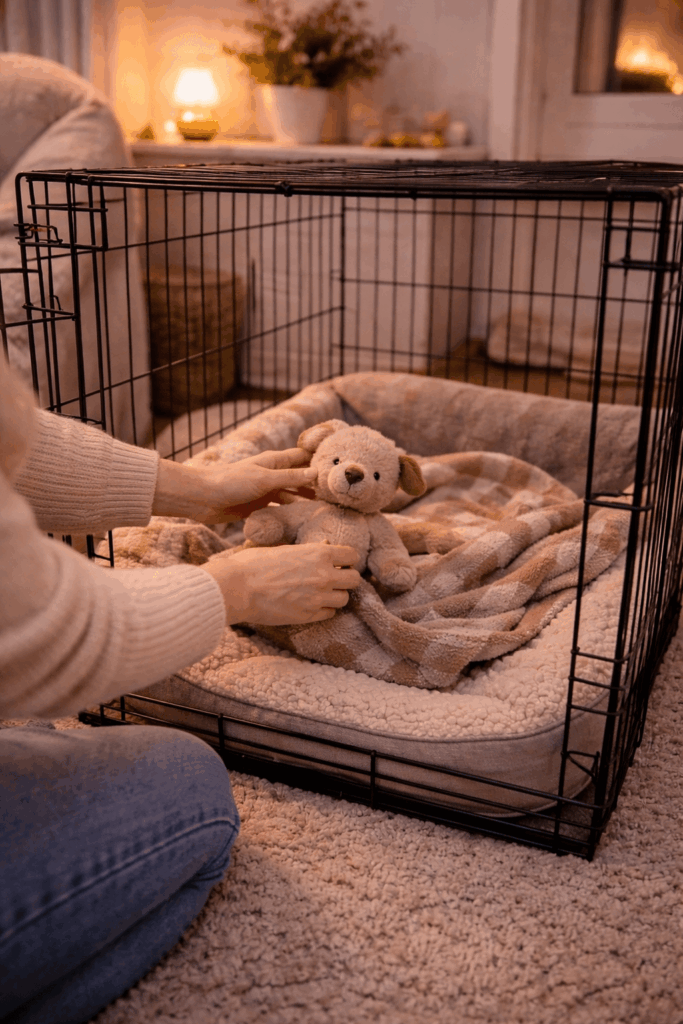
Step 6: Use Comfort Techniques
Helpful methods include:
• Soft blanket
• Safe chew toy
• White noise
• Worn T-shirt with your scent
These reduce anxiety naturally.
Comfort builds confidence.
Common Mistakes in Night Crate Training
Avoid these:
• Using crate as punishment
• Forcing puppy inside
• Skipping bedtime potty
• Inconsistent schedule
• Letting puppy sleep outside crate randomly
Consistency determines success.
How Long Does Night Crate Training Take?
Typical timeline:
First 3 nights: Adjustment phase
1 week: Noticeable improvement
2–3 weeks: Comfortable routine
Every puppy is different.
Patience is essential.
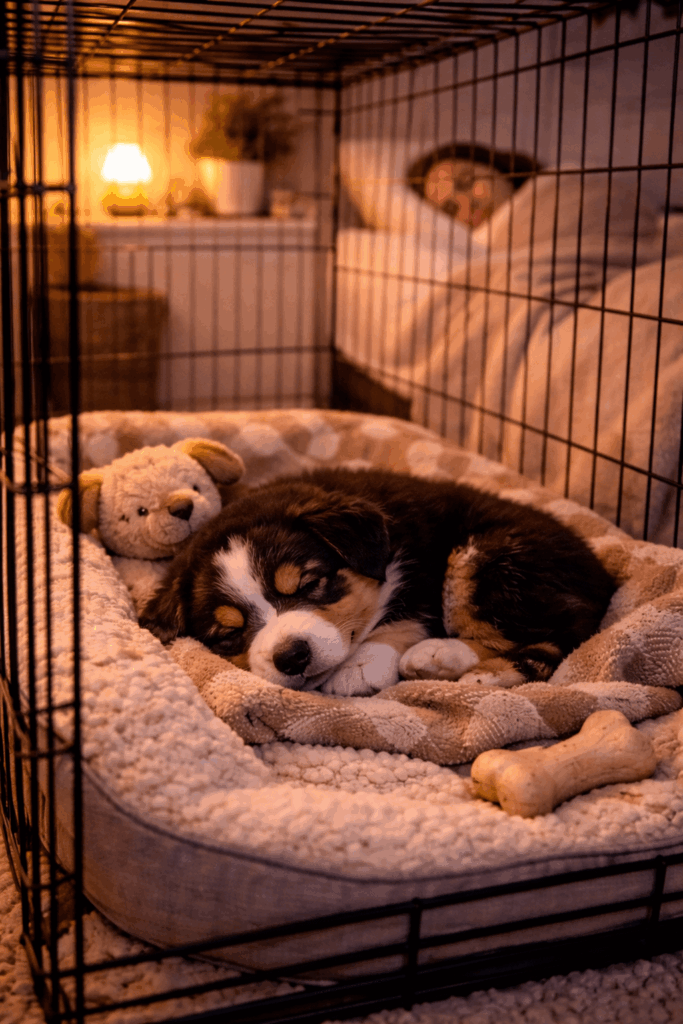
Signs Crate Training Is Working
You will notice:
• Less crying
• Faster sleep
• No night accidents
• Calm behavior
These are positive progress signs.
When Crate Training May Not Be Working
Consult a trainer or vet if:
• Excessive panic continues
• Puppy refuses food
• Severe anxiety signs appear
Rare cases need professional help.
Conclusion: Crate Training at Night Builds Lifelong Discipline
Crate training a puppy at night is one of the most effective ways to build structure and confidence. When done gently, it teaches your puppy independence, improves potty training, and ensures peaceful nights.
Remember:
Your puppy is learning — not misbehaving.
Stay consistent, patient, and calm. Within weeks, your puppy will view the crate as a safe sleeping space.
For better nights, master sleeping through the night, add daytime alone training, follow our separation anxiety plan, and keep a consistent potty training schedule.
Frequently Asked Questions
Is crate training cruel?
No — dogs are natural den animals and most puppies love a cosy crate. It only becomes cruel if used as punishment or for far too many hours.
How long can a puppy stay in a crate at night?
Roughly one hour per month of age plus one — so a 3-month-old needs a break after about 4 hours. Young puppies always need a night-time toilet trip.
What if my puppy cries in the crate?
Make sure needs are met, then wait for a pause before any response — releasing a crying puppy teaches that crying opens doors. Build up crate time gradually with treats and meals inside.
Where should the crate go at night?
Start in your bedroom so your puppy feels safe hearing you breathe. Once nights are calm, you can gradually move the crate to its permanent spot.

