
One of the most common questions new puppy owners ask is also one of the most misunderstood: how much exercise does a puppy actually need? Exercise too little and you get a restless, destructive tornado. Exercise too much and you risk damaging joints that are still growing. The good news is that veterinarians and trainers agree on a simple guideline — the 5-minute rule — that takes the guesswork out of it.
This guide breaks down exactly how much exercise your puppy needs at every age, what counts as exercise, the warning signs of overdoing it, and the mistakes that can harm your puppy’s developing body.
The 5-Minute Rule: The Only Formula You Need
The 5-minute rule is the most widely recommended guideline for puppy exercise:
Give your puppy 5 minutes of structured exercise per month of age, up to twice a day.
That means:
- A 2-month-old puppy: 10 minutes, twice daily
- A 3-month-old puppy: 15 minutes, twice daily
- A 4-month-old puppy: 20 minutes, twice daily
- A 6-month-old puppy: 30 minutes, twice daily
- A 9-month-old puppy: 45 minutes, twice daily
These are ceilings, not targets to push past. If your puppy is happily tired at 20 minutes, stop at 20 minutes — there is no prize for hitting the maximum.
Why the Rule Exists: Growth Plates
Puppies are not small adult dogs. Their bones contain growth plates — soft areas of developing cartilage at the ends of long bones — that don’t fully close until 12 to 18 months of age (and up to 2 years in giant breeds). Until those plates harden into solid bone, they are vulnerable.
Too much repetitive, high-impact exercise — long runs, endless fetch, jumping, stairs — can damage growth plates and contribute to hip dysplasia, elbow problems, and early arthritis. This is why the rule is conservative: it protects the skeleton while the puppy is building it.
At the same time, puppies do need movement. Gentle, age-appropriate exercise builds bone density, muscle, coordination, and confidence. A puppy kept crated all day with no activity can develop weak bones and poor joint development. The goal is the middle ground: enough movement to grow strong, never so much that growing joints take a beating.
Structured Exercise vs. Free Play: Know the Difference
This distinction matters more than most owners realize:
Structured exercise is activity where you set the pace — leash walks, jogs, fetch sessions, agility-style play. This is what the 5-minute rule limits, because your puppy will keep going to match you even when their body is tired.
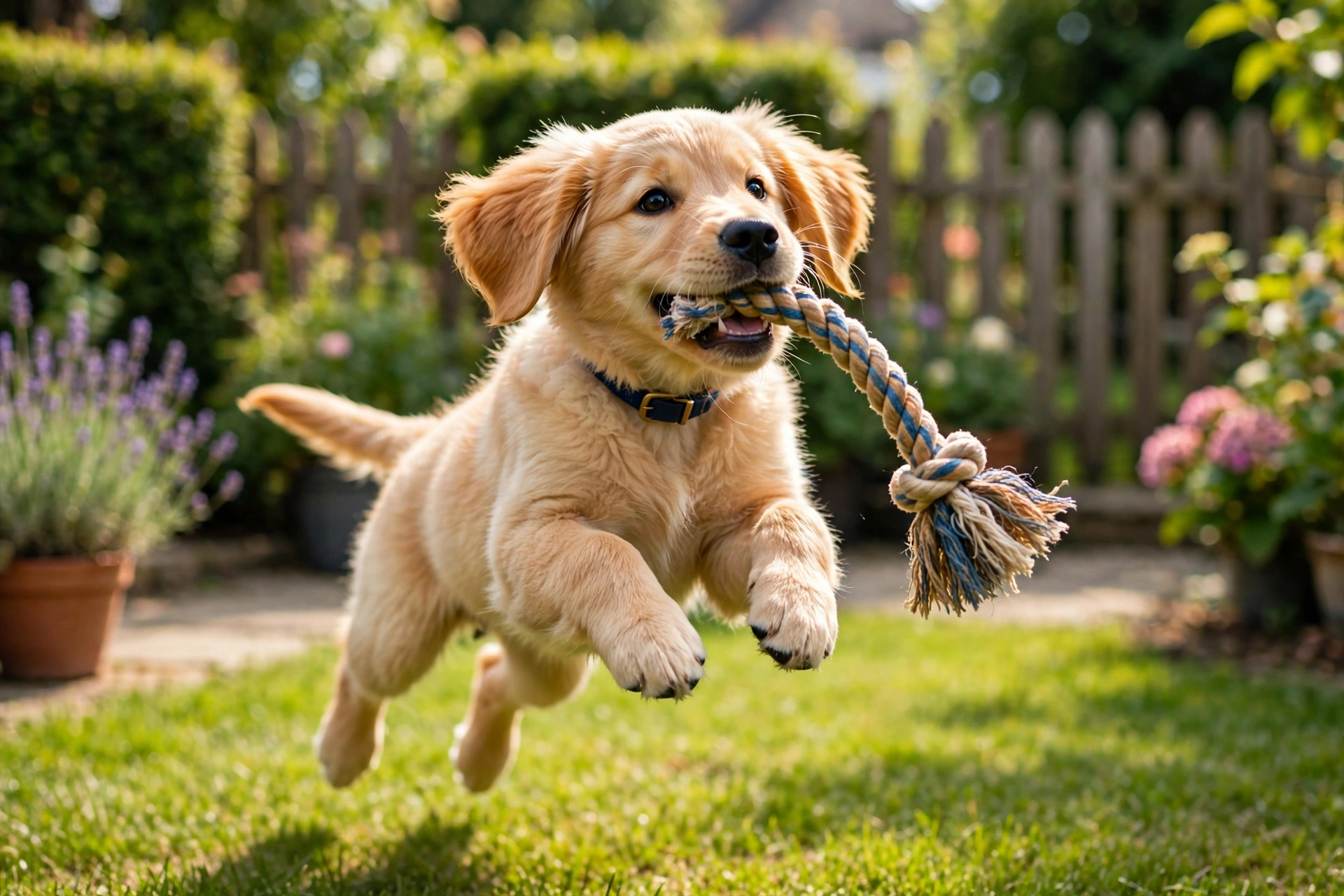
Free play is self-directed — your puppy romping in the yard, wrestling with a toy, playing with another friendly dog at their own speed. When puppies control the pace, they naturally rest when tired: they flop down, sniff, wander off. Free play is much safer and doesn’t need strict timing, though you should still supervise and step in before wild play gets reckless.
The practical takeaway: time the walks, but don’t stress about the backyard zoomies.
What Counts as Exercise for a Puppy?
Exercise isn’t just walks. A balanced puppy routine includes:
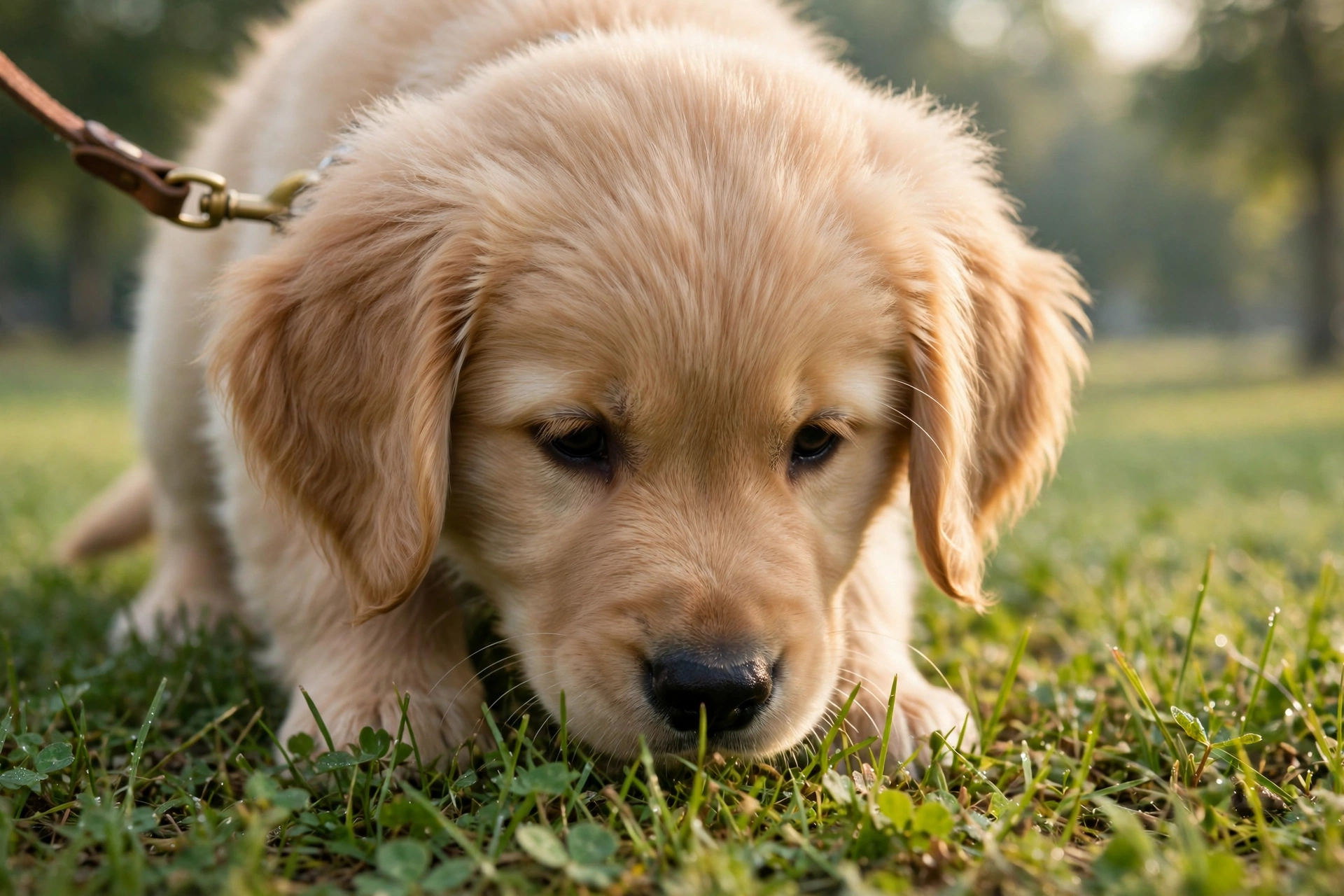
- Leash walks — the backbone of structured exercise; let the puppy sniff freely
- Free play — yard romps, gentle wrestling with toys
- Training sessions — short obedience games burn surprising energy
- Social play — supervised playdates with friendly, vaccinated dogs
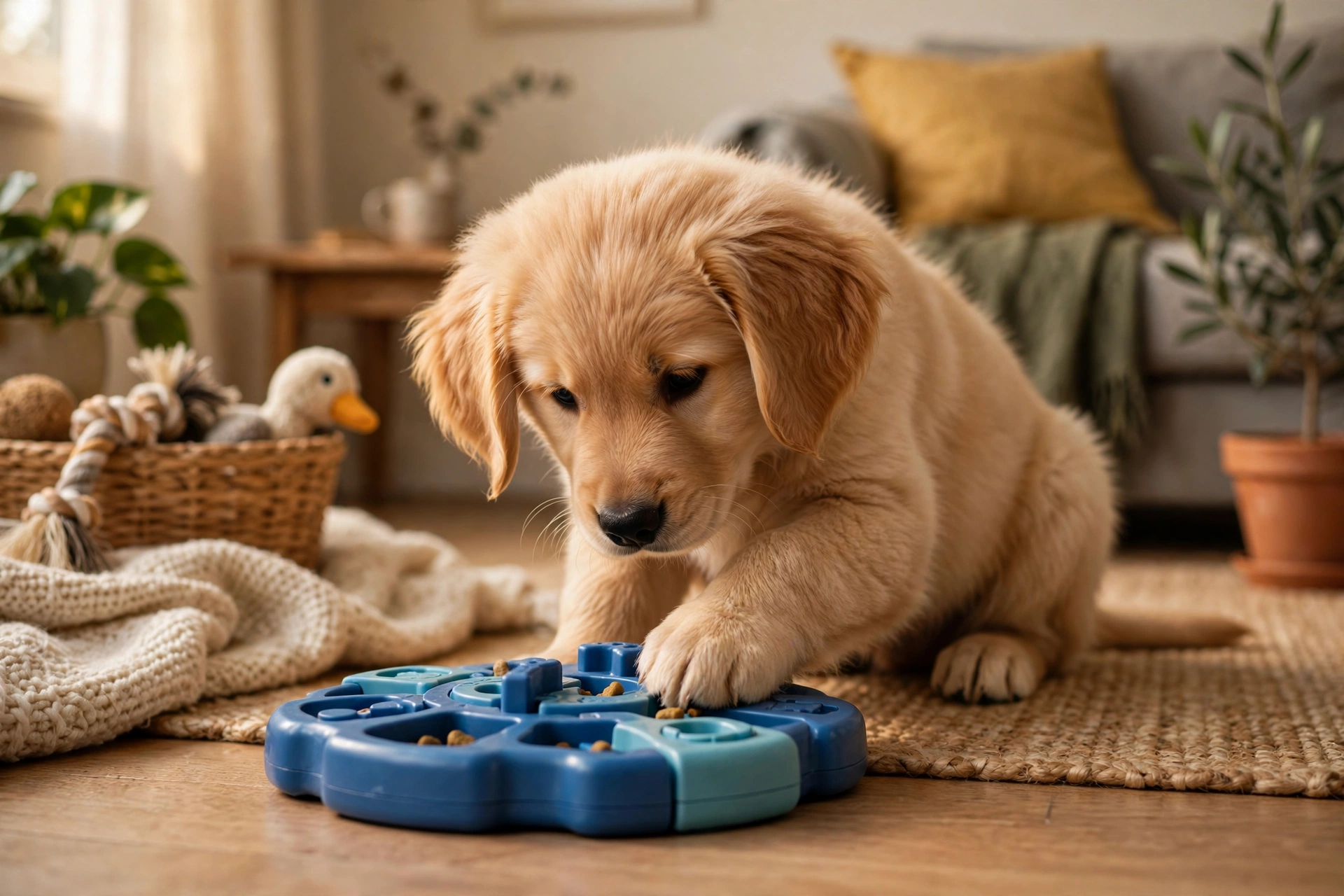
- Mental exercise — puzzle toys, snuffle mats, scent games, hide-and-seek with treats
- Swimming — excellent low-impact exercise once your puppy is comfortable in water (great for joint-sensitive breeds)
Mental stimulation deserves special emphasis. A 10-minute training session or food puzzle can tire a puppy as effectively as a walk — without stressing a single joint. Trainers call sniff-heavy walks “sniffaris” for a reason: nose work is exhausting in the best way.
Puppy Exercise by Age: The Complete Guide
8–12 Weeks: 10 Minutes, Twice a Day
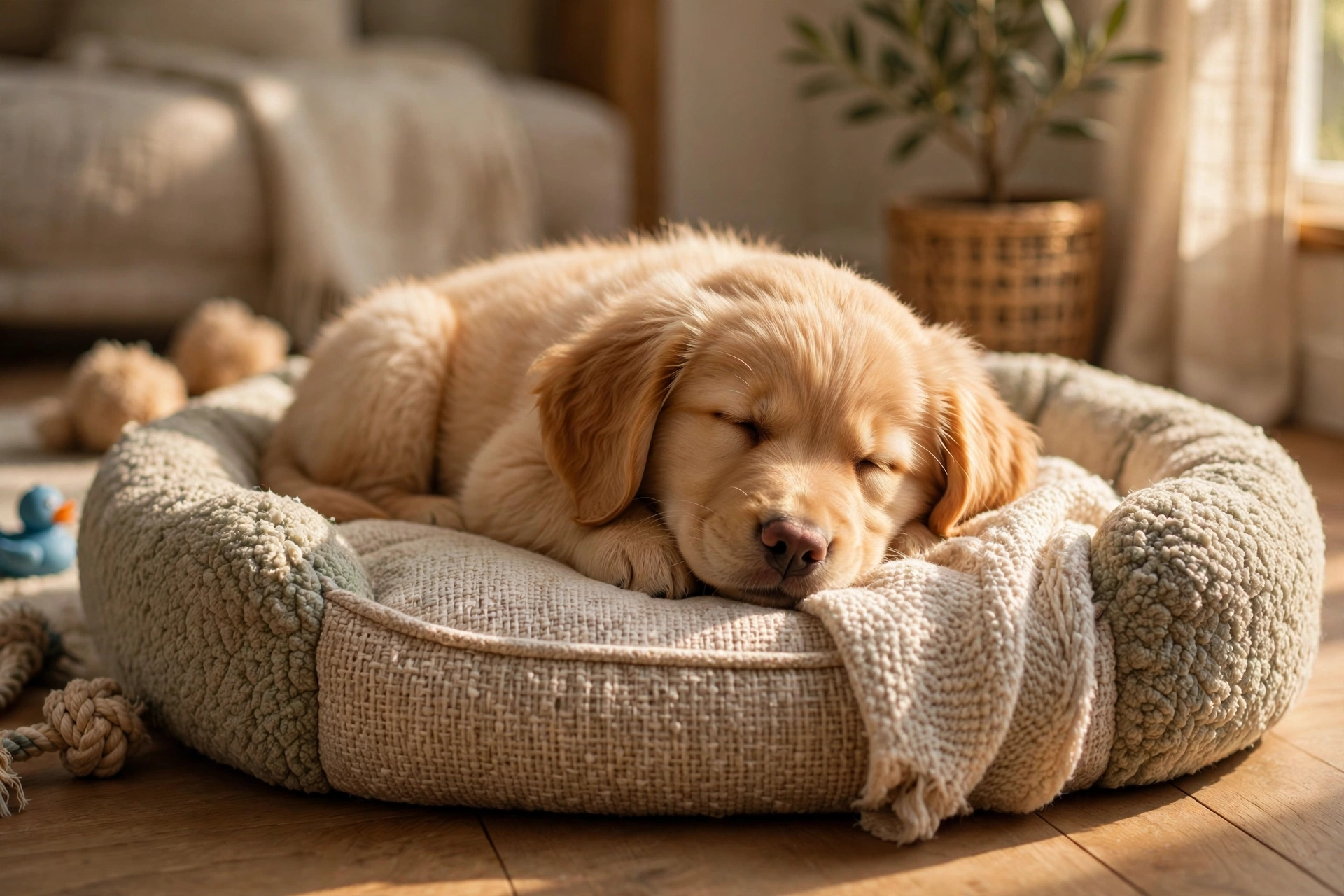
Your new puppy is a baby. At this stage, the world itself is the workout — every new surface, sound, and smell is stimulating. Keep structured walks to about 10 minutes, twice daily, on soft surfaces. Most “exercise” at this age should be gentle indoor play, short training games (name recognition, sit), and supervised exploration. Puppies this young also sleep 18–20 hours a day; protect nap time fiercely.
Note: until vaccinations are complete (around 16 weeks), avoid dog parks and high-traffic dog areas. Carry your puppy through risky areas or stick to your own yard.
3–4 Months: 15–20 Minutes, Twice a Day
Energy ramps up fast at this age. Extend walks to 15 minutes at 3 months and 20 minutes at 4 months, twice daily. This is the golden window for leash manners — loose-leash walking practice doubles as exercise and training. Introduce puzzle feeders and begin short, positive training sessions. Supervised playdates with calm, vaccinated dogs are excellent now.
5–6 Months: 25–30 Minutes, Twice a Day
The “teenage” phase is approaching and energy is high — but growth plates are still wide open, so resist the urge to start jogging or long hikes. Stick to 25–30 minutes of structured exercise twice daily. Add variety: new walking routes for sniffing, beginner trick training, gentle tug games (let the puppy win sometimes, keep it low-key). Swimming is a fantastic addition at this age if introduced positively.
7–9 Months: 35–45 Minutes, Twice a Day
Your puppy looks nearly grown but the skeleton is still maturing. You can extend walks to 35–45 minutes twice daily and introduce slightly more challenging activities — longer sniffaris, fetch with limits (a few short throws, not marathons), and continued training. Still avoid: forced running, repetitive jumping, and long hikes on hard surfaces.
10–12 Months: 50–60 Minutes, Twice a Day
Most medium and small breeds are nearing physical maturity. Hour-long walks twice a day are reasonable, and you can start building toward adult exercise routines. Large and giant breeds still need caution — their growth plates may not close until 18–24 months, so check with your vet before starting running or high-impact sports.
Breed Size Matters: Adjusting the Rule
The 5-minute rule is a starting point, not gospel. Adjust for your puppy’s build:
- Small breeds (Chihuahua, Dachshund, Shih Tzu): often satisfied at or below the rule’s limits. Short legs cover less ground, and these pups tire faster. Watch for lagging behind on walks.
- Medium breeds (Beagle, Cocker Spaniel, Border Collie): the rule fits well, but high-drive working breeds may need extra mental exercise rather than extra miles. A bored Border Collie puppy doesn’t need a longer walk — it needs a job.
- Large and giant breeds (Labrador, German Shepherd, Great Dane): follow the rule strictly, or even stay slightly under it. These puppies grow fastest and their joints carry the most load. This is the group most at risk from over-exercise. Delay running, jumping sports, and long hikes until your vet confirms growth plates have closed.
When in doubt, ask your vet — especially for large-breed puppies, where the stakes are highest.
7 Warning Signs You’re Over-Exercising Your Puppy
Puppies rarely quit on their own — excitement and the desire to stay with you override fatigue. Watch for:
- Lagging behind or lying down on walks — the clearest stop signal
- Excessive panting that doesn’t resolve quickly after stopping
- Stiffness or limping after rest, especially the next morning
- Reluctance to go for walks they previously enjoyed
- Sore, warm joints or yelping when touched after activity
- Extreme hyperactivity after exercise — counterintuitively, an overtired puppy often gets wilder, not calmer (like an overtired toddler)
- Trouble settling — panting and pacing instead of napping after a walk
If you see these signs regularly, cut structured exercise by a third and see if things improve. Persistent limping or stiffness warrants a vet visit — don’t wait.
Signs Your Puppy Needs MORE Exercise
Under-exercised puppies tell you too:
- Destructive chewing, digging, or shredding beyond normal puppy behavior
- Constant nipping and mouthing that training doesn’t dent
- Zoomies at midnight and inability to settle in the evening
- Barking or whining from boredom, not need
- Gaining excess weight
The fix usually isn’t just more walking — it’s more variety. Add a training session, a puzzle feeder, a sniffari, or a playdate before adding miles.
The Mistakes That Harm Growing Joints
- Jogging or running with a puppy before growth plates close — the repetitive impact is the single biggest risk
- Fetch marathons — sprinting, hard stops, and twisting to catch balls stress shoulders, elbows, and hips
- Stairs and jumping — repeated stair climbing and jumping off furniture or car tailgates load developing joints
- Dog park free-for-alls — uncontrolled play with large, rough adult dogs before your puppy can handle it
- “Tiring them out” as a strategy — an exhausted puppy isn’t a trained puppy; overtired pups are harder to train and more injury-prone
- Skipping rest days — growing bodies need recovery; not every day needs to hit the maximum
A Sample Daily Exercise Schedule (4-Month-Old Puppy)
- Morning: 20-minute sniff-heavy walk + 5-minute training game
- Afternoon: 5-minute trick training + snuffle mat
- Evening: 20-minute walk on a new route + gentle tug
- Night: calm chew toy, then bedtime
Total structured exercise: ~40 minutes (within the 20-minutes-twice-daily ceiling). Total stimulation: plenty — without ever stressing growing joints.
Frequently Asked Questions
How much exercise does a 3-month-old puppy need?
About 15 minutes of structured exercise, twice a day. Supplement with free play, short training games, and puzzle toys. At this age, mental stimulation tires a puppy faster than physical exercise.
Can I take my 8-week-old puppy for walks?
Yes, but keep them very short — around 10 minutes — and until vaccinations are complete, stick to low-risk areas like your own yard. Carry your puppy through high-traffic dog areas.
Is it bad to over-exercise a puppy?
Yes. Excessive high-impact exercise before growth plates close (12–18 months, up to 2 years in giant breeds) can damage developing joints and contribute to hip dysplasia and arthritis. Follow the 5-minute rule as a ceiling.
Does playing in the yard count toward the 5-minute rule?
No — self-directed free play where the puppy sets the pace doesn’t count against the structured-exercise limit. Puppies naturally rest when tired during free play. Just supervise and interrupt truly wild play.
My puppy still has endless energy after walks. What should I do?
Add mental exercise, not more miles. Training sessions, puzzle feeders, snuffle mats, and sniff-heavy walks tire a puppy’s brain, which is often what they’re actually craving. An overtired puppy can also look hyper — make sure they’re getting 18–20 hours of sleep.
When can my puppy start running with me?
Wait until growth plates have closed — around 12 months for small/medium breeds and 18–24 months for large/giant breeds. Ask your vet to confirm before starting any running program.
Related reads
- Puppy Training Schedule: What to Teach by Age
- What Age Do Puppies Calm Down? Timeline by Breed Size
- Puppy Sleep Schedule by Age: How Much Sleep Do Puppies Need?

