
You just brought your puppy home, and suddenly the to-do list feels endless: potty training, crate training, teaching commands, stopping the nipping — where do you even begin? A clear puppy training schedule takes the guesswork out of those first months. Instead of teaching random tricks whenever you remember, you follow an age-by-age plan that matches what your puppy’s brain is actually ready to learn.
Puppies go through distinct developmental stages, and each stage has a learning sweet spot. An 8-week-old puppy is a sponge for simple associations like their name and where to potty, but asking that same puppy for a reliable 30-second stay is setting both of you up for frustration. By six months, the picture flips: your puppy can handle real-world distractions but may also start “forgetting” things they knew — completely normal adolescent behavior, not defiance.
This guide gives you a practical puppy training schedule from 8 weeks to 12 months: exactly what to teach at each age, how long sessions should be, and the mistakes that slow most owners down.
Why Training by Age Works Better Than Training by Instinct
Most new owners train reactively: the puppy jumps, so they work on jumping; the puppy pulls, so they work on leash manners. That approach fixes problems after they start. A puppy training schedule works proactively — you teach the right skill just before your puppy needs it.
There are two science-backed reasons age matters. First, the critical socialization window (roughly 3 to 14 weeks) is when puppies form lasting impressions about what is normal and safe. Gentle exposure and positive training during this window pays off for life. Second, a puppy’s attention span and impulse control grow predictably with age. Matching your expectations to that growth curve keeps training fun instead of frustrating — for both of you.
The schedule below assumes a typical puppy coming home at 8 weeks. If you adopted an older puppy, simply start at the stage matching their age and fill in any missed foundation skills alongside.
The Golden Rules for Every Age
Before the age-by-age breakdown, five principles apply from day one to adulthood:
Keep sessions short. A young puppy’s focus lasts about 3 to 5 minutes. Three great minutes beat fifteen sloppy ones. End every session while your puppy still wants more.
Reward what you want. Modern training is built on positive reinforcement: reward the behavior you want to see again, and it grows. Tiny, soft treats work best — your puppy should be able to eat them in one second and stay in learning mode.
Train before meals, not after. A slightly hungry puppy is a motivated puppy. Schedule sessions before breakfast or dinner, and you can even use part of the meal as training rewards.
Be consistent with cues. Pick one word per behavior and stick to it. If “down” means lie down in your house, it cannot also mean “get off the couch.” Everyone in the household must use the same words and rules.
Train everywhere, gradually. A sit in the kitchen is not the same skill as a sit at the park. Once your puppy knows a behavior at home, re-teach it in new places with easier criteria first — this is called proofing, and it is what turns tricks into reliable manners.
8–12 Weeks: Foundation Skills
Welcome home week. Your 8-week-old puppy is learning that you are safe, that the crate is cozy, and that good things happen when they pay attention to you. Keep everything gentle, keep sessions to 3–5 minutes, and train 3–5 times a day — woven into normal life rather than as formal “school.”
Name recognition. Say your puppy’s name in a happy voice; the instant they look at you, mark it (“yes!”) and treat. Repeat a handful of times per session. Within days, that head whip toward you becomes automatic — and it is the foundation of recall later.
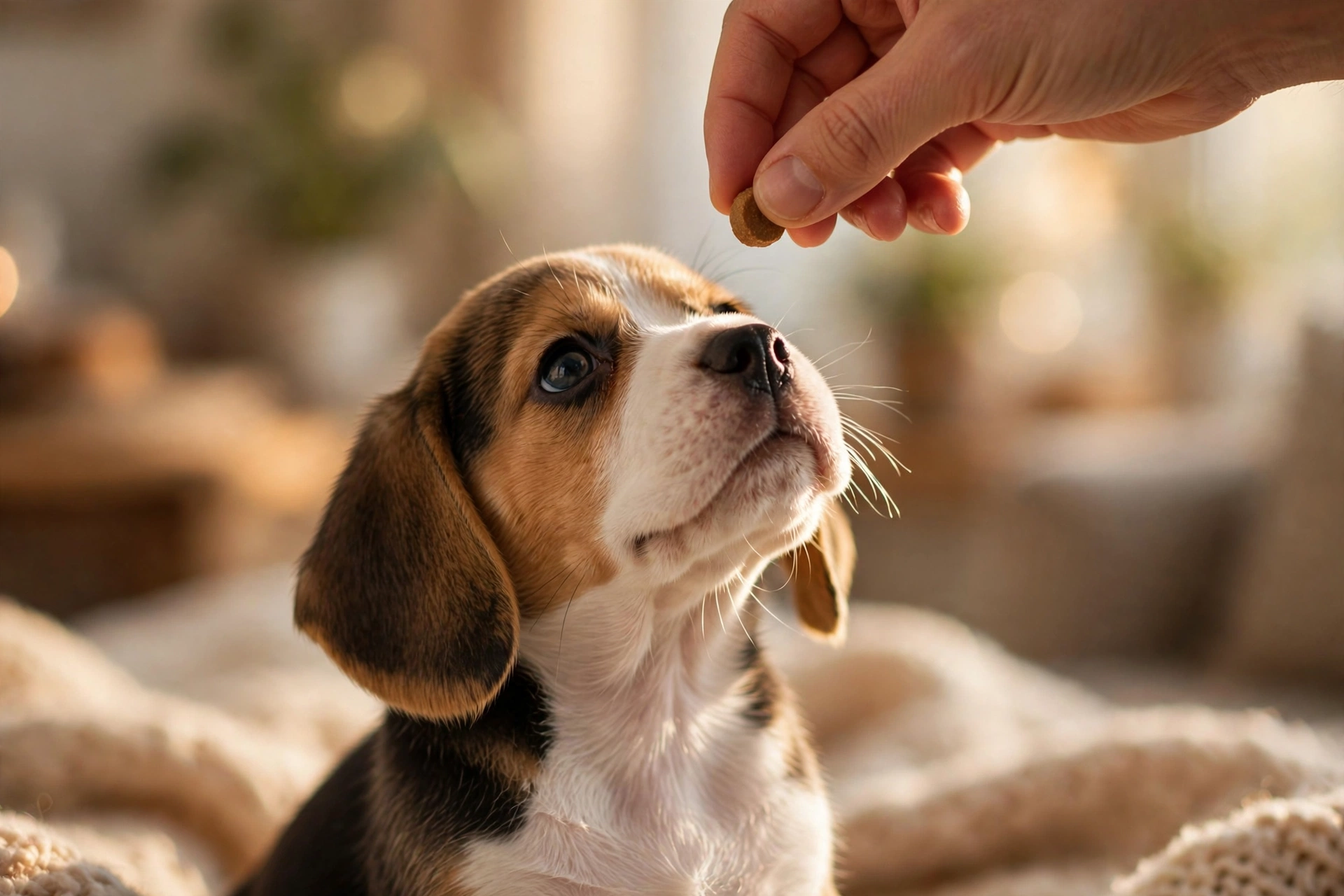
Sit. Hold a treat at your puppy’s nose, then slowly move it up and back over their head. As their nose follows, their bottom drops. Mark and reward the instant it touches the ground. Most puppies learn this in a day or two.
Potty routine. This is the highest-value training of this stage. Take your puppy out after waking, after eating, after playing, and every 1–2 hours in between. Reward every outdoor success within three seconds — that is what builds the habit. Expect accidents; they are a management failure, not a puppy failure.
Crate comfort. Feed meals in the crate, toss treats inside randomly, and keep the door open at first. The crate should predict good things, never be used as punishment. A puppy who loves their crate gives you safe naps and easier nights.
Bite inhibition. Puppy teeth are needles, and mouthing is normal. When teeth touch skin, yelp or say “ouch” calmly, withdraw attention for a few seconds, then redirect to a toy. You are teaching jaw control, not punishing play.
Gentle handling. Daily, touch paws, ears, belly, and mouth while feeding treats. This 2-minute game makes future vet visits and grooming dramatically easier.
3–4 Months: Core Commands and Early Manners
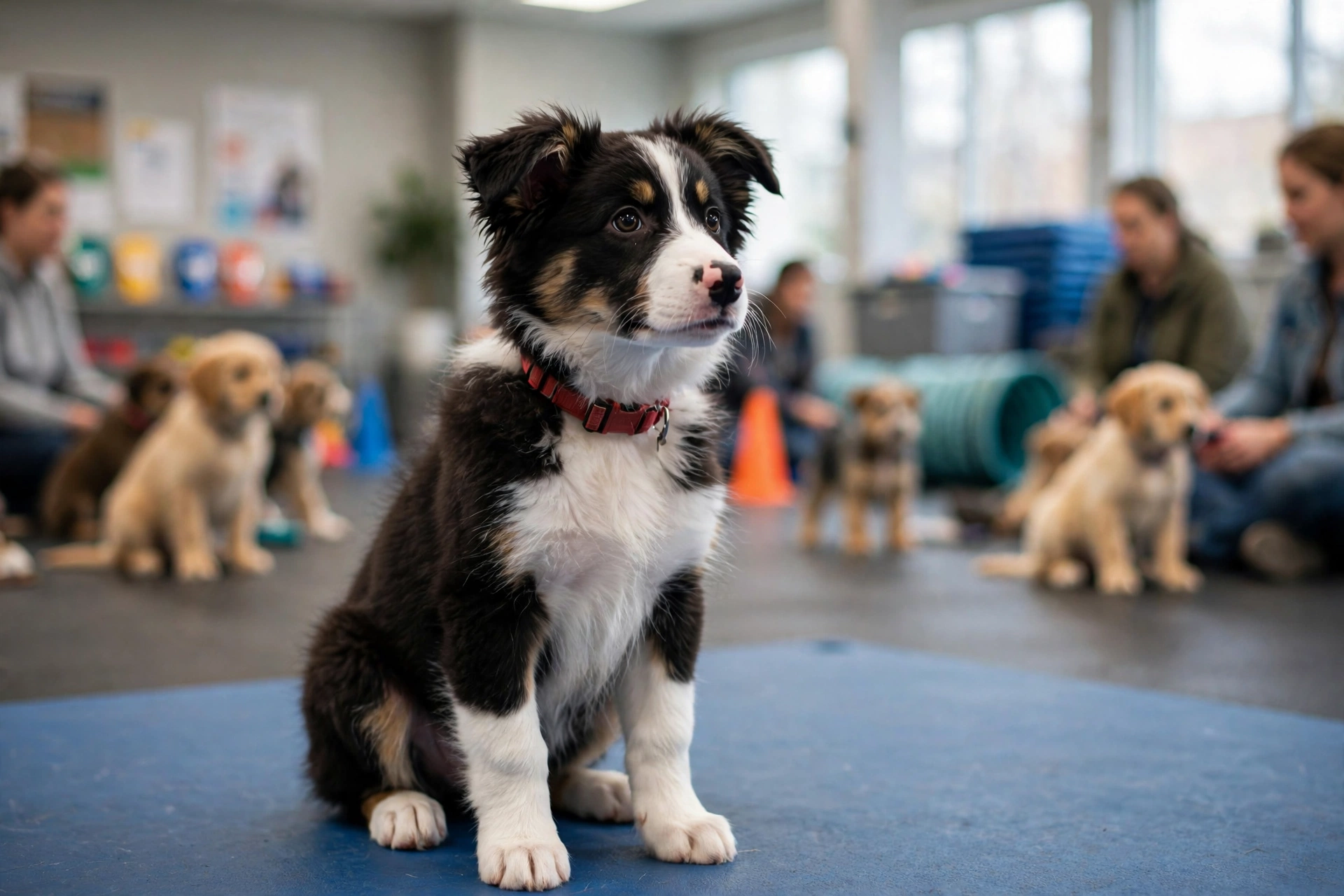
Your puppy’s brain is now ready for real obedience foundations. Sessions can stretch to 5–8 minutes, 3–4 times daily. This is also peak socialization time — pair training with calm, positive exposure to new sights, sounds, people, and vaccinated dogs.
Down. From a sit, lure the treat from nose to floor between the paws, then slide it slightly forward. Reward the elbows-down position. If your puppy pops up, you moved too fast — reward smaller steps.
Stay (short). Ask for a sit, say “stay,” wait one second, then reward before they move. Build duration in tiny increments: 2 seconds, 5 seconds, 10 seconds across days, not minutes. Release with a clear word like “okay” or “free” so your puppy learns stay ends on your cue, not their decision.
Come (recall). This one can save your puppy’s life, so make it the best word in their vocabulary. Crouch down, say their name plus “come” in an excited voice, and reward with a jackpot — several treats, praise, a party — every single time they reach you. Never call your puppy for anything unpleasant. Practice indoors and in safe enclosed spaces only.
Leave it. Hold a treat in your closed fist. When your puppy sniffs and eventually backs off, mark and reward from your other hand. This impulse-control game becomes invaluable outdoors, where the ground is full of things puppies should not eat.
Drop it. Trade, don’t grab. Offer a high-value treat in exchange for whatever is in their mouth, say “drop it” as they release, then reward. Chasing a puppy to pry their jaws open teaches them to run away with treasures.
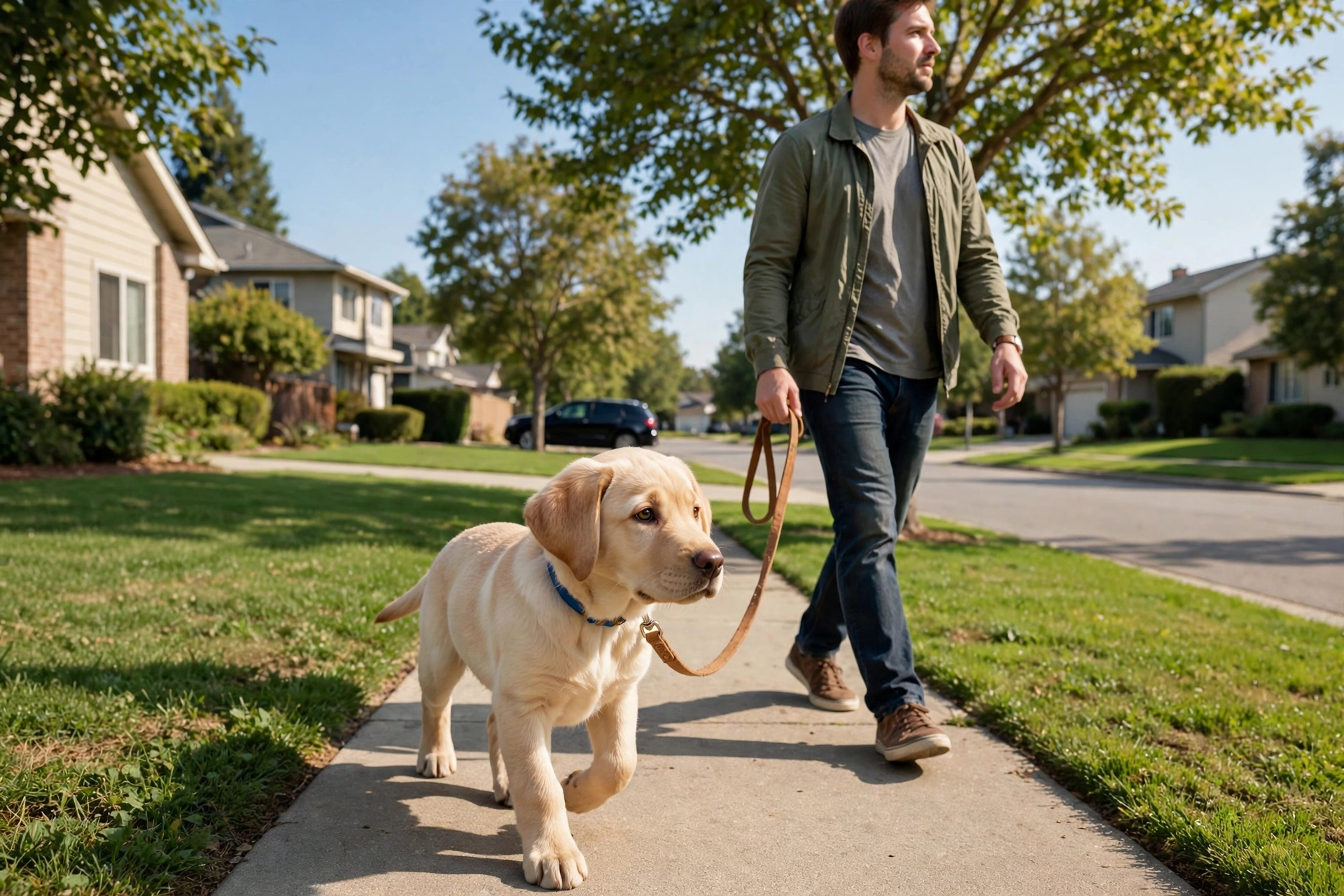
Loose-leash foundations. Let your puppy wear the harness and leash indoors first, rewarding calm acceptance. Then practice in boring areas: every time the leash goes slack, mark and treat. Keep early “walks” to 5–10 minutes — at this age, sniffing and exploring is the point.
5–6 Months: Proofing and Real-World Manners
Teething is ending, energy is climbing, and your puppy now looks like a small dog with big-dog opinions. Sessions can run 8–12 minutes. The theme of this stage is proofing: taking behaviors your puppy “knows” at home and rebuilding them amid distractions.
Heel and polite walking. Reward your puppy for choosing the position near your left leg. Start indoors, then move to the driveway, then the sidewalk. Expect this to take weeks — loose-leash walking is genuinely one of the hardest skills for dogs, because the whole world is more interesting than your leg.
Longer stay with distance and distraction. Add one challenge at a time: longer duration, then a step back, then a mild distraction like a tossed toy. If your puppy fails twice in a row, you raised the difficulty too fast — drop back to where they succeed.
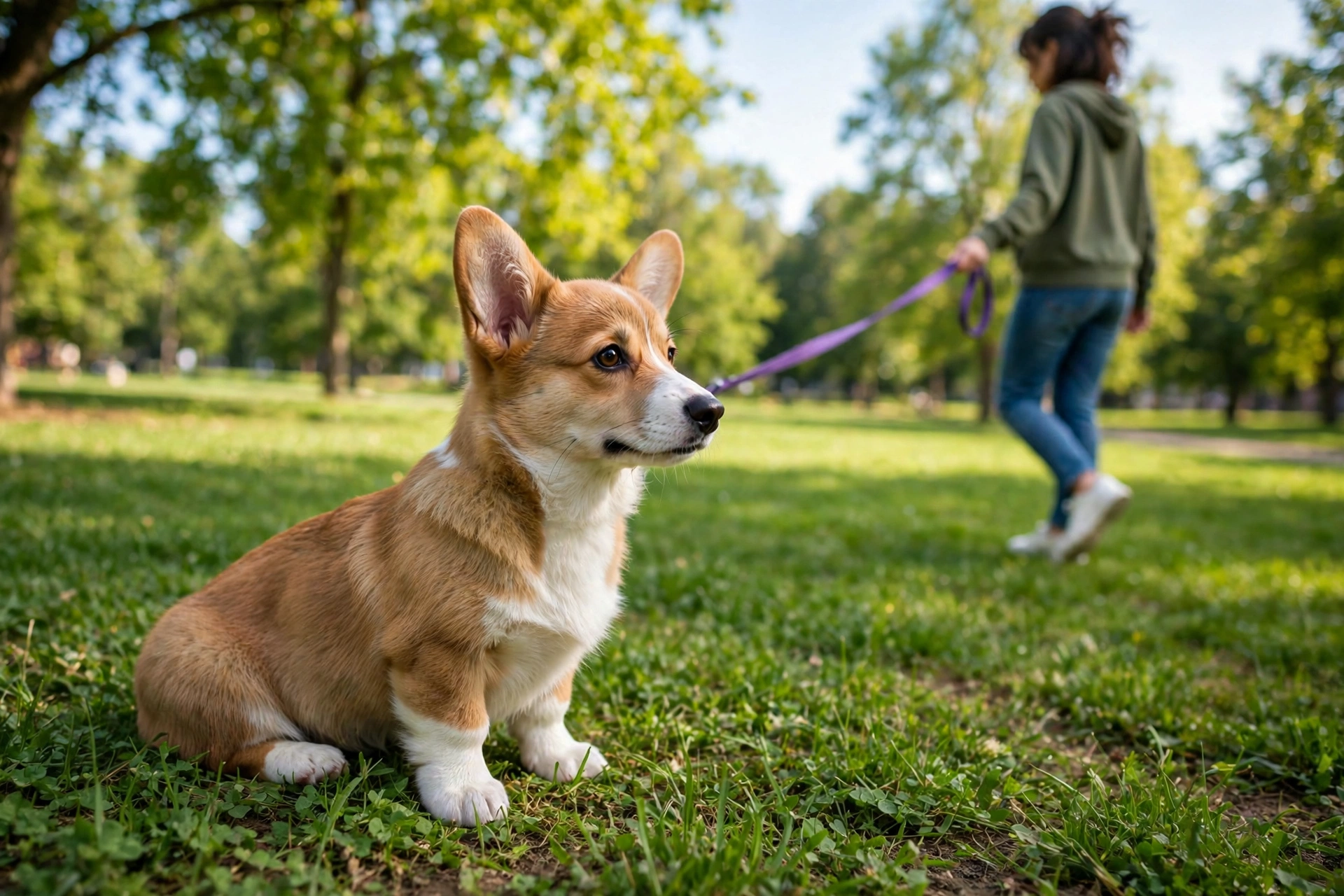
Place (go to mat). Teach your puppy to go to a mat or bed and settle there. This is a superpower for real life: dinner time, visitors at the door, coffee shop patios. Reward calm lying on the mat, gradually extending the time before release.
Polite greetings. Jumping up gets attention, so it repeats. Teach an incompatible behavior: four paws on the floor earns greeting, jumping makes the person turn away. Enlist friends to practice — consistency from visitors matters as much as your own training.
A note on adolescence. Around 5–6 months many puppies seem to “forget” their training. This is normal adolescent brain development, not stubbornness. Stay patient, keep rewarding, and avoid the temptation to get sterner — harsh corrections during this phase damage trust without teaching anything.
6–12 Months: Advanced Reliability
Your puppy is now an adolescent or young adult dog. Training shifts from teaching new behaviors to making known behaviors reliable anywhere. Sessions can be 10–15 minutes, and much of your training now happens woven into daily life rather than in formal sessions.
Recall with distractions. Practice come in increasingly challenging environments: from sniffing, from playing with a friend’s dog, from a distance. Keep the jackpot rewards flowing — recall should always pay better than the distraction.
Proofed stay and wait. Build stays up to a minute or more, with you out of sight briefly. “Wait” at doors, curbs, and car doors becomes a safety habit: your dog pauses until released instead of bolting.
Settle on cue. Beyond “place,” teach a general settle — lying calmly while life happens around them. Cafes, parks, family gatherings: a dog who can switch off in stimulating environments is a joy to take anywhere.
Fun skills and sports foundations. This is the perfect age to explore what your dog loves: trick training (spin, shake, roll over), scent games, agility foundations, or fetch with rules. Fun training keeps adolescents engaged and strengthens your bond far more than drilling obedience alone.
Public manners. Practice everything in pet-friendly stores, outdoor markets, and busy sidewalks. Short, successful outings beat long overwhelming ones. If your dog struggles, increase distance from triggers and reward calm behavior — you are training emotional control, not just commands.
Puppy Training Schedule at a Glance
| Age | Main focus | Key skills to teach | Session length |
|---|---|---|---|
| 8–10 weeks | Bonding and foundation | Name, sit, potty routine, crate comfort, gentle handling | 3–5 min, 3–5x daily |
| 10–12 weeks | Early learning | Down, bite inhibition, leave it (foundations), leash acceptance | 3–5 min, 3–5x daily |
| 3–4 months | Core commands | Stay, come, drop it, loose-leash basics, polite play | 5–8 min, 3–4x daily |
| 5–6 months | Proofing and manners | Heel, longer stay, place, polite greetings | 8–12 min, 2–3x daily |
| 6–9 months | Real-world reliability | Recall with distractions, wait at doors, settle on cue | 10–15 min, 1–2x daily |
| 9–12 months | Advanced and fun | Public manners, tricks, sport foundations | 10–15 min, woven into life |
Mistakes to Avoid at Each Stage
Training too long. The number one beginner mistake. A puppy who checks out at minute six is not being stubborn — their brain is full. Always quit while you are ahead.
Repeating cues. Saying “sit, sit, SIT!” teaches your puppy that the first two sits are meaningless. Say it once, then help them succeed — lure, wait, or reset — instead of nagging.
Only training when there is a problem. If the only time you practice recall is when your puppy is running toward danger, recall becomes poisoned. Practice in easy moments so the behavior is strong when it counts.
Skipping proofing. “My puppy knows sit!” — in the kitchen, with treats visible, zero distractions. Real reliability means practicing in ten locations with gradual distractions. Budget as much time for proofing as for initial teaching.
Punishing adolescence. The 5–8 month regression looks like defiance but is developmental. Owners who switch to harsh corrections here usually get a fearful, less responsive dog — not a better-trained one.
Inconsistency between people. If one family member allows couch access and another forbids it, your puppy is not confused about the rule — there is no rule. Agree on the words, the rules, and the rewards as a household.
Frequently Asked Questions
When should I start training my puppy?
Start the day your puppy comes home — typically at 8 weeks. Early training means name recognition, potty routine, crate comfort, and gentle handling, not formal obedience drills. Puppies are learning from every interaction from day one, so you might as well make those interactions intentional.
How long should puppy training sessions be?
Match the session to the age: 3–5 minutes at 8–12 weeks, 5–8 minutes at 3–4 months, 8–12 minutes at 5–6 months, and 10–15 minutes from 6 months on. Multiple short sessions per day beat one long session at every age. End each session with a success, while your puppy still wants more.
What is the first thing I should teach my puppy?
Teach name recognition first — it powers everything else, especially recall. Then sit, because it gives you a polite alternative to jumping and a foundation for stay. In parallel, run the potty routine and crate comfort from day one; those management skills matter more than any trick in the first weeks.
Can I train my puppy before vaccinations are finished?
Yes — train at home freely from day one. The vaccination waiting period restricts where your puppy’s paws go in public, not whether they can learn. Indoor training, carry-out socialization, and classes requiring proof of vaccination are all safe options before the final shots.
My 6-month-old puppy suddenly stopped listening. What happened?
Welcome to adolescence. Between roughly 5 and 8 months, hormonal changes and brain remodeling make many puppies seem to forget their training. It is developmental, not defiance. Keep sessions fun, keep rewarding good choices, lower your criteria temporarily, and ride it out — consistency now pays off enormously by 10–12 months.
Do I have to use treats forever?
No, but fade them gradually, not suddenly. Once a behavior is reliable, switch from treating every repetition to rewarding randomly — intermittent rewards actually strengthen behavior. Replace food with real-life rewards too: a sit earns the leash being clipped on, a wait earns the door opening, a recall earns a game of tug. The goal is a dog who works for life’s paychecks, not just cookies.
Related reads
- What Age Do Puppies Calm Down? Timeline by Breed Size
- Puppy Sleep Schedule by Age: How Much Sleep Do Puppies Need?
- When Can Puppies Go Outside? Safe Age & Rules

