
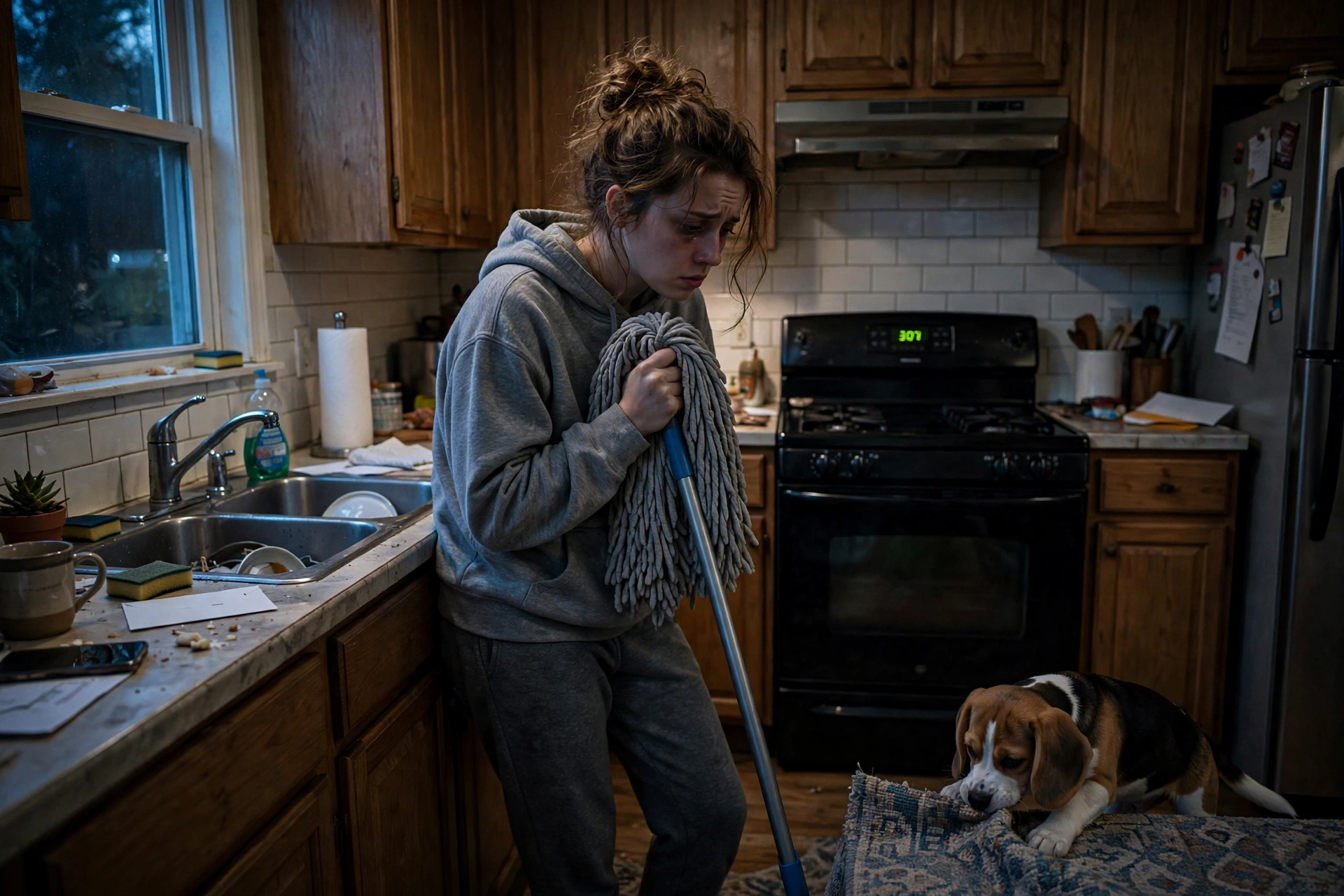
It’s 3 a.m. You’re standing in the kitchen in your pajamas, mopping up the third accident of the night, while your new puppy — the one you dreamed about for months — chews the corner of your rug like it’s a personal mission. And a thought slides in that makes your stomach drop: what have I done?
If that thought has crossed your mind, hear this first: you are not a bad person, you are not a bad dog owner, and you are absolutely not alone. What you’re feeling has a name — the puppy blues — and it hits a huge number of new puppy owners, including experienced ones who “should have known better.”
So let’s answer the big question honestly: is it normal to regret getting a puppy? Yes. It’s one of the most normal things in dog ownership. Let’s talk about why it happens, how long it lasts, and how to get through it.
What Are the Puppy Blues?
The puppy blues describe a wave of regret, anxiety, sadness, or overwhelm that hits after bringing home a new puppy. It’s not a clinical diagnosis — it’s a widely recognized pattern that veterinarians, trainers, and behaviorists see constantly. The feelings can range from mild “what did I get myself into?” doubts to tearful, can’t-sleep, can’t-eat distress.
Here’s what surprises most people: the puppy blues often hit hardest the people who prepared the most. You read the books, bought the crate, puppy-proofed the house — and still feel blindsided. That’s because no amount of reading truly prepares you for the lived reality: the sleep deprivation, the constant vigilance, the biting, the accidents, and the sudden loss of your old, free life.
It also hits experienced owners. People on their second or third dog still report puppy blues, because every puppy is different and every life stage is different. A puppy at 25 is a different experience than a puppy at 40 with a full-time job and kids.
The key thing to understand: feeling regret doesn’t mean you made the wrong choice. It means you’re adjusting to one of the biggest lifestyle disruptions a person can voluntarily take on — and adjustment is uncomfortable by nature.
Why Puppy Blues Happen: 7 Real Causes
1. Sleep Deprivation
This is the number one driver, and it’s not a small thing. A young puppy needs to go out every 2–3 hours, including overnight. Weeks of broken sleep wreck your mood, your patience, your immune system, and your ability to think straight. Almost everything feels worse — including your puppy — when you’re running on four hours of fractured sleep. Many owners say the blues lifted dramatically the week their puppy finally started sleeping through the night.
2. Your Whole Life Just Changed Overnight
One day you could leave the house spontaneously, sleep in, work late, meet friends. The next day, your schedule belongs to a small creature with a bladder the size of a walnut. That loss of freedom and spontaneity triggers genuine grief for your old life — even when you love the puppy. It’s okay to miss your old life and love your new one at the same time.
3. The Biting, Chewing, and Accidents
Puppy teeth are needles. Puppies explore the world with their mouths, which means your hands, your clothes, your furniture, and your shoes are all targets. Add house-training accidents, 3 a.m. wake-ups, and chewed belongings, and it’s easy to start wondering if your puppy is somehow “worse” than everyone else’s. They’re not — this is textbook normal puppy behavior. It just doesn’t feel normal at 2 a.m.
4. Guilt and Self-Doubt
“Am I doing this right?” “Am I ruining my dog?” “Everyone else’s puppy seems fine — what’s wrong with me?” New owners drown in guilt: guilt for feeling frustrated, guilt for crate training, guilt for leaving the puppy alone, guilt for the regret itself. Social media makes it worse — nobody posts their 4 a.m. breakdowns, only the cute nap photos. You’re comparing your behind-the-scenes to everyone else’s highlight reel.
5. Unrealistic Expectations
Many people expect the movie version: instant bond, puppy follows you adoringly, training clicks in days. The reality: the first weeks are mostly management, not magic. The deep bond you’re imagining? It usually builds over months, not days. When reality doesn’t match the fantasy, disappointment rushes in — and it gets mislabeled as “I chose the wrong dog.”
6. Financial Stress
Puppies are expensive in ways that sneak up on you: vet visits, vaccinations, quality food, crates, toys, training classes, the shoes they destroyed. If money is already tight, every unexpected bill can spike the regret. This is practical stress, not a character flaw.
7. Isolation
Raising a puppy can be lonely. You turn down plans because you can’t leave the puppy. You’re too tired to see friends. Meanwhile, non-dog people don’t really get it (“it’s just a puppy!”). That isolation amplifies every negative feeling. Finding even one person who understands — a friend with a dog, an online puppy community — can make a real difference.
How Long Do Puppy Blues Last?
There’s no fixed timeline, but there is a common pattern. For most owners, the worst of it hits in the first 2–4 weeks and starts lifting as three things happen: the puppy begins sleeping longer stretches, a routine forms, and training starts producing small wins (the first accident-free day feels like a miracle).
Many owners report a real turning point somewhere between 8 weeks and 4–6 months of ownership — not because the puppy is “done” being a puppy, but because you have adapted. You’ve learned your puppy’s patterns, the biting has faded, house training is mostly reliable, and the bond has had time to grow roots.
Be honest with yourself, though: some people feel waves of it for several months, especially with high-energy breeds or during adolescence (6–14 months), when a “trained” puppy can seem to forget everything overnight. That’s normal too.
The trend that matters: is the general direction improving? Bad days will still happen — even years in — but if the overall trajectory is upward, you’re moving through it, not stuck in it.
7 Ways to Cope With the Puppy Blues
1. Protect Your Sleep Like It’s Your Job
Because it basically is. Take shifts with a partner or family member if you can. A well-rested owner is a patient owner, and patience is the whole game. If you’re solo, it’s okay for the puppy to cry in the crate for a bit while you get one unbroken stretch — consult your vet or trainer on safe approaches, but don’t martyr your health.

2. Lower the Bar — Then Lower It Again
Your house doesn’t need to be spotless. The puppy doesn’t need a perfect training session today. “Good enough” parenting raises perfectly good dogs. Pick one small win per day (one calm crate entry, one successful potty trip outside) and let the rest be messy.
3. Get Help Before You Break, Not After
This is the big one people resist. Ask a friend to puppy-sit for two hours. Hire a dog walker for the midday break. Book one session with a certified trainer — not because you’ve failed, but because an expert can normalize what you’re seeing and give you a plan. Relief isn’t weakness; it’s strategy.
4. Build a Routine and Cling to It
Puppies thrive on predictability, and so do overwhelmed humans. Fixed wake, feed, walk, play, nap, and bedtime slots remove a hundred daily decisions. Enforced naps are magic — an overtired puppy is a nightmare puppy, and most young puppies need 18–20 hours of sleep a day. A crate-trained puppy napping on schedule will transform your evenings.
5. Remember: You’re in the Hardest Chapter
It genuinely gets easier. The biting stops. The nights get quiet. The accidents end. Nearly every owner who pushed through says the same thing: “I’m so glad I didn’t give up.” When you’re in it, borrow hope from the thousands of owners who stood exactly where you’re standing and came out the other side obsessed with their dog.

6. Stop Comparing
Unfollow the accounts that make you feel inadequate. Every puppy in those perfect videos had a 3 a.m. phase — you just didn’t see it. Compare your puppy only to your puppy last week. That’s the only progress that matters.
7. Take Care of the Human, Not Just the Puppy
Eat real food. Step outside alone for ten minutes. Call a friend. The puppy will survive a short break, and you’ll come back a better owner for it. You cannot pour patience from an empty cup.
When It’s More Than the Blues: Get Support
Puppy blues usually fade as life stabilizes. But sometimes what you’re feeling runs deeper — and that’s important to name without shame.
Reach out to a mental health professional or your doctor if:
- The hopelessness doesn’t lift after several weeks, even as the puppy situation improves
- You can’t sleep, eat, or function even when you get the chance
- You feel persistent dread, panic, or detachment — from the puppy or from life generally
- You’re having thoughts of harming yourself
A new puppy is a major life stressor, and major stressors can trigger or worsen anxiety and depression — conditions that deserve real support, not just “tough it out” advice. Getting help is not admitting defeat as a dog owner. It’s taking care of yourself the way you’d take care of your dog: promptly, kindly, and without judgment.

Thinking About Rehoming? Read This First
Let’s say the hardest thing out loud: some people do decide a puppy isn’t workable — severe allergies, a landlord reversal, a health crisis, finances collapsing. If you’re there, you deserve honesty, not shame.
First, wait if you can. Most puppy blues peak early and fade. Decisions made at 3 a.m. in week two are rarely the decisions you’d make in month four. Give it time unless there’s a genuine emergency.
Second, know that responsible rehoming exists. If after real time and real effort it’s truly not working, finding your puppy a great home through a reputable rescue or breed-specific organization is a responsible, loving choice — far kinder than years of mutual misery. A good rescue will take the puppy back or help rehome; that’s literally what they’re for.
But be honest about which situation you’re in. The vast majority of “I want to rehome” feelings in the early weeks are puppy blues, not a genuinely unworkable situation — and the vast majority of owners who ride it out are deeply glad they did. The dog snoring on your feet a year from now will feel like a different animal from the tiny chaos gremlin keeping you up tonight. Same dog. Different chapter.
Frequently Asked Questions
Is it normal to regret getting a puppy?
Yes — extremely normal. A large share of new puppy owners experience regret, anxiety, or sadness in the early weeks. It’s called the puppy blues, and it usually fades as routines form and the puppy matures. Feeling it says nothing bad about you.
How long do the puppy blues last?
The worst typically hits in the first 2–4 weeks and eases over the following months. Many owners feel a real turning point between 2 and 6 months of ownership as sleep improves, training clicks, and the bond deepens. The key is whether the overall trend is improving.
Why do I feel sad after getting a puppy I wanted?
Because wanting something and adjusting to it are different things. Sleep deprivation, loss of freedom, constant demands, guilt, and shattered expectations combine into a perfect storm — even when you love the puppy. Your feelings are about the transition, not about the dog.
Do puppy blues mean I should rehome my puppy?
Not usually. Puppy blues are a phase; rehoming is permanent. Most early “I can’t do this” feelings fade with time, routine, and support. Only consider rehoming after real time has passed and for genuine, lasting reasons — and do it responsibly through a reputable rescue if so.
Can experienced dog owners get puppy blues too?
Absolutely. Every puppy is different, and your life circumstances change between dogs. Plenty of second- or third-time owners report being blindsided by the blues with a new puppy.
When should I talk to someone about how I’m feeling?
If hopelessness, dread, or inability to function persists for weeks even as things improve — or if you have thoughts of harming yourself — reach out to a mental health professional or your doctor promptly. Puppy blues fade; deeper struggles deserve real support.
Related reads
- Puppy Sleep Schedule by Age: How Much Sleep Do Puppies Need?
- What Age Do Puppies Calm Down? Timeline by Breed Size
- Puppy Training Schedule: What to Teach by Age

