
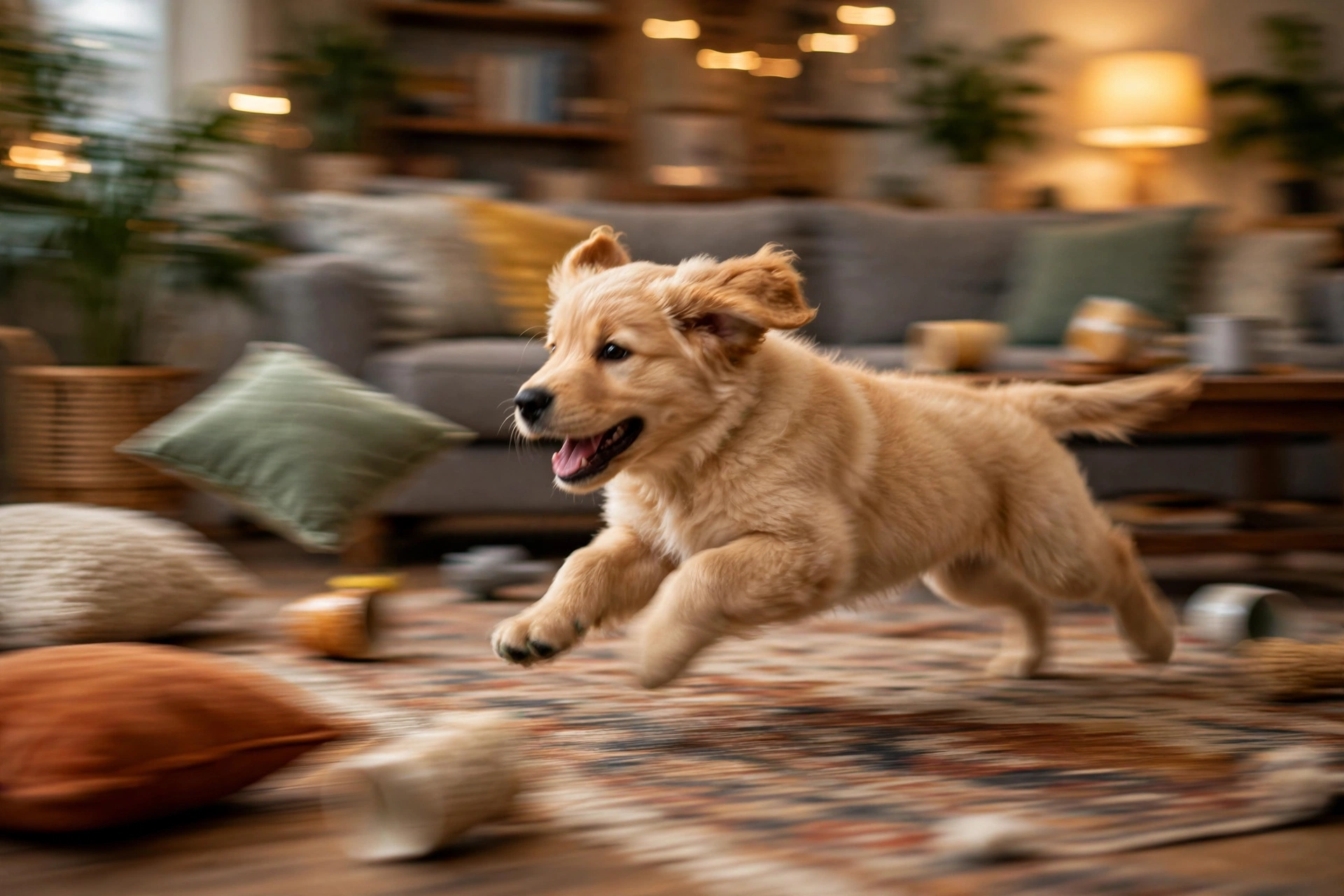
One moment your puppy is peacefully chewing a toy — the next they’re tearing around the house at full speed, ears flat, eyes wild, ricocheting off the sofa like a furry pinball. Congratulations: you’ve just witnessed the zoomies.
Funny as they are, zoomies leave many new owners asking: why does my puppy get the zoomies, and is it normal? The short answer: yes, completely normal — and scientists even have a technical name for it. Let’s break down what FRAPs are, what triggers them, how to tell happy zoomies from stressed ones, and how to keep your puppy safe mid-craze.
What Are Zoomies? (FRAPs Explained)
“Zoomies” is the nickname for what animal behaviorists call FRAPs — Frenetic Random Activity Periods. That’s the technical term for sudden, intense bursts of energy where a dog sprints in circles, spins, bounces, play-bows, and darts around with zero apparent purpose.
They’re not random at all, really. FRAPs are a natural pressure valve: a way for dogs to discharge built-up physical energy or emotional tension in one glorious explosion. Puppies get them more than adult dogs simply because they have more energy to burn and less impulse control to contain it. Episodes usually last just a few minutes, often ending as abruptly as they began — with the puppy flopping down for a well-earned rest.
6 Common Zoomie Triggers
1. Pent-Up Energy
The classic cause. A puppy that’s been napping, crated, or cooped up indoors builds energy like a shaken soda bottle. The moment they’re released — out of the crate, off the leash, into the yard — pop. Regular exercise and play dramatically reduce these eruptions.
2. Excitement and Happiness
You walk through the door. A favorite human visits. The leash comes out. Pure joy needs an outlet, and for a puppy that outlet is running laps at top speed. These are the happiest zoomies of all — ears up, loose wiggly body, often with play bows mixed in.
3. After a Bath
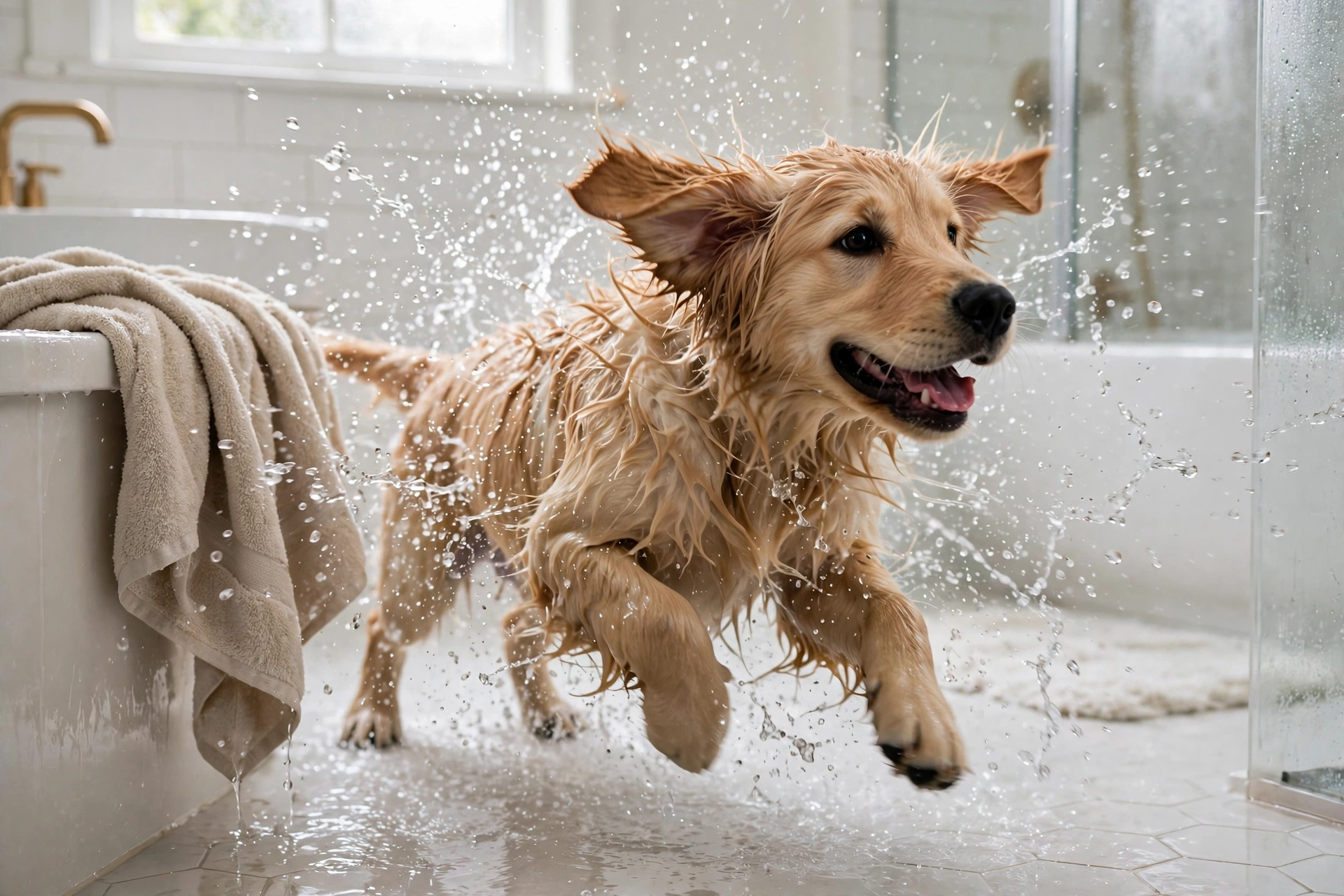
Post-bath zoomies are legendary. Your freshly washed puppy explodes out of the tub and tears around the house. Experts believe this is part celebration (“that ordeal is OVER!”), part stress release, and part an instinctive attempt to dry off and get that weird wet feeling gone.
4. After Pooping
Yes, really — many dogs zoom right after doing their business. The leading theory: it’s relief plus a burst of feel-good endorphins. Some also believe it’s an instinctive “leave the scene quickly” behavior inherited from wild ancestors avoiding predators near their scent.
5. Mornings, Evenings, and the “Witching Hour”
Dogs are naturally more active at dawn and dusk, and many puppies have a predictable daily “witching hour” — often early evening — when the crazies reliably strike. If your puppy zooms every night at 7 PM, that’s not misbehavior; it’s their internal clock.
6. Stress or Tension Release
Zoomies aren’t always happy. After intense concentration (a training session), a scary encounter, or an overstimulating situation, puppies may zoom to shake off stress — the canine equivalent of taking a deep breath after a tense meeting. Watch the body language (more on that below).
Happy Zoomies vs. Stressed Zoomies: How to Tell
Most zoomies are joyful, but learning to read the difference matters:
Happy zoomies look like:
- Loose, wiggly, bouncy body
- Play bows (front down, rear up)
- Ears in a neutral position, soft eyes
- May grab a toy and parade it
- Easily interrupted — they’ll pause if you call them
Stressed or overtired zoomies look like:
- Tense, frantic movement — more “fleeing” than playing
- Whale eyes (whites of eyes showing), pinned ears, tucked tail
- Can’t be interrupted or redirected
- Happen right after something scary or overstimulating
- Often paired with nipping, jumping, or humping
Happy zoomies: sit back and enjoy. Stressed zoomies: calmly guide your puppy to a quiet space, offer a chew or a sniff mat, and let their nervous system settle. Never punish either kind — punishment adds stress to a behavior that’s fundamentally about releasing it.

Are Zoomies Safe? How to Keep Your Puppy Safe
Zoomies themselves are harmless, but a 20-pound missile at full speed can cause accidents. A few safety basics:
- Clear the runway. Move sharp-edged furniture, secure rugs that slide, and close doors to staircases before the daily witching hour hits.
- Choose safe surfaces. Zooming on grass or carpet is fine; full-speed sprints on slick tile or hardwood can injure growing joints. Lay down runners or a rug in the main zoomie corridor.
- Don’t chase. Chasing a zooming puppy turns it into a game and teaches them that running away from you is fun — the opposite of what you want for recall training. Let them run it out, or lure them with a toy instead.
- Watch the mouth. Overtired zoomers sometimes graduate to nipping. If teeth come out, the zoomies are over — calmly end the session with a boring timeout, not drama.
- Puppy-proof the height. Zooming puppies launch off sofas and beds without a thought for landing. Block access to high furniture during peak zoomie times.
How to Manage (Not Eliminate) the Zoomies
You can’t — and shouldn’t — train zoomies out of a puppy entirely. They’re healthy. But you can make them less chaotic:
- Meet exercise needs proactively. A puppy with regular walks, play, and training has less pressure to vent. Follow age-appropriate exercise limits — overtired puppies zoom harder.
- Add mental stimulation. A 10-minute sniff game or puzzle feeder tires a puppy’s brain more than you’d expect, and mentally tired puppies zoom less frantically.
- Build a predictable routine. Puppies with consistent sleep, meal, and play schedules have fewer surprise eruptions — and you’ll know exactly when the witching hour hits so you can plan for it.
- Teach an off-switch. Practice calm behaviors (settle on a mat, “place”) daily when your puppy is already calm. Over time, you’ll be able to cue relaxation even as excitement builds.
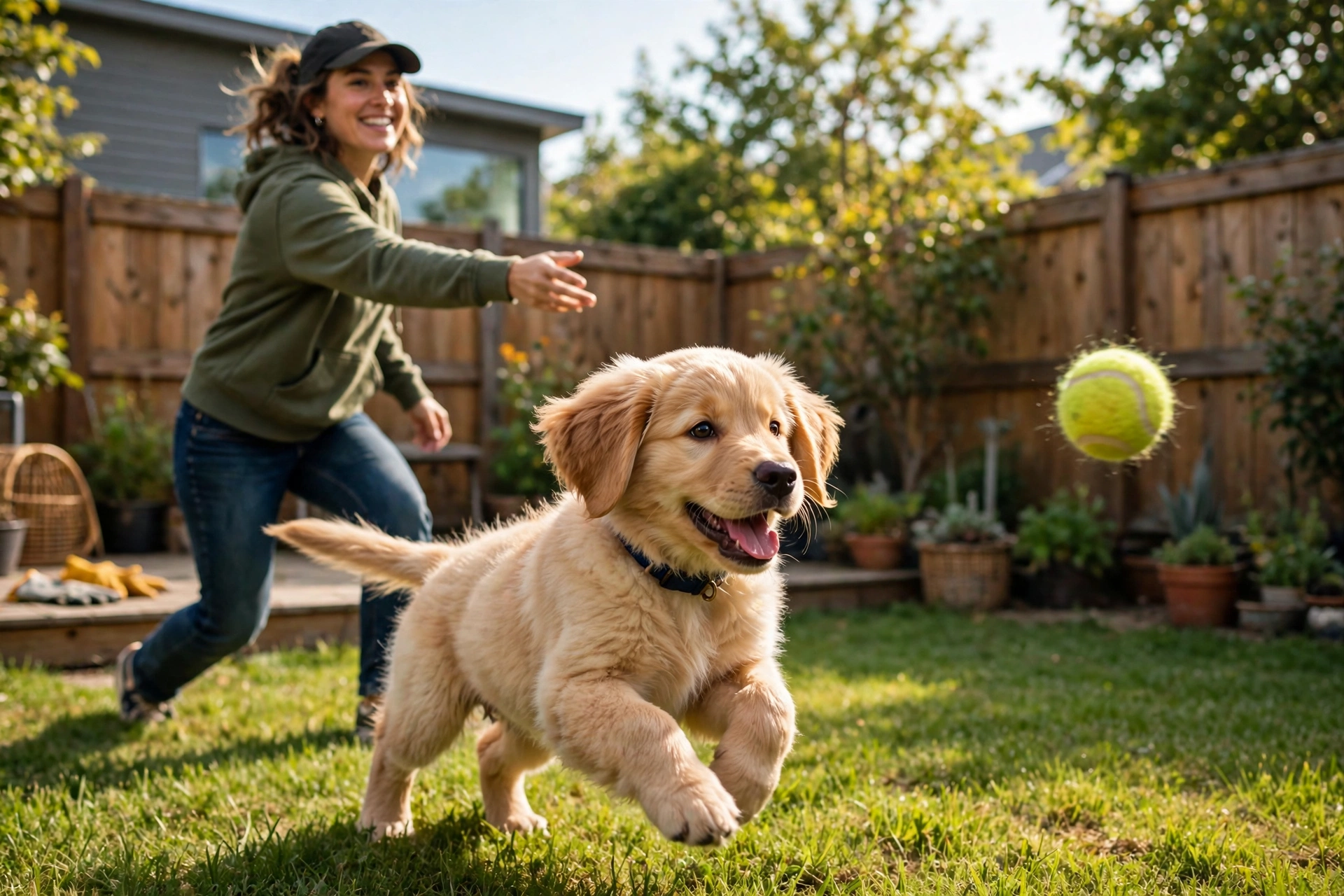
- Give zoomies a legal venue. When you see the pre-zoomie glint in their eye, head to the yard or a safe room and let them rip. A puppy with an approved zoomie zone destroys fewer living rooms.
When Should You Worry About Zoomies?
Almost never — but consult your vet or a certified behaviorist if:
- Zoomies are constant and frantic throughout the day (not in bursts)
- Your puppy can’t settle at all, even after adequate exercise and sleep
- Zoomies always pair with aggression, resource guarding, or panic behaviors
- There’s a sudden dramatic change in frequency or intensity
- Zoomies are accompanied by repetitive behaviors like tail chasing or flank sucking
Nonstop, uninterruptible hyperactivity can occasionally signal anxiety disorders, lack of stimulation, or (rarely) medical issues — worth a professional opinion, not an internet diagnosis.
Frequently Asked Questions
Why does my puppy get zoomies after a bath?
It’s a mix of relief that the bath is over, stress release, and an instinct to shake off the wet feeling. Post-bath zoomies are one of the most universal dog behaviors — totally normal.
Why does my puppy get zoomies after pooping?
Most likely a rush of relief and feel-good endorphins. Some experts also point to an ancestral instinct to move away from their scent quickly. Either way: normal, healthy, and a little funny.
Do puppies grow out of zoomies?
They get less frequent and less intense as dogs mature and develop better impulse control — but many adult dogs still get occasional FRAPs, especially high-energy breeds. Enjoy them while they’re at peak chaos.
Should I stop my puppy’s zoomies?
Don’t punish or forcibly stop happy zoomies — they’re a healthy energy release. Do manage the environment for safety, and redirect or calm things down if the zoomies turn frantic, nippy, or destructive.
Why does my puppy get zoomies every night at the same time?
That’s the “witching hour” — dogs are naturally more active at dawn and dusk, and puppies often develop a predictable daily burst. A consistent routine (plus an evening play session before the witching hour) smooths it out.
Can zoomies be a sign of anxiety?
Sometimes. Zoomies after something scary or overstimulating are stress release, not joy. Look at the body language: tense, frantic, uninterruptible zoomies mean your puppy needs calm-down help, not more excitement.
Related reads
- How Much Exercise Does a Puppy Need? The 5-Minute Age Rule Explained
- Puppy Sleep Schedule by Age: How Much Sleep Do Puppies Need?
- What Age Do Puppies Calm Down? Timeline by Breed Size

