
Adopted a wonderful adult dog who keeps having accidents in the house? Or maybe your loyal senior has started forgetting his housetraining? Here’s the good news first: you absolutely can potty train an older dog. Old dogs really can learn new habits — it just takes a slightly different approach than the one you’d use with an 8-week-old puppy.
Learning how to potty train an older dog is one of the most rewarding things you’ll do together. Most “accidents” aren’t defiance — they’re confusion, old habits, anxiety, or medical issues. Once you understand why it’s happening and follow a clear, patient method, most older dogs get reliably housetrained within 2–4 weeks.
If you’re searching for how to potty train an older dog, you’re probably dealing with one of two situations: a newly adopted adult who’s still figuring out the rules of your home, or a beloved senior whose reliability has slipped. Both are fixable, and neither means your dog is “too old to learn.” Dogs learn at every age — what changes with age isn’t the ability to learn, but the baggage they carry: years of different rules, possible health issues, and ingrained routines.
This guide walks you through the vet-first 7-step method that works for adopted adults, rescue dogs, and seniors alike — no punishment, no frustration, just a plan. Follow it as written for the first two weeks before judging results; consistency in the early days is what makes the whole thing work.
Step Zero: Rule Out Medical Issues First
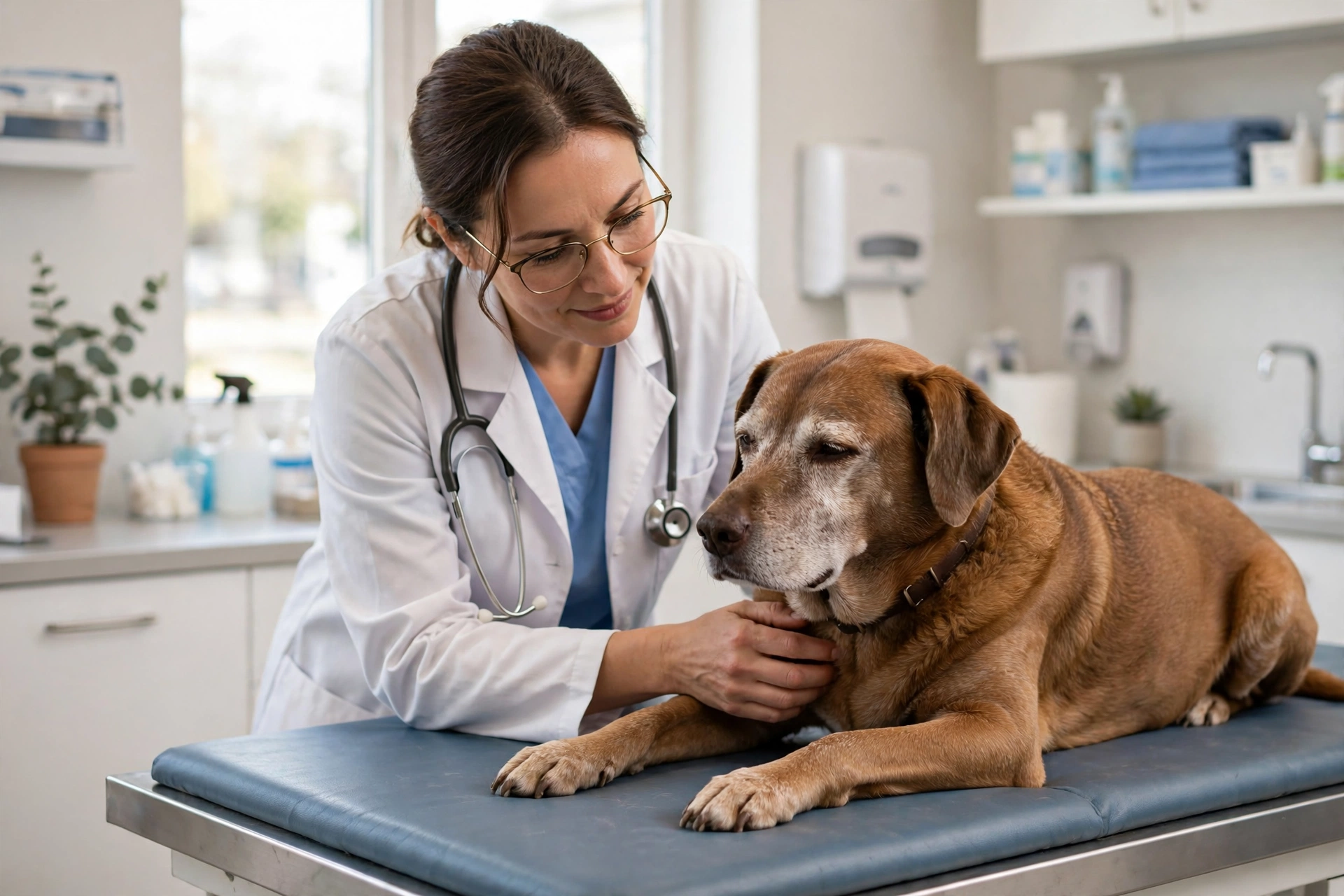
Before you change a single thing about your routine, book a vet visit. This is the most skipped — and most important — step in potty training an older dog. A surprising number of “housetraining problems” in adult and senior dogs are actually medical problems wearing a disguise:
- Urinary tract infections (UTIs) — cause sudden urgency and frequent accidents, even in previously housetrained dogs.
- Kidney disease or diabetes — increase thirst and urination dramatically.
- Canine cognitive dysfunction (doggy dementia) — can make a senior dog genuinely forget housetraining.
- Arthritis or mobility pain — the dog knows he should go outside, but the stairs or the cold hurt too much.
- Hormone-responsive incontinence — common in spayed females; leaks happen while sleeping, not from lack of training.
If your dog was reliably housetrained and suddenly started having accidents, treat it as a medical question first, training question second. No training method fixes a UTI. Once your vet gives the all-clear (or treatment is underway), you’re ready to train with confidence.
Why Older Dogs Have Accidents (It’s Rarely Spite)
Understanding the why behind the accidents changes everything about how you respond. Here are the most common reasons:
1. He was never fully housetrained
Many rescue and shelter dogs lived outdoors, in kennels, or in homes where nobody taught them. Going inside isn’t a “bad habit” — it’s simply all he’s ever known. You’re not fixing a problem; you’re teaching a brand-new skill.
2. Old environment, old rules
A dog rehomed from another family may have been allowed to use pee pads, a doggy door, or a specific room. Your house has different rules, and nobody explained them to him yet.
3. Marking, not emptying
Small amounts of urine on vertical surfaces (furniture legs, door frames) — especially in newly adopted males — is marking, a communication behavior, not a housetraining failure. It needs a slightly different approach: management plus neutering discussions with your vet.
4. Anxiety and stress
New home, new smells, new people — rehoming is one of the most stressful events in a dog’s life. Stress loosens bladders. Dogs with separation anxiety often have accidents specifically when left alone, which is a clue the problem is emotional, not educational.
5. Age-related changes
Senior dogs may simply need more frequent breaks. An 11-year-old bladder isn’t a 2-year-old bladder. Adjusting your expectations — and your schedule — is training too.
What You’ll Need Before You Start
Gather these before day one. Having everything ready removes 90% of the frustration:
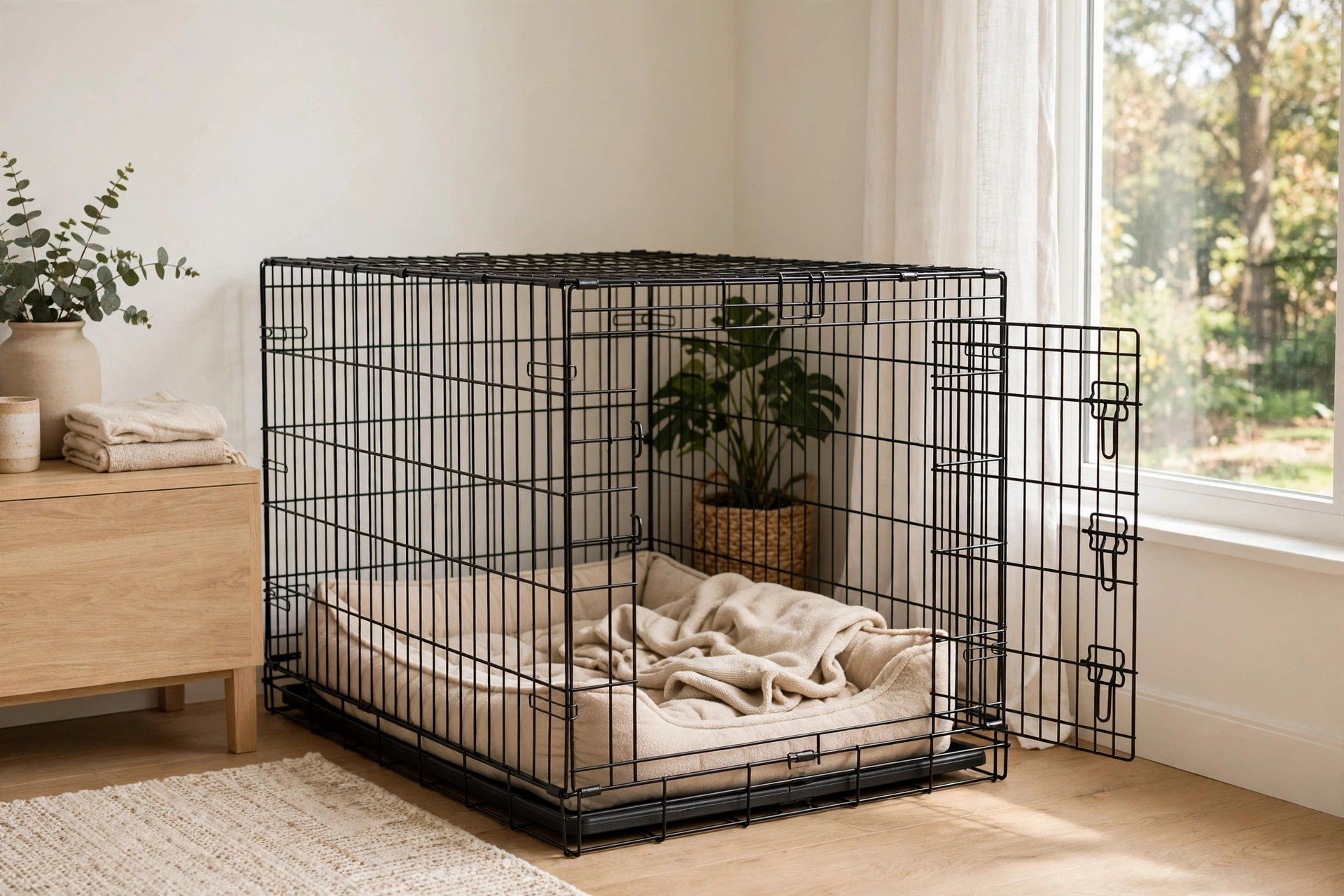
- A crate or exercise pen — properly sized (stand up, turn around, lie down — no bigger). If your dog panics in a crate, a small gated room works instead. The idea comes from the same den instinct behind crate training: dogs naturally avoid soiling their sleeping area.
- Enzymatic cleaner — not regular soap, not vinegar. Only enzymatic cleaners actually break down the urine proteins that tell your dog “bathroom here.” This single product prevents more repeat accidents than any training technique.
- High-value treats — small, soft, smelly. Cheese, boiled chicken, freeze-dried liver. Kibble won’t cut it for this job.
- A 6-foot leash — for tethering him to you indoors during supervision phases.
- Patience for 2–4 weeks — that’s the honest timeline for most older dogs.
The 7-Step Method to Potty Train an Older Dog
This is the core of the guide. Follow the steps in order, and don’t skip ahead — each one sets up the next.
Step 1: Get the vet’s all-clear
Covered above, but it bears repeating: medical first. If your vet finds and treats a UTI on day one, you’ve just saved yourself three weeks of confused training.
Step 2: Set up a small, clean world
For the first week or two, your dog lives in a smaller world: crate or pen when you can’t watch him, one or two rooms when you can. This isn’t punishment — it’s management. Every accident he doesn’t have is a repetition of the right habit. Scrub any old accident spots with enzymatic cleaner so the house smells neutral, not like a bathroom.
Step 3: Build an hourly schedule — same spot, same cue
Take him out at least once every hour when you’re home, plus:
- First thing in the morning
- After every meal
- After naps and play sessions
- Last thing before bed
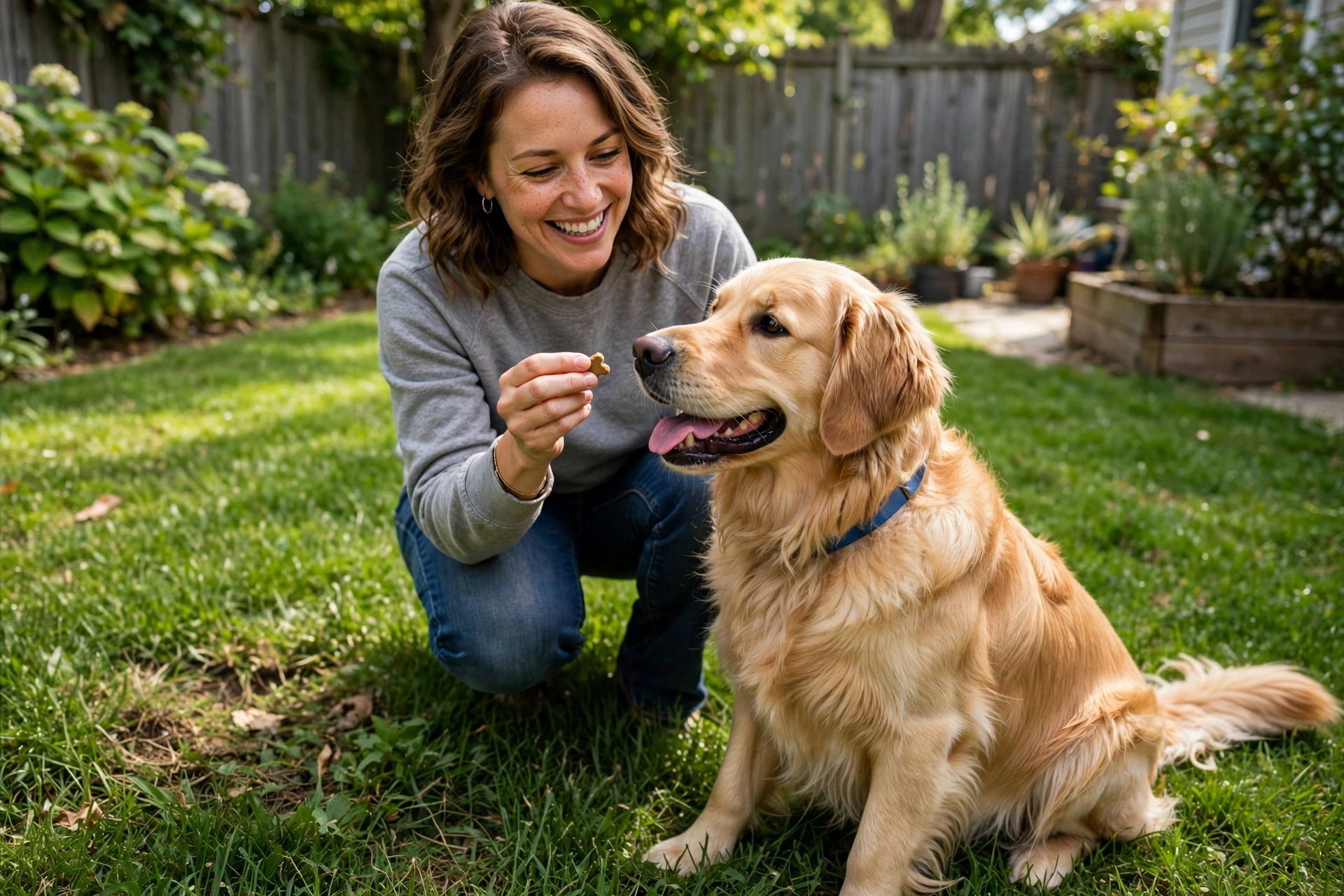
Always go to the same spot, use the same cue word (“go potty”), and stand boring — no play, no excitement — until he goes. The moment he finishes, throw a party: treats, praise, genuine delight. Timing is everything; the reward must land within 2–3 seconds of finishing so he connects it to the act, not the walk. If you’re building routines from scratch, our puppy training schedule by age shows how structured days accelerate learning at any age — the principles transfer directly to older dogs.
A sample day for the first week might look like this: 7:00 AM out, 7:30 breakfast then out again, then hourly breaks at 9, 10, 11, 12:30 (after lunch), 2, 3, 4, 5:30 (after dinner), 7, 8:30, and a final 10:30 PM trip. It sounds like a lot — and it is — but most owners find the rhythm becomes second nature within days, and the schedule loosens significantly by week three.
Step 4: Supervise like a hawk
When he’s out of confinement, he’s either tethered to you with the leash or under your direct eyes. Learn his pre-potty signals: sniffing the floor intently, circling, whining, pacing, suddenly disengaging from what he was doing. The instant you see one, cheerfully interrupt (“let’s go outside!”) and head to the spot. Every successful outdoor trip you engineer is a deposit in the new-habit bank.
Step 5: Make outdoor potty the best deal in his life
This is where older dogs differ from puppies: an adult dog with years of indoor habits needs a stronger reason to change. Use jackpot rewards — three or four treats in a row, not one — every single time he goes outside for the first two weeks. Be embarrassingly enthusiastic. You’re competing with years of history; pay accordingly.
Step 6: Handle accidents with zero drama
Accidents will happen. When one does:
- Never punish. No yelling, no rubbing his nose in it, no “time outs.” Punishment after the fact teaches him you’re scary — it doesn’t teach him where to pee. It often makes dogs hide to go, which is worse.
- If you catch him mid-act, interrupt calmly (“oops, let’s go outside”) and finish at the spot, then reward.
- Clean with enzymatic cleaner, thoroughly. If you can still smell it, so can he.
- Ask what failed: too long between breaks? Too much freedom too soon? Adjust the plan, not the dog.
Step 7: Earn freedom gradually
After 7–10 accident-free days, expand his world slowly: one more room, slightly longer unsupervised stretches. If accidents return, you’ve moved too fast — shrink the world again for a few days. This isn’t failure; it’s information. Most older dogs reach full house freedom within 3–4 weeks.
What a Realistic Timeline Looks Like
One of the biggest reasons people give up on housetraining an older dog is unrealistic expectations. Here’s what the process actually looks like when you follow the method above:
- Days 1–3: The reset. Your dog is confused by the new rules. Accidents still happen, but you should see him starting to understand the routine — heading toward the door, sniffing the designated spot. Your job is pure management and reward.
- Days 4–10: The pattern builds. Outdoor successes start outnumbering accidents. He begins offering signals (going to the door, looking at you) because going outside has paid off so well. Keep the schedule tight — this is not the time to relax it.
- Days 11–21: The testing phase. Many owners see a brief regression here and panic. It’s normal — he’s testing whether the rules still apply as his world expands. Hold the line, tighten management for a few days, and it passes.
- Week 4 and beyond: Reliability. Most healthy adult dogs are genuinely housetrained by now. Seniors may need the schedule to stay a bit tighter permanently, and that’s fine — a predictable routine is a gift to an old dog, not a burden.
If you’re learning how to potty train an older dog for the first time, print this timeline and put it on the fridge. Progress isn’t linear, but it is predictable — trust the process through the dip in week two.
5 Mistakes That Slow Everything Down
When learning how to potty train an older dog, what you avoid matters as much as what you do. These five mistakes account for most stalled cases:
- Punishing accidents. Yelling or “showing him the mess” doesn’t teach anything except that you’re unpredictable. Dogs punished for accidents don’t learn to hold it — they learn to hide it. Behind the couch. In the guest room. Worse in every way.
- Too much freedom, too soon. The number one cause of week-three regression. If he’s had three good days, he hasn’t “got it” — he’s had three good days under management. Freedom is earned in small increments.
- An inconsistent schedule. Hourly means hourly, especially in week one. “Roughly every couple of hours” is how accidents happen. Set phone alarms if you need to — there’s no shame in it.
- Cleaning with the wrong products. Regular cleaners and vinegar mask odor for human noses but leave the urine proteins intact for dog noses. Only enzymatic cleaner truly resets a spot. This ten-dollar bottle is the highest-ROI purchase in this entire guide.
- Skipping the vet visit. Training a medical problem is like mopping while the tap runs. If accidents persist despite perfect consistency, the vet — not a new technique — is your next step.
Adopted Adult vs. Senior Dog: What Changes
The method is the same, but your expectations should shift:
- Young adult rescue (1–4 years): Often the fastest learners. Bladder control is fully developed, energy is high, and they usually “get it” within 1–2 weeks once the rules are clear. The main challenge is unlearning shelter or street habits.
- Middle-aged (5–8 years): The sweet spot of patience and capability. May need the full 3–4 weeks, especially if habits are deeply ingrained.
- Senior (9+ years): Be generous with the schedule — every 45–60 minutes, not every 2 hours. Nighttime breaks may be needed. If progress stalls despite perfect consistency, revisit the vet; canine cognitive dysfunction can mimic training failure. Success here looks like management plus training, and that’s a perfectly good outcome.
Troubleshooting: When It’s Not Working
Followed the plan for two weeks and still cleaning up daily? Run through this checklist:
- Still having daily accidents after 2+ weeks? First, vet recheck — UTIs can develop mid-training. Second, tighten management: you’re probably giving too much unsupervised freedom. Shrink the world again.
- Accidents only when you’re gone? That’s likely anxiety, not housetraining. Our separation anxiety guide covers the desensitization approach — the peeing stops when the panic stops.
- Was doing great, then regressed? Regression is normal and fixable — it usually means freedom expanded too fast or the schedule slipped. Go back to Step 2–3 basics for a week. Our potty training regression guide walks through the reset process in detail.
- Only pees on rugs or one specific spot? Substrate preference. Clean it enzymatically, block access temporarily, and make the outdoor spot smell like “the place” by bringing a used pee pad or paper towel out there.
- Marking instead of emptying? Small amounts on vertical surfaces. Manage with belly bands indoors while you train, discuss neutering timing with your vet, and reward outdoor marking too — yes, really.
That’s how to potty train an older dog — not with shortcuts or punishment, but with a vet check, a tight schedule, generous rewards, and the patience to let a new habit replace an old one. Whether he’s a 2-year-old rescue learning house rules for the first time or a 12-year-old senior who needs a refresher, the formula is the same: make the right choice easy, make it pay well, and give him time. He’s worth it.
Frequently Asked Questions
Can you really potty train a 5-year-old dog?
Yes — absolutely. Age is not the barrier people think it is. A healthy 5-year-old has full bladder control and learns fast, often within 1–2 weeks. The “old dog” challenge is mostly about unlearning old habits, not inability to learn.
How long does it take to potty train an older dog?
Most healthy adult dogs are reliable within 2–4 weeks of consistent training. Seniors or dogs with deeply ingrained habits may take 4–6 weeks. If there’s zero progress after 3 weeks of true consistency, get a vet recheck.
Should I use pee pads for an older dog?
Pee pads can help as a temporary bridge — especially for seniors with mobility issues or apartment dwellers — but they can also confuse the “inside vs. outside” lesson. If you use them, place them by the door and transition outdoors gradually rather than keeping them permanent.
Is it harder to potty train a rescue dog?
It’s different, not necessarily harder. Rescue dogs often learn quickly because they’re highly motivated to please their new family. The main obstacles are unknown history (was he ever trained?) and the stress of transition, both of which fade with routine and patience.
My senior dog was housetrained for years and now has accidents. What do I do?
Vet visit first — sudden regression in a previously trained senior is a classic sign of UTI, kidney issues, or cognitive decline. Once medical causes are addressed, refresh training with the schedule method above, and consider more frequent breaks as the new normal.
Should I punish my older dog for accidents?
No — never. Punishment doesn’t teach where to go; it teaches your dog to fear you and hide accidents. Every behaviorist and veterinary organization agrees on this. Interrupt calmly, clean thoroughly, and adjust your management.
Related Reads
- Puppy Potty Training Regression: Why It Happens & How to Fix It
- Puppy Training Schedule by Age: What to Teach When
- How to Potty Train a Puppy Fast: The No-Stress Method

