
Imagine this: instead of finding a puddle by the front door, you hear a cheerful little jingle — and your puppy is sitting by the door, waiting politely to be let out. No guessing. No accidents. No hovering by the door every twenty minutes wondering if “this is the time.”
That is exactly what bell training gives you: a clear, reliable way for your puppy to tell you when it’s potty time. And the best part? Most puppies learn it in under two weeks, with just a few minutes of practice a day.
In this guide, you’ll learn the exact 5-step bell training method trainers use, the 5 mistakes that ruin it (one of them turns your door into a 24/7 playground gate), and how to fix the most common problems — like a puppy who rings the bell fifty times a day just to go outside and play.
What Is Bell Training (and Why Does It Work So Well)?
Bell training is beautifully simple: you hang a bell on the door handle, teach your puppy to nudge it with their nose or paw, and open the door every time they ring. Very quickly, your puppy connects the dots: ring bell → door opens → I get to go potty outside.
It works so well because it solves the biggest communication problem in potty training. Puppies don’t have accidents because they’re stubborn — they have accidents because they can’t tell you they need to go. Whining is vague. Pacing is easy to miss. A bell is unmistakable: you hear it from the kitchen, the bedroom, anywhere in the house.
It also removes the guesswork for you. Instead of watching the clock and dragging your puppy out “just in case,” you get a clear signal. Many owners say bell training was the single thing that finally made potty training click — especially when combined with a solid routine like our 7-day potty training plan.
Bells also beat the “natural” signals puppies invent on their own. Barking at the door works — until your puppy barks at everything. Scratching the door works — until your door looks like a crime scene. A bell is specific: it means exactly one thing, it’s impossible to miss, and it doesn’t destroy your woodwork.
What You’ll Need
You don’t need fancy equipment. Here’s the short list:
- A potty bell — a strip of jingle bells that hangs from the doorknob, or a single loud bell mounted at your puppy’s nose height. Choose one with a clear, pleasant ring (not a harsh clang that might startle a shy puppy). They’re inexpensive and last for years.
- Tiny, high-value treats — pea-sized bits of chicken, cheese, or soft training treats. You’ll use a lot of them in the first few days, so keep them small.
- A consistent potty door — always use the same door for potty trips during training. Switching doors confuses the whole system.
- Patience for about two weeks — most puppies grasp the concept in 3–7 days and get reliable within two weeks. Some take a little longer, and that’s completely normal.
One important note: bell training replaces the signal, not the routine. Your puppy still needs regular potty breaks, especially in the beginning. The bell is the communication upgrade on top of a good schedule.
The 5-Step Bell Training Method
Step 1: Teach “Touch the Bell” (Days 1–2)
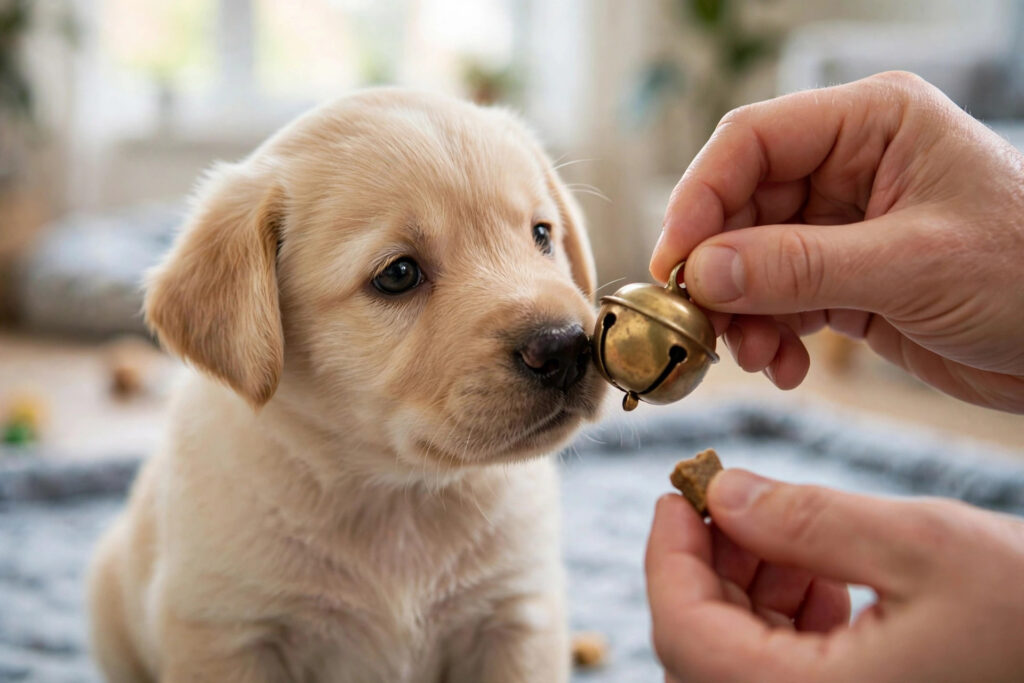
Start away from the door. Hold the bell in your hand at your puppy’s nose level and wait. The moment your puppy sniffs or nudges it — ding! — mark it with an enthusiastic “Yes!” and deliver a treat. Repeat 10–15 times per session, 2–3 sessions a day.
Most puppies figure this out within a single session because it’s such a fun game: boop the shiny thing, get chicken. If your puppy is hesitant, smear a tiny bit of peanut butter on the bell for the first few reps, then wipe it off once they’re happily nudging.
Goal: your puppy deliberately touches the bell to make it ring, expecting a treat.
Step 2: Hang the Bell on the Door (Days 2–3)
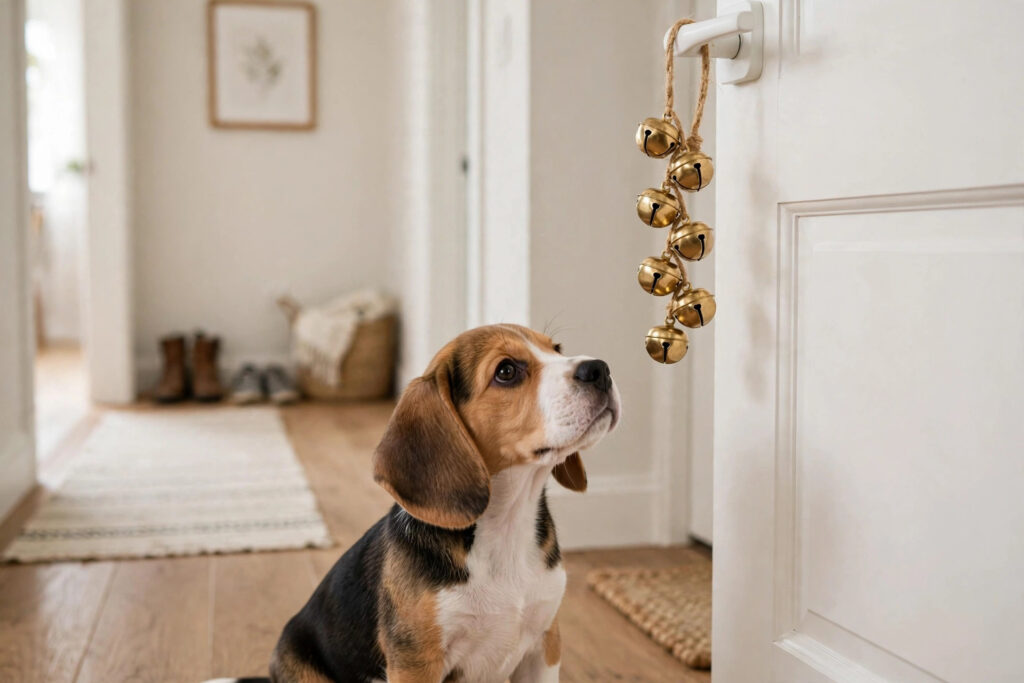
Now hang the bell on your potty door at your puppy’s nose height. Before every scheduled potty trip, walk to the door with your puppy, point at the bell, and encourage the nose touch. The instant it rings: “Yes!”, treat, then open the door.
You’re building the first half of the chain: bell → door opens. Don’t worry about whether your puppy “needs” to go yet — at this stage, every trip starts with a ring, a treat, and the door opening.
Step 3: Ring Every Time, No Exceptions (Days 3–7)
This is the make-or-break step: the bell must ring before the door opens, every single time. If your puppy walks to the door and stares at you instead of ringing, gently guide their nose to the bell (or wait them out — most puppies offer the touch within seconds once they know the game).
Consistency here is everything. If the door sometimes opens without a ring, your puppy learns the bell is optional. Every family member must follow the same rule. Tape a little reminder note on the door for the first week if you need to.
Step 4: Connect the Ring to Potty (Days 5–10)
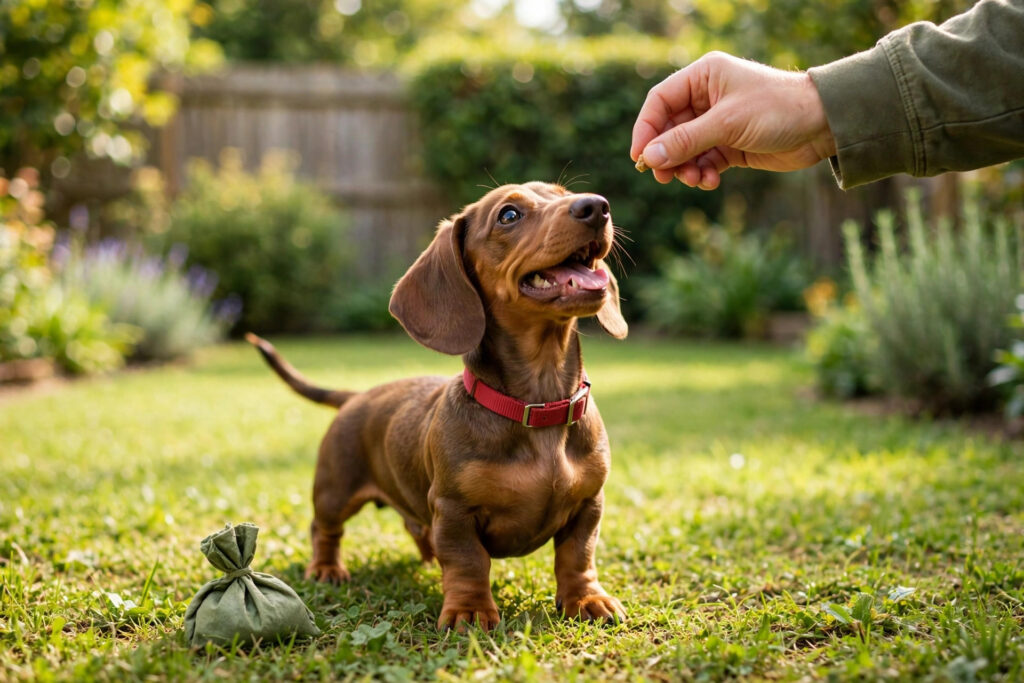
Now the full chain comes together: ring → door opens → outside → potty → massive reward. The moment your puppy potties outside, throw a little party — happy voice, treats, brief play. You want “potty outside” to feel like winning the lottery.
Start fading the treat for the bell ring itself around now. The real reward becomes the door opening and the outdoor potty payoff. If you keep treating every ring forever, some clever puppies learn to ring just for snacks (more on that troublemaker in the mistakes section).
Step 5: Let Your Puppy Take the Lead (Week 2+)
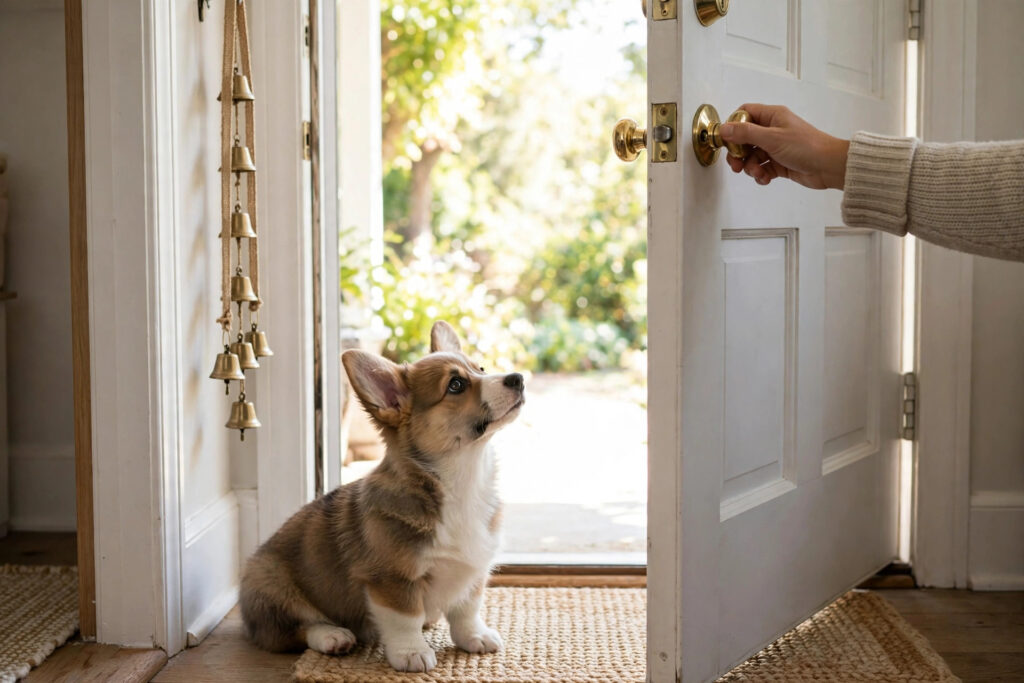
Now stop prompting. Wait by the door area and let your puppy decide to ring on their own. The first time it happens unprompted — the little jingle from across the room — you’ll want to frame the moment. Open the door immediately, every time. Fast, reliable responses in these early weeks are what turn a trick into a lifelong habit.
From here, it’s maintenance: keep responding to every ring for at least a month before you even think about ignoring any rings (and even then, only the obvious “I just want to play” ones — see troubleshooting).
Your First 7 Days: A Simple Schedule
Here’s how the five steps map onto a real week, so you always know what to do today:
- Days 1–2: Play the “touch the bell” game (Step 1). Two or three short sessions a day. Goal: confident, deliberate nose boops.
- Days 3–4: Bell goes on the door (Step 2). Ring before every potty trip, no exceptions (Step 3). Get the whole household following the rule.
- Days 5–7: Run the full chain — ring → door opens → outside → potty → celebration (Step 4). Start fading the treat for the ring itself; the opening door becomes the reward.
- Week 2: Stop prompting and let your puppy choose to ring on their own (Step 5). Respond to every ring within seconds — fast responses now build a lifelong habit.
Keep a quick log on your phone (day, rings, accidents). Most owners are amazed how fast the “got it!” moment arrives once they can see the progress in writing.
How Long Does Bell Training Take?
For most puppies: the concept clicks in 3–7 days, and reliable independent ringing takes 1–3 weeks. Younger puppies (8–12 weeks) often learn the mechanic fast but need more time for bladder control to catch up — so keep your regular potty schedule going in parallel.
Factors that speed things up: starting with a puppy who already has a decent potty routine, training before meals (treats matter more), and every single family member following the same rules. Factors that slow it down: inconsistency, a bell that’s too quiet to hear, or trying to bell train before any potty routine exists at all.
Nighttime is a special case — a sleeping puppy can’t ring a bell. For overnight success, combine bell training with crate training at night, which teaches bladder control while everyone sleeps.
5 Mistakes That Ruin Bell Training
Mistake 1: Letting the bell become a toy
If the bell hangs there all day and your puppy bats it around for fun, it stops meaning “potty.” During the first two weeks, supervise around the bell. Every ring should lead somewhere — ideally outside. Fun-without-purpose ringing gets a calm reset, not a door opening.
Mistake 2: Opening the door for “play rings”
This is the #1 bell training killer. Your puppy rings, you open the door, they sprint to the yard to chase leaves — and they’ve just learned the bell is a magic “outside playtime” button. Fix: when you open the door after a ring, it’s a boring leashed potty trip. Potty happens → praise. No potty within 3–5 minutes → back inside, no fuss. Playtime happens on your schedule, never as a reward for ringing.
Mistake 3: Ringing the bell FOR your puppy
It’s tempting to jingle it yourself “to show them.” Don’t. Your puppy needs to learn that their action causes the door to open. If you ring it, they learn that your action does — and they’ll just wait for you forever.
Mistake 4: Punishing accidents
A puppy who gets scolded for indoor accidents doesn’t learn to hold it — they learn to hide it from you (behind the couch, in the corner). Punishment also poisons the whole communication system you’re building. Clean accidents calmly with an enzymatic cleaner and double down on the routine.
Mistake 5: Different rules from different people
If you require a ring but your partner opens the door on a whine, your puppy learns the bell is optional decoration. Get the whole household on the same page before you start — one family meeting saves weeks of confusion.
Troubleshooting Common Bell Training Problems
“My puppy rings the bell 50 times a day just to go play!”
Classic — and it means the training worked; your puppy just overgeneralized. The fix is the boring-potty-trip protocol: leash on, straight to the potty spot, 3–5 minutes, no play, back inside if nothing happens. Within a week, most puppies stop ringing for fun because ringing no longer buys playtime. Never punish the ringing itself — you want that communication line wide open.
“My puppy is scared of the bell sound.”
Switch to a softer-sounding bell (fabric muffles the ring), or start with the bell wrapped in a sock so it’s nearly silent, gradually unwrapping it over several days. Pair every ring with treats so the sound predicts good things. Shy puppies almost always come around within a week.
“My puppy rings, goes outside, but doesn’t potty — then potties inside.”
This usually means the outdoor trip was too exciting or too short. Keep them leashed, stand boringly in the potty spot, and give it a full 5 minutes. The instant they go: jackpot reward. If they don’t go, back inside and try again in 15–20 minutes. They’re learning that outside is for business first.
“My puppy was doing great, then suddenly stopped using the bell.”
Regression happens — stress, schedule changes, or a growth phase can all cause it. Don’t panic and don’t start over from zero; just revisit Step 3 (ring every time, no exceptions) for a few days. If the slide continues, read our guide on puppy potty training regression — it covers the hidden causes and exactly how to get back on track.
“Can an older dog learn this, or is it puppies only?”
Absolutely — older dogs often learn faster because their bladder control is already developed. The steps are identical. If you’re working with an adult dog, our guide on how to potty train an older dog pairs perfectly with this method.
Frequently Asked Questions
What age can I start bell training my puppy?
You can start as early as 8 weeks — the “touch the bell” game is easy even for very young puppies. Just remember that bladder control develops with age, so keep a regular potty schedule alongside the bell until your puppy is reliably holding it (usually around 4–6 months).
What kind of bell works best for potty training?
A hanging strip of 2–4 jingle bells on a sturdy strap is the most popular choice — loud enough to hear from another room, easy for a puppy nose to hit. Avoid tiny delicate bells (too quiet) and harsh cowbells (can startle shy puppies). Hang it at your puppy’s nose height on the potty door.
How long does it take a puppy to learn to ring the bell?
Most puppies understand the concept within 3–7 days and ring independently within 1–3 weeks. Consistency matters more than age or breed — households where everyone follows the same rules see the fastest results.
My puppy rings the bell constantly. Should I take the bell down?
Don’t remove it — that kills the communication you’re building. Instead, make every ring lead to a boring leashed potty trip: no play, back inside after 3–5 minutes if nothing happens. Play-ringing extinguishes itself within a week or two once it stops paying off.
Can I use bell training if I live in an apartment?
Yes — it works great in apartments. Hang the bell on your front door and follow the same steps; the “outside” just becomes your designated potty spot or balcony setup. Pair it with the tips in our apartment potty training guide for the full system.
Should the bell stay on the door forever?
Many owners keep it for life — it’s a handy system even for adult dogs. Others phase it out once the dog reliably signals in other ways (sitting by the door, vocalizing). There’s no rule; keep it as long as it’s useful. If you travel, bring a portable bell so the system works anywhere.
The Bottom Line
Bell training turns potty training from a guessing game into a conversation. Five steps, a few minutes a day, about two weeks — and you get a puppy who tells you when it’s time. Start with the nose-touch game today, stay consistent through the boring-potty-trip phase, and enjoy that first magical unprompted jingle from across the room. You’ve got this. 🔔
Related Reads
- How to Potty Train Your Puppy in 7 Days
- How to Potty Train an Older Dog
- Puppy Potty Training Regression: Why It Happens & How to Fix It

