
You say your puppy’s name in a funny voice — and there it is. That perfect, sideways head tilt. Ears slightly askew, eyes locked on you, looking like the world’s most confused (and adorable) little philosopher.
If you’ve ever melted at that sight and immediately reached for your phone camera, you’re not alone. The puppy head tilt is one of the most beloved behaviors in the entire dog world. But have you ever wondered why they actually do it?
As it turns out, scientists have studied this, and the reasons are a delightful mix of biology, curiosity, and — fair warning — a little bit of manipulation (yours, not theirs… well, actually theirs). In this guide, you’ll learn the 7 real reasons puppies tilt their heads, when a tilt is a sign to call the vet, and how to teach it as a trick on cue.
The Science Behind the Head Tilt
Let’s start with what researchers actually know. A well-known 2021 study on gifted word-learner dogs found something fascinating: dogs that had learned the names of many toys tilted their heads significantly more often — and almost always when concentrating on a task or listening to their owner. The researchers suggested the tilt is linked to attention and mental processing: your puppy is literally tilting to think harder.
There’s also a physical explanation. A dog’s muzzle can partially block their view of your face — especially in long-nosed breeds. Tilting the head adjusts their line of sight so they can see your facial expressions better. And since dogs read human faces remarkably well, that small adjustment helps them gather information. Researchers have noted that dogs, unlike wolves, developed an extraordinary ability to read human communicative cues during domestication — the tilt may be part of that toolkit, a physical adjustment that maximizes the information they get from our faces.
Then there’s hearing. Dogs can move their ears independently to pinpoint sounds, but adjusting the whole head changes how sound waves hit each ear, helping them locate exactly where an interesting noise is coming from. That squeaky toy behind the couch? The tilt helps triangulate it. A dog’s hearing is roughly four times more sensitive than ours, and they can detect frequencies we can’t even perceive — the tilt is them fine-tuning an already remarkable instrument.
So the head tilt isn’t random — it’s your puppy actively trying to understand you better. Which, honestly, makes it even cuter.
7 Adorable Reasons Your Puppy Tilts Its Head
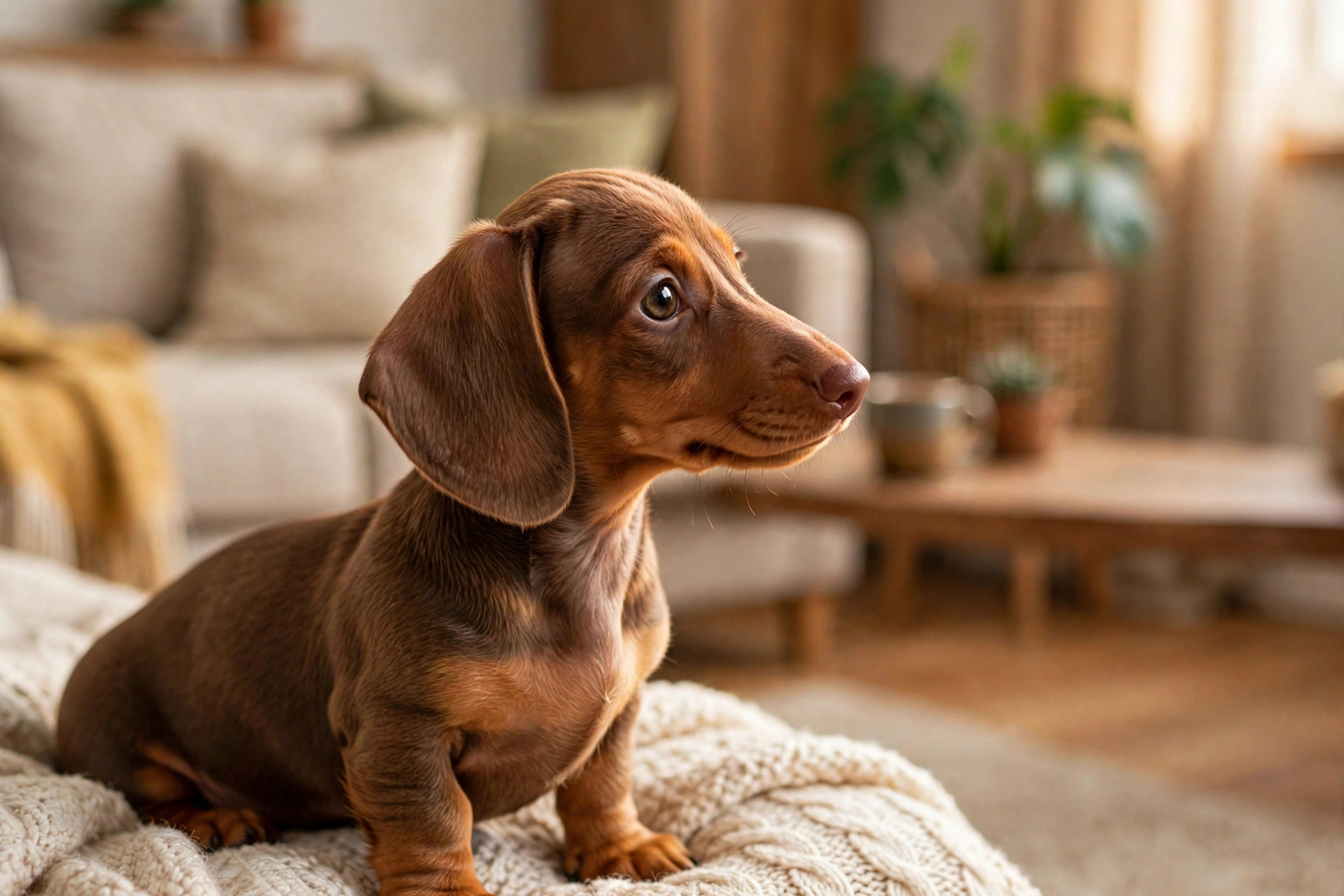
1. They’re Trying to Hear You Better
This is the classic explanation, and it’s solid. When you speak in an unusual tone — high-pitched baby talk, a funny accent, a new word — your puppy tilts to adjust their ears and pinpoint the sound. They’re essentially turning up their biological antenna. Puppies with floppy ears do this even more, since they have to work harder to direct sound into the ear canal.
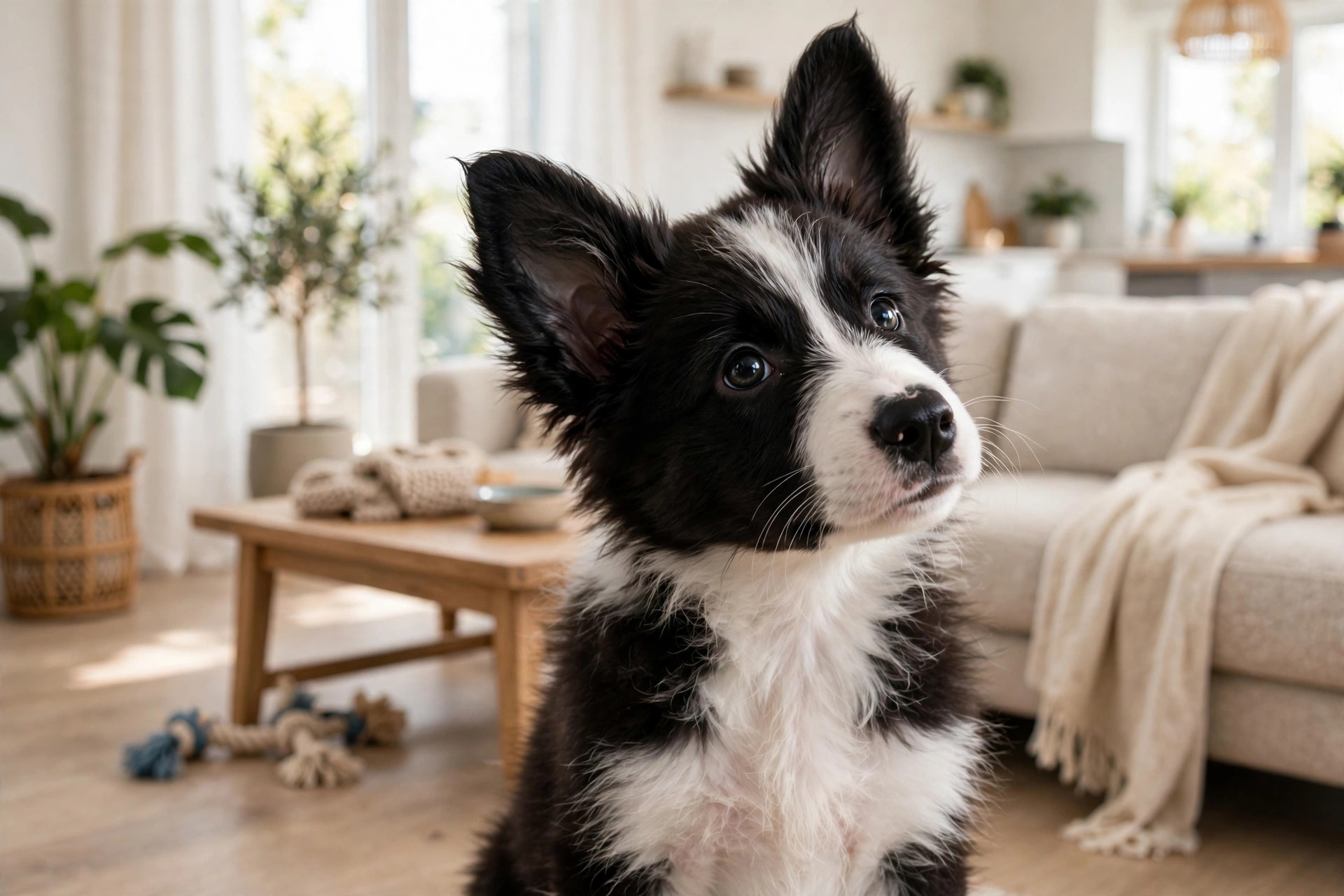
2. They’re Trying to See Your Face
Your puppy reads your facial expressions constantly — it’s one of the main ways they understand you. But a long muzzle can block the lower part of your face from their view. The tilt shifts their visual field so they can see your mouth and eyes clearly. Breeds with longer noses (like greyhounds, collies, and dachshunds) are champion head-tilters for exactly this reason. Think about it from their perspective: so much of what you “say” is in your expression — the smile that means a treat is coming, the raised eyebrows, the laugh. The tilt is your puppy making sure they don’t miss a single frame.
3. They’re Concentrating Hard
Remember that 2021 study: the smartest, most attentive dogs tilted the most while processing information. When your puppy tilts during training or when learning a new word, it’s a sign of deep focus — their little brain is working overtime. Take it as a compliment: you have their complete attention. Some trainers even use the tilt as a feedback signal — if your puppy is tilting during a session, they’re locked in and learning; if the tilts stop and the gaze drifts, it’s time for a play break.
4. They’re Curious About Something New
A strange sound, an unfamiliar object, a weird smell — novelty triggers the tilt. It’s your puppy’s way of saying, “What is that?” This curiosity response is strongest in young puppies, who are encountering most of the world for the first time. As you continue socializing your puppy and learning to read their body language, you’ll start noticing the tilt as one of their clearest “I’m intrigued” signals.
5. It Worked Before (You’re Being Trained)
Here’s the funny truth: puppies are excellent behavior scientists. The first time your puppy tilted its head, you probably gasped, laughed, said “awww,” and maybe gave a treat or a cuddle. Your puppy’s brain recorded all of that. Behaviors that earn big reactions get repeated — it’s the same learning principle behind countless dog behaviors, from barking that successfully makes strangers leave to spinning before dinner. Your puppy has, in a very real sense, trained you to reward the tilt.
6. They’re Showing Empathy
Dogs are remarkably tuned in to human emotions. Many owners report the head tilt appearing when they’re sad, upset, or speaking softly. While we can’t know exactly what a puppy feels, the tilt often shows up during emotional moments — as if they’re trying extra hard to understand what you’re feeling. Whether it’s true empathy or just attention to your changed tone, it sure feels like they care.
7. It’s Just Plain Fun for Them
Sometimes a tilt is simply a puppy being a puppy — playful, expressive, and a little bit goofy. Young dogs experiment with their bodies the way toddlers do, and the tilt might just feel interesting. Not every behavior needs a deep explanation. Some are just joyful.
Is Head Tilting Normal? When to Call the Vet
For the vast majority of puppies, head tilting is completely normal, healthy, and delightful. It’s a sign of an engaged, curious, thinking puppy.
However — and this matters — there’s a difference between the cute, occasional tilt and a persistent medical head tilt. Call your vet promptly if you notice:
- A constant tilt to one side that doesn’t go away — the head stays cocked even at rest, not just during cute moments
- Loss of balance — stumbling, walking in circles, falling over, or a general clumsiness that’s new
- Eye flickering (nystagmus) — eyes darting side to side involuntarily
- Nausea or vomiting paired with the tilt
- Head shaking, scratching at ears, or bad odor from the ears — classic signs of an ear infection
- A sudden tilt after trauma — a fall, a bump, rough play
These can indicate vestibular disease (a balance-system problem), a middle or inner ear infection, or — rarely — something neurological. The key distinction: the cute tilt is brief, situational, and your puppy is otherwise happy and coordinated. The medical tilt is persistent and comes with other symptoms. When in doubt, a quick vet check is always worth it — ear infections are common in puppies and very treatable.
A special note on vestibular issues: they can look scary — some puppies suddenly can’t walk straight, their eyes flicker, and they may vomit. It’s frightening to watch, but many vestibular episodes (especially the idiopathic kind) improve significantly with veterinary care and time. The important thing is not to wait and hope — balance symptoms always deserve a prompt vet visit, because early treatment of ear infections can prevent them from reaching the inner ear at all.
Also watch for asymmetry in how the tilt looks. A healthy curious tilt is usually a slight, charming angle that comes and goes. A medical tilt is often more pronounced — the head held at a stark angle — and the puppy may seem bothered, disoriented, or reluctant to move. Trust your gut: you know what your puppy’s happy tilt looks like, and anything that looks wrong probably is.
One more note: if your puppy tilts specifically around other dogs and shows worried body language too (tucked tail, lip licking, freezing), the tilt might be part of uncertainty rather than curiosity. Our guide on helping a puppy scared of other dogs can help you read those situations.
Can You Teach a Head Tilt on Cue? (Yes!)
Since puppies tilt naturally, shaping it into a trick on cue is one of the easiest and most crowd-pleasing tricks you can teach. Here’s how:

- Step 1: Catch it. For a few days, keep treats handy. The instant your puppy tilts naturally, say “Yes!” and treat. You’re marking the behavior.
- Step 2: Add the cue. Once your puppy is tilting often (they will — it pays!), start saying “Tilt!” or “What?” right before you expect the tilt, then reward.
- Step 3: Create the trigger. Make a funny noise — a squeak, a whistle, a weird word — that reliably causes a tilt. Pair it with your cue word a few times.
- Step 4: Fade the noise. Gradually just use the cue word without the funny sound. Reward every tilt.
- Step 5: Show off. Practice in different rooms and with family members. Your puppy now has a party trick.
Keep sessions to 3–5 minutes — puppies learn fastest in short, happy bursts. And if you catch the trick-training bug, the head tilt pairs beautifully with other easy tricks to teach your puppy.
5 Fun Facts About Puppy Head Tilts
- Some breeds tilt more. Long-muzzled breeds and floppy-eared breeds are the most frequent tilters, for the vision and hearing reasons above.
- It’s been studied in “genius” dogs. The 2021 research found gifted word-learner dogs tilted their heads 43% of the time during concentration tasks, versus 2% in typical dogs.
- Puppies do it more than adult dogs. Everything is new, so everything is tilt-worthy. Enjoy it — the frequency often mellows with age.
- It’s a universal crowd-pleaser. In surveys of dog owners, the head tilt consistently ranks among the top 3 cutest dog behaviors, right up there with the “puppy eyes” look.
- Your reaction matters. The more delighted you act, the more you’ll see it. You’re not imagining that your puppy tilts more for you than for anyone else — you’ve simply reinforced it the most.
- It’s basically a canine question mark. Behaviorists sometimes describe the tilt as the closest thing dogs have to raising an eyebrow — a visible signal of “I’m processing, keep going.” Once you see it that way, you’ll notice it in exactly the moments you’d raise an eyebrow yourself.
- It may help them smell better too. Some researchers suggest the head angle can slightly change airflow through the nose, potentially helping a puppy catch a tricky scent. Yet another sense the tilt might be fine-tuning.
Frequently Asked Questions
Why does my puppy tilt its head when I talk to it?
They’re adjusting their ears to hear you better, shifting their view to see your face, and concentrating on your words — all at once. It’s a sign they’re deeply engaged with you.
Do all puppies tilt their heads?
Almost all do, but frequency varies hugely by breed, ear shape, and personality. Some puppies are constant tilters; others rarely do it. Both are normal.
Why does my puppy tilt its head at other dogs?
Usually curiosity — they’re trying to read the other dog. But if the tilt comes with worried signals (freezing, tucked tail, hiding), it may reflect uncertainty about the other dog rather than playful interest.
Can a head tilt be a sign of an ear infection?
Yes — but with a big difference. A cute tilt is brief and situational. An ear-infection tilt is persistent, usually to one side, and comes with scratching, head shaking, odor, or discharge. That’s a vet visit, not a photo op.
Will my puppy grow out of head tilting?
The frequency often decreases as the novelty of the world wears off, but most dogs tilt occasionally their whole lives — especially the smart, attentive ones.
Is it okay to encourage the head tilt?
Absolutely — as long as it’s the healthy, voluntary kind. Rewarding it with treats and affection is harmless and gives you both a delightful little ritual. Just never try to physically pose your puppy’s head; let every tilt be their choice.
The Bottom Line
Your puppy’s head tilt is one of those rare things in life that is exactly as wonderful as it looks. It’s your puppy listening harder, looking closer, and thinking deeper — all because you said something interesting. It’s attention, curiosity, and a dash of “I learned this gets me treats” rolled into one irresistible gesture.
So the next time it happens, don’t just reach for the camera (though definitely do that too). Take a second to appreciate what’s really going on: a young mind working hard to understand the person it loves most. Then say “awww” as loud as you want — you’re only encouraging more of it.
Related Reads
- Easy Tricks to Teach Your Puppy
- How to Socialize a Puppy Properly
- Why Does My Puppy Bark at Strangers? (7 Calm-Down Steps)

