
Your sweet puppy has turned into a tiny land-shark. Everything — your hands, the furniture, the rug, your favorite shoes — is a chew target. They’re drooling, cranky, sleeping badly, and gnawing like their life depends on it. You might even find tiny rice-sized teeth on the floor and wonder if something’s wrong.
Nothing’s wrong — this is teething, and it’s as uncomfortable for your puppy as it looks. The good news: the right remedies can soothe those aching gums dramatically, most of them from your own kitchen, costing almost nothing. And understanding why your puppy is chewing everything makes the whole phase easier to survive with your sanity (and your furniture) intact.
In this vet-approved guide, you’ll get 10 remedies that actually work, 5 dangers to avoid, when to call the vet, and answers to the questions every teething-puppy owner asks.
What’s Happening in Your Puppy’s Mouth
Puppies are born toothless, grow 28 needle-sharp baby teeth by about 8 weeks, then lose every single one between roughly 12 and 24 weeks as 42 adult teeth push through. That months-long swap is what makes your puppy chew everything in sight — chewing counter-pressure genuinely relieves the ache of teeth erupting through inflamed gums.
Peak discomfort usually hits between 4 and 6 months, when the big molars and canines come in. Signs your puppy is actively teething: excessive drooling, chewing everything, mild bleeding on toys, crankiness, going off food briefly, and rubbing their face with their paws. For the full week-by-week breakdown, see our puppy teething timeline.
Here’s the science that makes everything in this guide work: chewing provides counter-pressure — the same reason you press your tongue against a sore tooth. Pressure on inflamed gums temporarily dulls the ache. Cold constricts blood vessels and numbs nerve endings. So every effective remedy in this guide is some combination of cold + pressure + safe texture. Once you understand that formula, you can even invent your own remedies — if it’s cold, chewable, and puppy-safe, it probably helps.
10 Remedies That Actually Soothe
1. Frozen Carrots (The #1 DIY Remedy)
The undisputed champion of teething remedies: cheap, safe, and effective. A large frozen carrot gives your puppy something cold (numbs the gums), firm (satisfies the chew urge), and tasty — the full cold + pressure + texture formula in one vegetable. Size it right — a whole large carrot for medium/large puppies so it can’t be swallowed whole; thick carrot sticks for tiny breeds. One per day is plenty; too many can loosen stools because of the fiber.
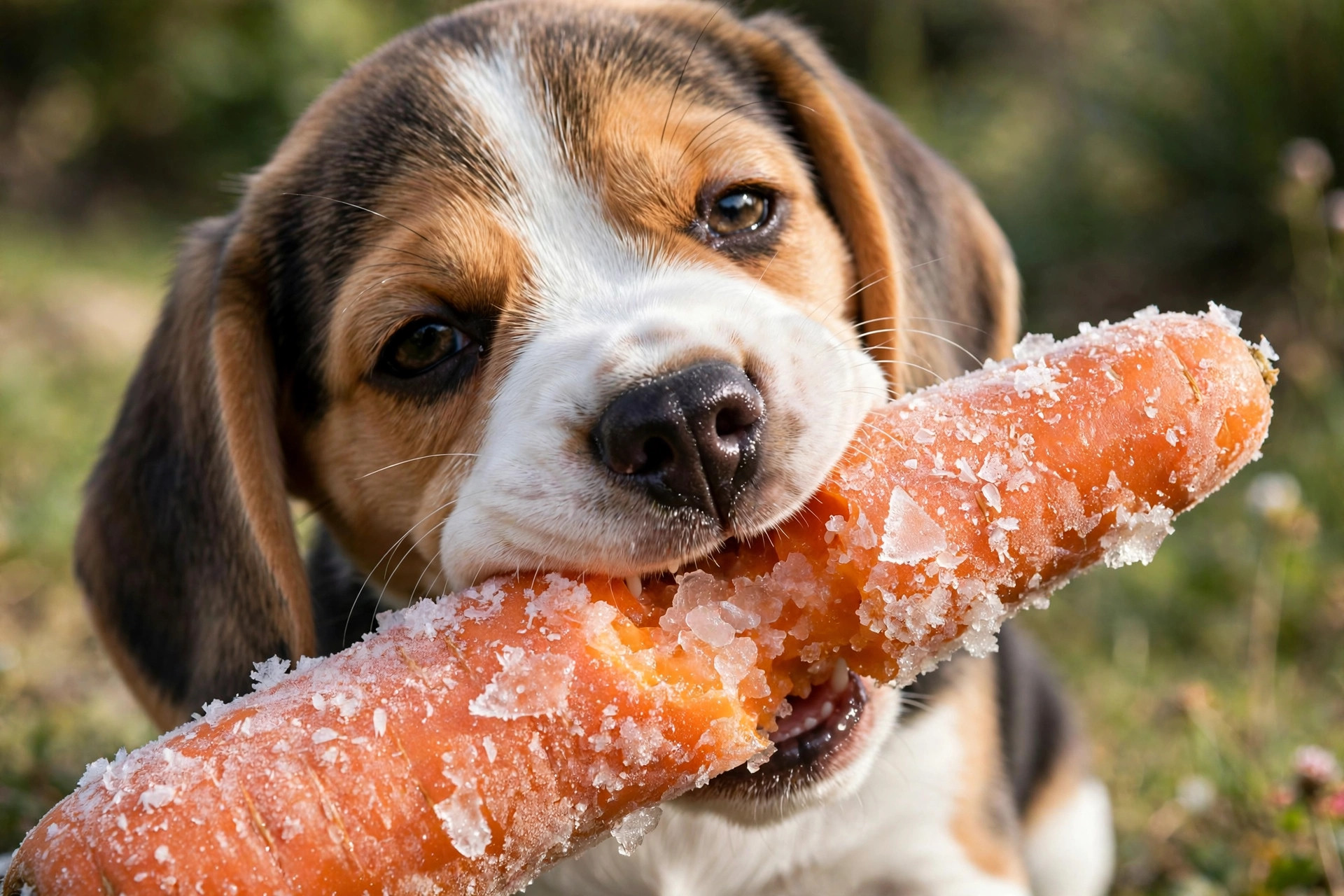
Why carrots beat most commercial chews here: they’re the right hardness for puppy teeth (firm but not rock-hard), they’re fully digestible if pieces break off, and most puppies love the slightly sweet taste. Wash them well, freeze for at least 4 hours, and serve on an easy-to-clean surface — carrot pulp stains light rugs. This single remedy gets more puppies through teething than anything else on this list.
2. Frozen Washcloth Rope
Soak a clean washcloth in water (or weak chamomile tea — see #6), twist it into a rope, and freeze it solid. The cold numbs, the texture massages, and the twist shape is perfect for reaching back teeth. This is the remedy most recommended by veterinary dentists for one reason: the fabric conforms to the gum line better than any hard chew, delivering pressure exactly where emerging teeth hurt most.
Supervise only — once it thaws and your puppy starts shredding fabric, trade it for a treat and toss it in the wash. Never leave a puppy alone with any fabric toy; swallowed strings can cause intestinal blockages. Keep two or three in rotation in the freezer so a fresh one is always ready.
3. Broth Popsicles
Freeze low-sodium chicken or beef broth in ice cube trays — or level up with mashed banana, plain yogurt, and a spoonful of xylitol-free peanut butter. These softer popsicles are safer than plain ice cubes for breakable puppy teeth (more on that danger below). Serve one or two at a time on a warm afternoon and watch your puppy’s whole body relax.
The beauty of broth popsicles is customization: a puppy who’s gone off kibble from sore gums will often still lap up something tasty and cold, so you’re sneaking in hydration and a few calories along with the pain relief. Make a big batch on Sunday, pop them out into a freezer bag, and you’ve got two weeks of teething relief ready to go. Always double-check labels — onion and garlic are toxic to dogs, so the broth must be plain.
4. Frozen Fruit (The Right Kinds)
Frozen strawberries, banana chunks, blueberries, and apple slices (no seeds) make excellent gum soothers — cold, slightly sweet, and packed with vitamins. Critical warning: grapes and raisins are toxic to dogs and can cause kidney failure. Never offer them, frozen or otherwise. When in doubt about a fruit, skip it.
5. Gum Massage
The most underrated remedy: your clean finger. Gently rub your puppy’s gums in small circular motions for a few minutes — most puppies melt into it within seconds. It provides direct counter-pressure exactly where it hurts, costs nothing, and doubles as handling practice that makes future vet dental exams easier. Aim for a few minutes, once or twice a day.
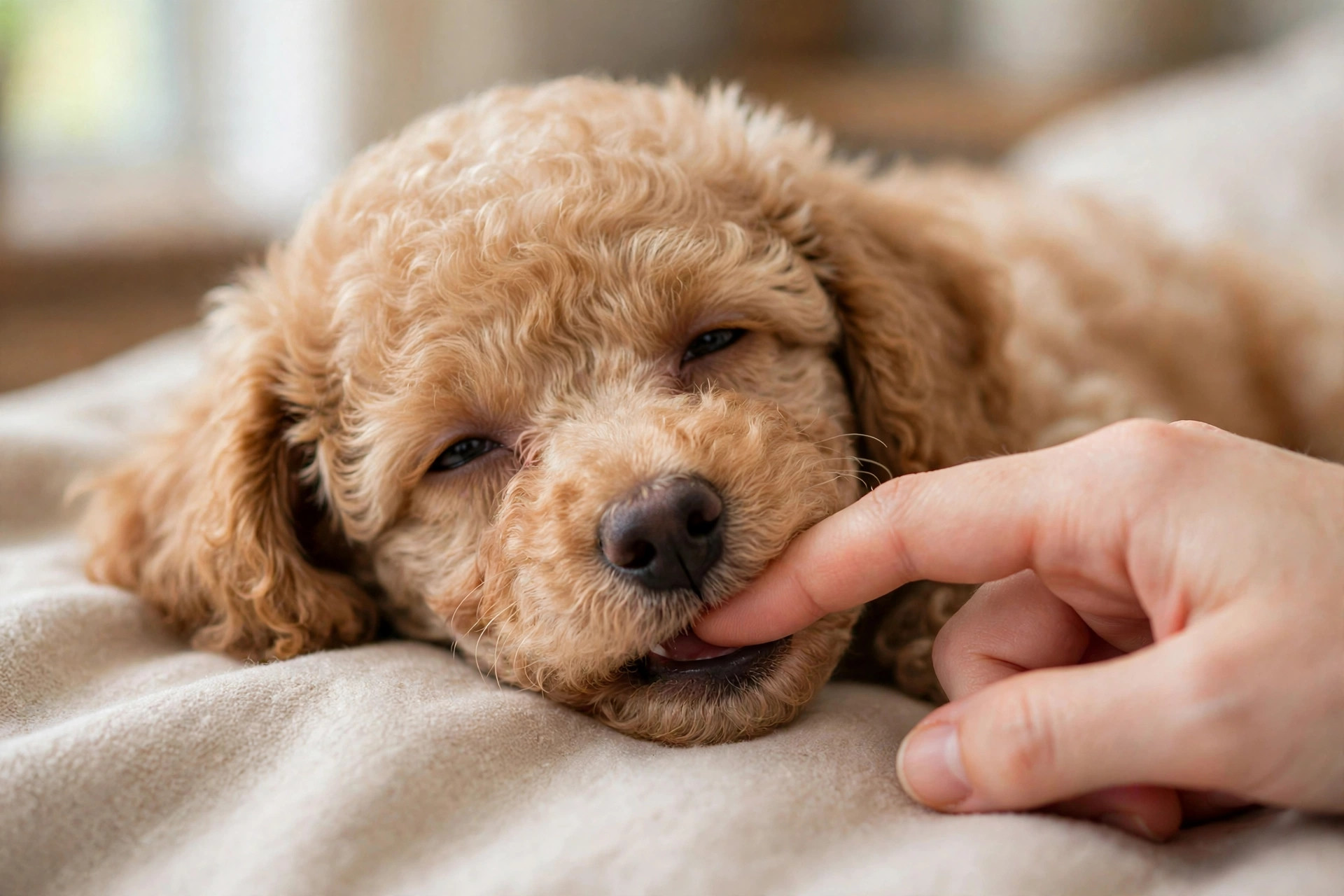
There’s a bonus most owners don’t expect: puppies who learn that human hands in their mouth predict relief become dramatically easier to handle for tooth brushing, vet exams, and medication later in life. You’re not just soothing today’s sore gums — you’re building a lifetime of easy mouth handling. Start with 30 seconds and a treat, and build up; never force it if your puppy pulls away.
6. Chamomile Tea for Restlessness
A weak, fully cooled chamomile tea can take the edge off a restless, uncomfortable puppy — it’s a mild natural calmative that many vets consider safe in small amounts. Brew it weak, cool it completely, and offer a few tablespoons in a bowl (or freeze it into the washcloth rope from #2). Skip it if your puppy is on any medication — check with your vet first.
7. Freezable Chew Toys
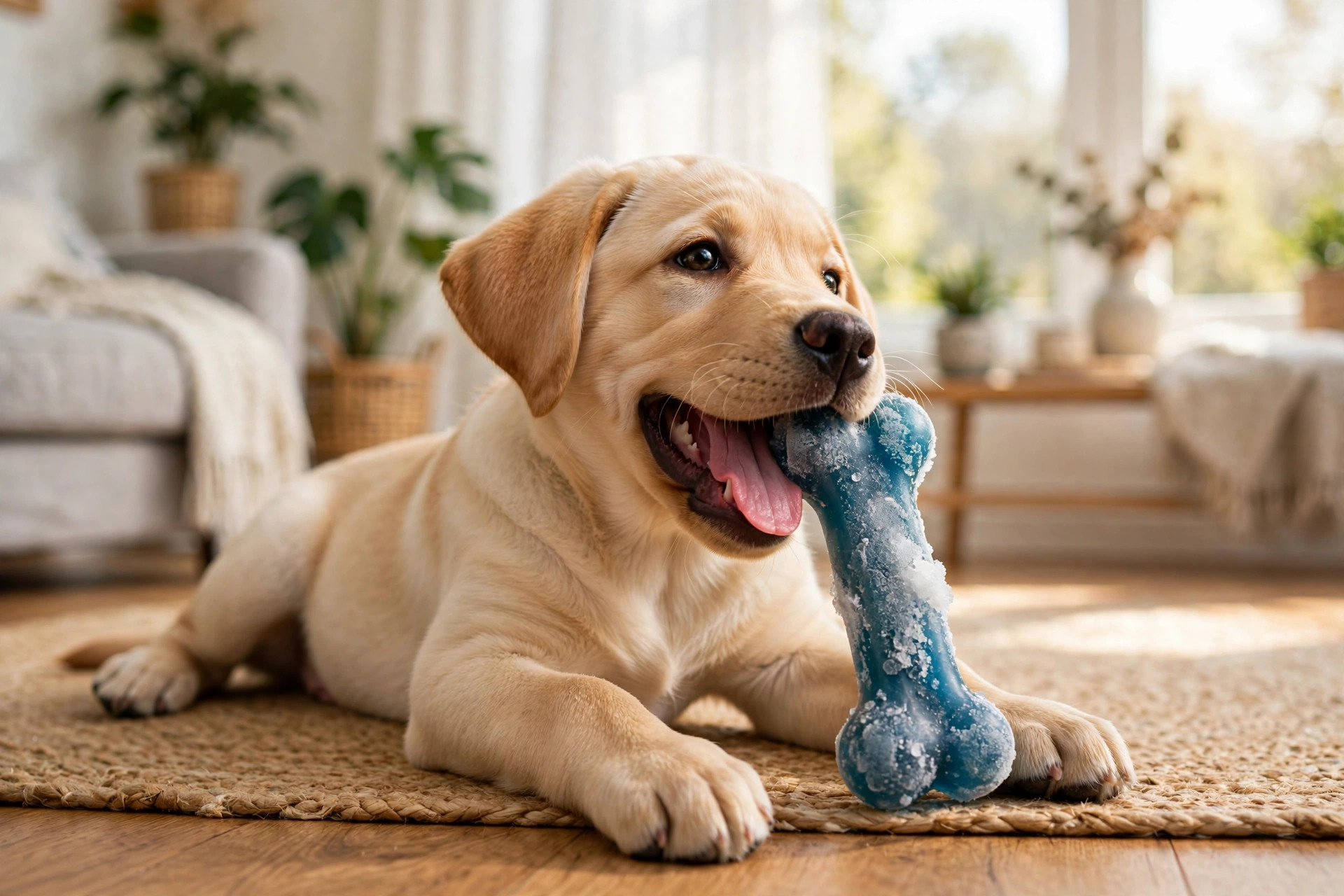
Several puppy toys are designed to be soaked and frozen — hollow rubber toys you stuff with peanut butter or yogurt, then freeze, give you 20–30 minutes of soothing licking and chewing. The licking itself is calming (it releases endorphins), and the cold works on the gums. A frozen stuffed Kong-style toy at bedtime can be the difference between a settled puppy and a 2 a.m. chew-a-thon.
Pro tip: layer the stuffing — a smear of peanut butter, some kibble, another smear, then freeze. The layers make it last much longer than a single filling, and the varying textures keep your puppy engaged. Prepare three or four at once and keep them in the freezer; grabbing one takes five seconds when the evening crankiness hits.
8. Frozen Lick Mat
Spread xylitol-free peanut butter, plain pumpkin purée, or yogurt thinly on a lick mat and freeze it. Licking is naturally soothing for dogs — repetitive licking lowers stress hormones — and the frozen layer makes it last. Perfect for the witching-hour crankiness or as a calm activity before bed.
9. Cold Celery Sticks
An underrated crunch: cold celery sticks are safe, low-calorie, and the fibrous texture gives gums a good workout. Not every puppy loves the taste — but the ones who do will gnaw happily for ages. Cut into puppy-appropriate lengths and supervise, as with any chew.
10. Chilled Rubber Teething Toys
Keep a rotation of sturdy rubber puppy toys in the fridge (not freezer — fridge-cold is enough for everyday use). Rotating them keeps novelty high: a “new” cold toy appears just as the old one gets boring. Look for toys specifically sized for puppies — adult-dog toys can be too hard for teething mouths.
5 Dangers to Avoid
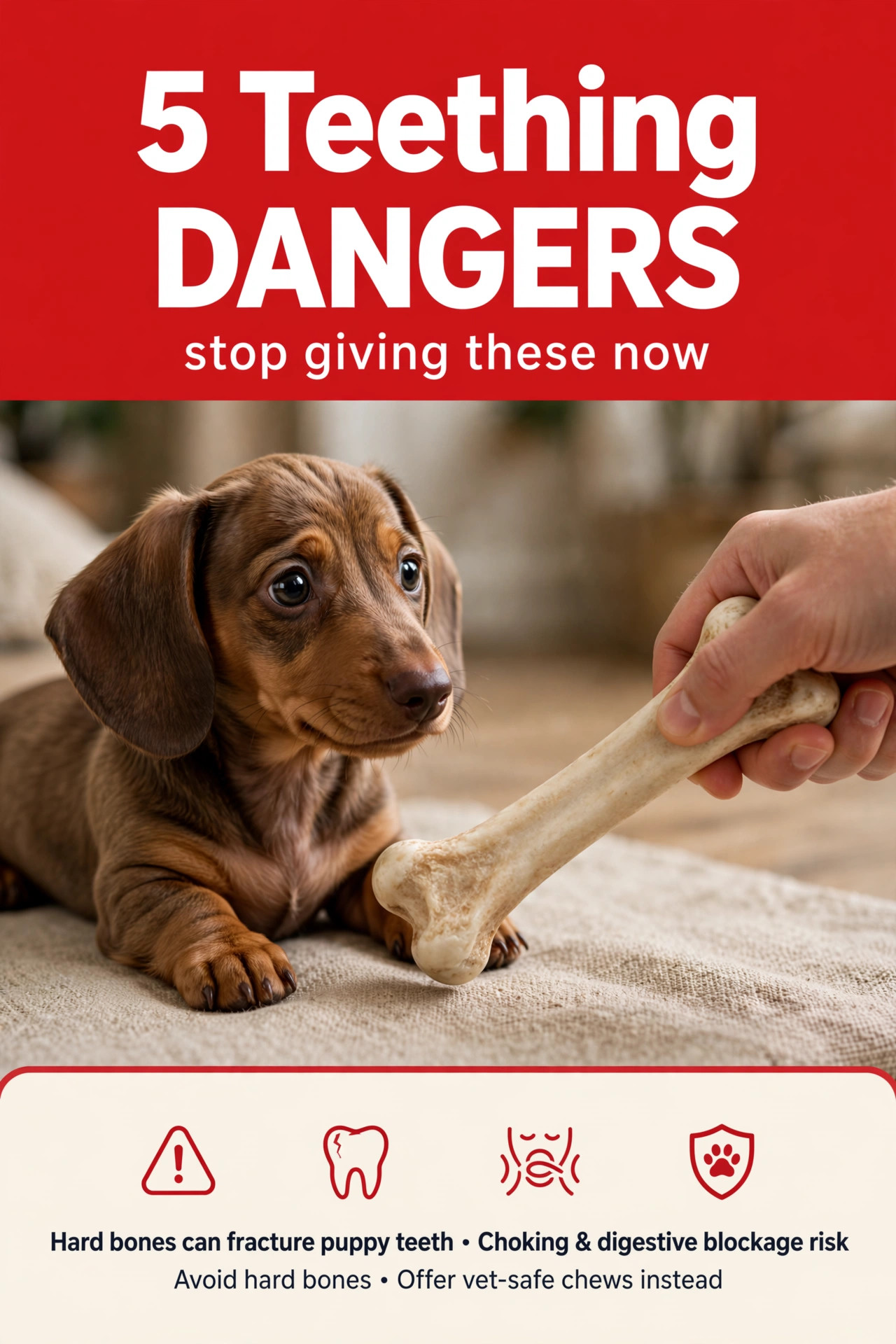
- 1. Hard ice cubes. Puppy teeth are fragile — crunching full-size hard ice cubes can crack or break them. Use chips, crushed ice, or the softer popsicles above instead.
- 2. Real bones, antlers, and hooves. Far too hard for puppy teeth and can splinter. Save these (if ever) for adult dogs, and even then with caution.
- 3. Unattended rope or fabric toys. Shredded strings can cause intestinal blockages. All fabric chews are supervised-only, always.
- 4. Grapes, raisins, and xylitol. Grapes/raisins can cause kidney failure; xylitol (in some peanut butters and sugar-free products) is deadly to dogs. Read every label.
- 5. Ignoring real pain signs. Some drooling and crankiness is normal — but refusal to eat for more than a day, facial swelling, bleeding that won’t stop, or extreme lethargy mean vet, not home remedies. If chewing ever tips into destructive overdrive, our guide on stopping problem chewing covers the training side.
When to Call the Vet
Teething is normal, but call your vet if you notice: retained baby teeth (a baby tooth still hanging on while the adult tooth erupts beside it — common in small breeds and often needs extraction, because a double row of teeth traps food and causes decay), bleeding that doesn’t stop within minutes, refusal to eat for 24+ hours, facial swelling, a cracked or broken tooth, or pain so severe your puppy cries when chewing.
Most teething needs no vet visit — but these signs do. And here’s something owners often miss: a puppy who’s suddenly much worse than the typical teething crankiness may have something else going on entirely (an infected tooth, a mouth injury from chewing something sharp). When in doubt, a quick vet check is always cheaper than the worry. Trust your gut — you know your puppy’s normal.
Frequently Asked Questions
When does puppy teething end?
Most puppies finish teething by 6–7 months, when all 42 adult teeth are in. Large breeds can run a little longer; small breeds sometimes need vet help with retained baby teeth.
Is bleeding during teething normal?
Light spotting on chew toys is completely normal — teeth are pushing through gum tissue. Heavy or persistent bleeding is not; call your vet.
My puppy swallowed a baby tooth. Is that okay?
Yes — most swallowed baby teeth pass harmlessly. Puppies swallow the majority of their baby teeth without anyone noticing; finding a tiny tooth on the floor is actually the rare event.
Why is my teething puppy biting ME so much?
Your hands are always available and satisfyingly chewable. It’s not aggression — it’s pain relief seeking. Redirect to an approved chew every single time, and see our guide on training a puppy not to bite for the full protocol.
Can I give my puppy ice cubes?
Small chips or crushed ice are fine; full hard cubes risk cracking fragile puppy teeth. The frozen treats in this guide are safer and more effective.
Do teething puppies need special food?
Slightly softening kibble with warm water during peak teething weeks can help a sore-mouthed puppy eat comfortably. No special diet needed beyond that.
The Bottom Line
Teething is a season, not a life sentence. A few months of frozen carrots, broth popsicles, and gum massages — and the land-shark phase gives way to a comfortable adult mouth.
Stock your freezer this weekend, keep the dangerous chews out of reach, and remember: every chomp on that frozen carrot is your puppy self-medicating exactly the way nature intended. The crankiness, the drool, the 2 a.m. chewing sessions — they’re all temporary. What lasts is the trust you build by easing their pain instead of punishing the symptoms.
You’ve got this — and so do they.
Related Reads
- Puppy Teething Timeline: Week by Week
- How to Stop Your Puppy From Chewing Everything
- How to Train a Puppy Not to Bite

