
You can’t go to the bathroom alone anymore. You get up to grab a glass of water, and there’s a small shadow attached to your ankles. You shift from the couch to the desk, and four little paws scramble to keep up — like you’re the sun and your puppy is a planet locked in orbit.
It’s flattering for about a week. Then it starts to feel like a lot.
So let’s answer the question properly: why does your puppy follow you everywhere? The short answer is that it’s one of the most normal things a puppy can do. The longer answer is more interesting — because why your puppy shadows you tells you a lot about what they need, and there’s a line where sweet becomes a problem worth addressing.
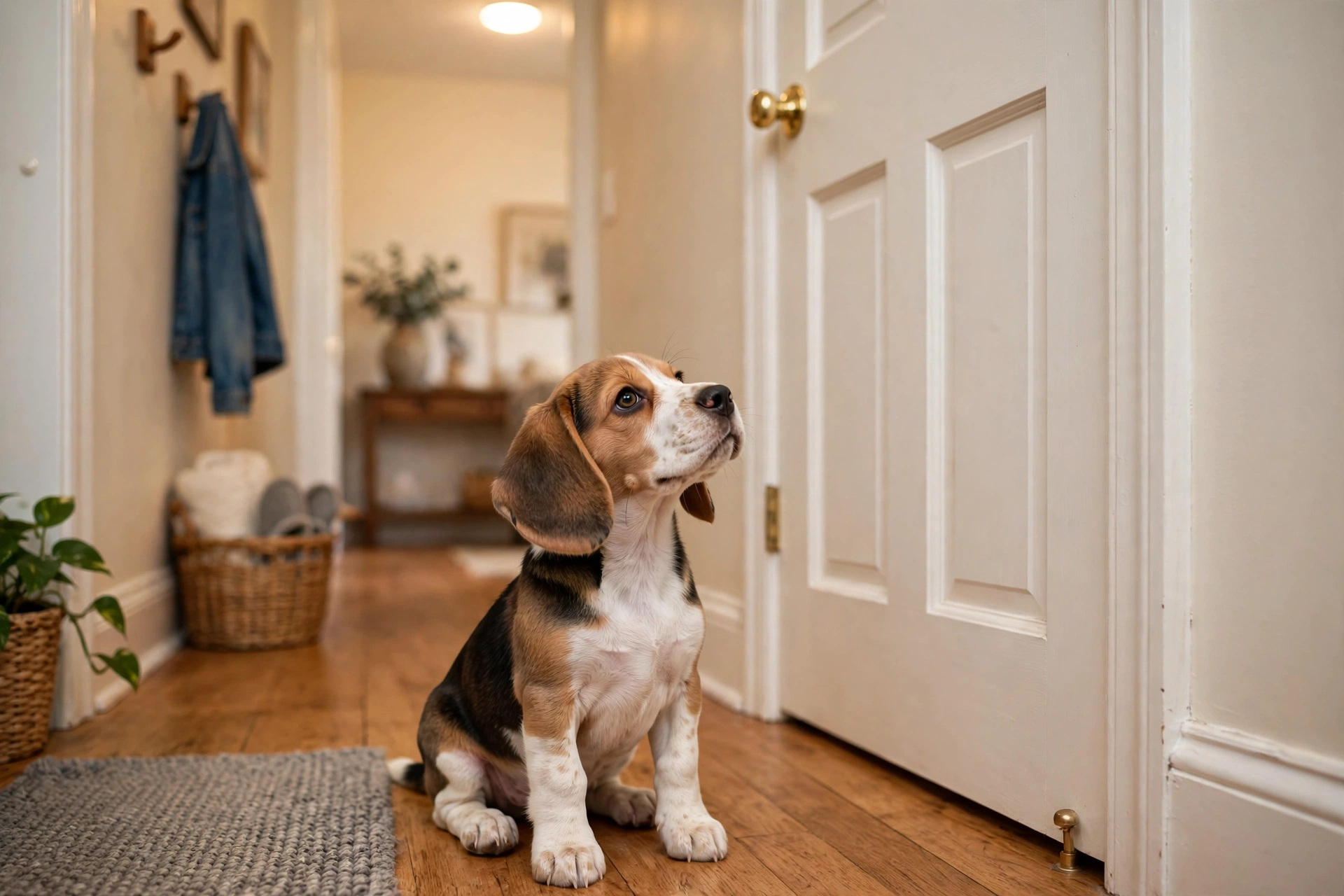
What Is a “Velcro Puppy”?
“Velcro dog” is the nickname trainers and vets give to dogs that stick to their owners like Velcro — room to room, minute to minute. A velcro puppy is the same thing in miniature: a young dog whose favorite place in the world is pressed against your leg.
Here’s the important framing: for a puppy, this is usually not a behavior problem. It’s a developmental stage plus instinct plus a completely rational strategy. You are, quite literally, the center of your puppy’s universe — food, safety, fun, and comfort all arrive through you. Following you is the smartest thing they can do.
That said, not all shadowing is equal. There’s a difference between a puppy who likes being near you and a puppy who can’t cope without you. We’ll get to that distinction — it matters.
7 Reasons Your Puppy Follows You Everywhere
1. Imprinting: You’re Their Mother Now
Puppies go through a critical socialization window in their first months of life, and young puppies — roughly from birth to 6 months — can imprint on their owners the way they’d imprint on their mother. Veterinarians note that during this phase, puppies look to their humans the way they’d look to their dam: for guidance, safety, and “what do I do now?” cues.
This is the single biggest reason young puppies shadow their people. Your puppy isn’t being needy — they’re doing exactly what nature programmed them to do: stay close to the caregiver. It usually softens naturally as they mature and gain confidence.
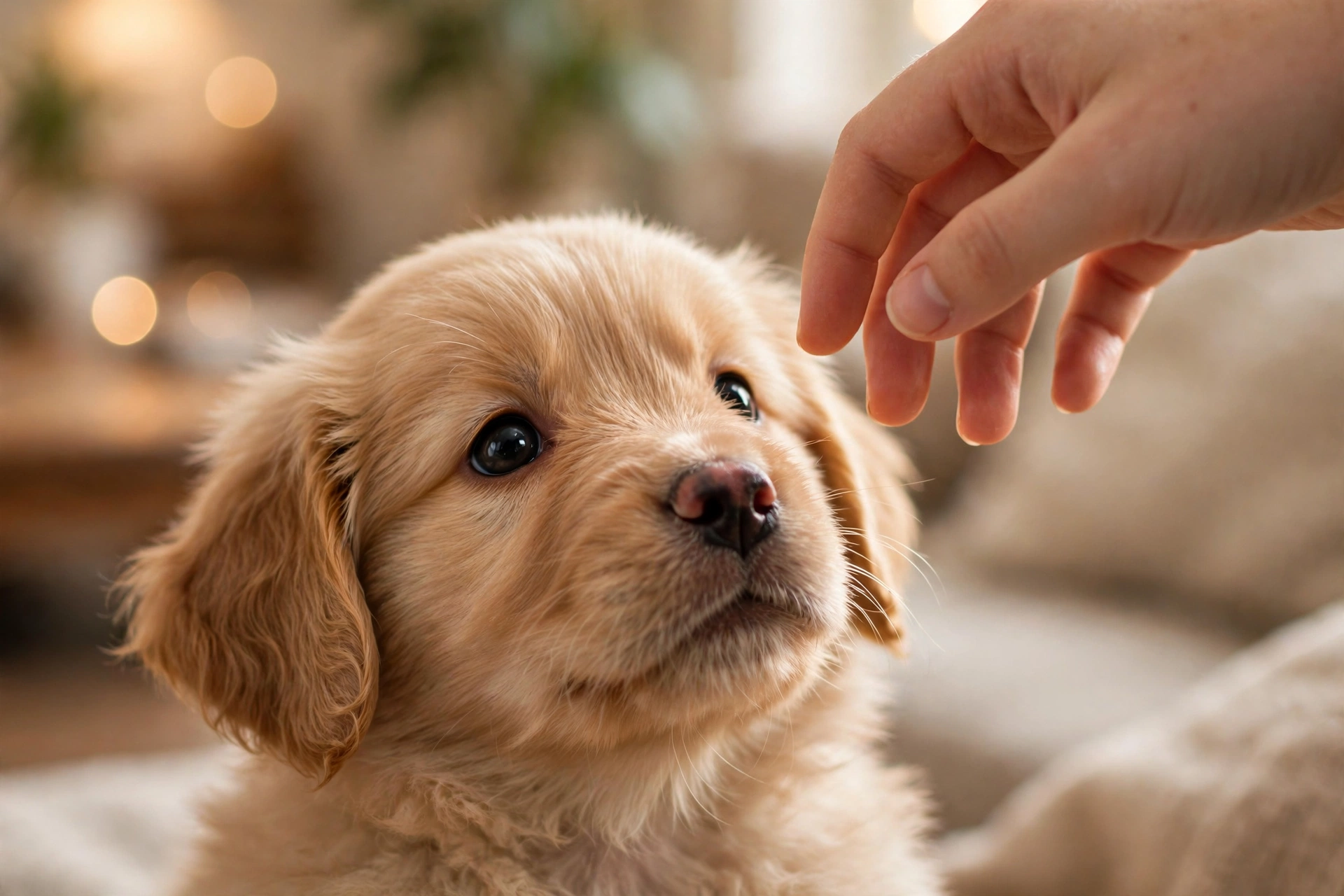
2. Pack Instinct: You’re Their Pack
Dogs are pack animals by ancestry, and modern dogs tend to treat their human family as their pack. In the wild, staying with the group meant survival; wandering off alone didn’t. That wiring didn’t disappear because your puppy now lives in an apartment.
So when your puppy trails you from the kitchen to the bedroom to the bathroom, part of what’s happening is ancient software running perfectly: stay with the pack.
3. You’ve Been Rewarding It (Probably Without Realizing)
This one is on us, and it’s the most fixable. Dogs repeat whatever gets rewarded. If every time your puppy follows you, they get a pat on the head, a belly rub, a treat, or even just delighted eye contact and baby talk — you’ve been running a very effective training program. The lesson your puppy learned: following the human makes good things happen.
There’s nothing wrong with affection. But if you reward clinginess 50 times a day and then feel frustrated by clinginess, it’s worth noticing the loop.
4. Breed Wiring Plays a Real Role
Some breeds were literally developed to stay glued to humans. Herding breeds like Border Collies were bred to read their handler’s body language all day. Toy breeds like Chihuahuas and Cavalier King Charles Spaniels were bred to be lap companions. Labrador and Golden Retrievers — the classic family puppies — are famously people-oriented.
Breed isn’t destiny — plenty of independent Labs and clingy terriers exist — but if your puppy’s breed was designed for close human partnership, expect a stronger shadow.
5. Boredom: You’re the Most Interesting Thing in the House
A bored puppy doesn’t lie down and contemplate life. They find something to do — and the most interesting, unpredictable, treat-dispensing thing in the house is you. If your puppy gets plenty of exercise and mental stimulation and still follows you, that’s affection. If the shadowing ramps up on lazy days and fades after a good play session or training round, boredom is doing a lot of the work.
Puppies need surprising amounts of both physical exercise and mental work. A puppy with an empty schedule will fill it with you.
6. New Home, New World: You’re the Only Familiar Thing
If your puppy is recently home — especially a rescue — everything is new: the smells, the sounds, the rooms, the rules. In a flood of unfamiliar stimuli, you are the one familiar thing. Rescue puppies in particular often form intense early attachments; after uncertainty, a safe human can feel like the only solid ground.
This kind of clinginess usually relaxes on its own as the puppy’s confidence grows and the home starts feeling like their territory too.
7. You’re the Source of Everything Good
Strip it down to pure logic: who opens the food? You. Who produces the walks, the games, the toys, the warm lap? You. Puppies are excellent economists. Keeping an eye on the source of all good things is simply good strategy — and every time you stand up, there’s a small chance something wonderful is about to happen.
Velcro Puppy vs. Separation Anxiety: How to Tell the Difference
This is the distinction that matters most. A velcro puppy prefers your company. A puppy with separation anxiety panics without it. One is sweet; the other is suffering — and needs a different response.
Signs it’s normal velcro behavior:
- Your puppy follows you but can settle when you leave the room — maybe after a whimper or two
- They play, eat, and nap normally when you’re home
- They’re happy and relaxed in your presence, not frantic
- They can be left with another family member without distress
- The behavior is steady, not escalating
Signs pointing toward separation anxiety:
- Panic when you leave: howling, barking, or crying that doesn’t stop
- Destructive behavior aimed at exits — scratching doors, chewing doorframes, breaking out of crates
- House-training regression that only happens when alone
- Drooling, panting, or pacing when they sense you’re leaving (keys, shoes, coat)
- They can’t eat, play, or settle at all when separated from you
- The clinginess is escalating over time, not fading
If you’re seeing the second list, that’s not “just a velcro puppy” — it’s worth working with a certified trainer or veterinary behaviorist. Separation anxiety is very treatable, but it usually doesn’t fix itself, and punishment makes it worse. (Note: this is behavioral guidance, not a diagnosis — when in doubt, talk to your vet.)
When Sudden Clinginess Is a Red Flag
A puppy who’s always been your shadow is one thing. A puppy who suddenly becomes clingy is another — and deserves attention.
Dogs who feel unwell, are in pain, or are experiencing vision or hearing changes often stick closer to their people for comfort and security. If your puppy’s shadowing ramps up out of nowhere — especially paired with appetite changes, lethargy, limping, or any new symptom — get them checked by a vet before assuming it’s behavioral.
Other sudden triggers: a big routine change (you started working from home — or stopped), a move, a new baby or pet, a frightening event like a thunderstorm or fireworks. Context usually explains it. When it doesn’t, the vet visit comes first.
How to Raise a Confident, Independent Puppy
You don’t need to fix velcro behavior — but you can gently shape it toward healthy independence. The goal isn’t a puppy who doesn’t care about you. It’s a puppy who loves you and can cope when you’re in the other room.
1. Reward Independence, Not Just Closeness
Start noticing and rewarding the moments your puppy chooses to settle alone — lying on their bed while you cook, chewing a toy across the room, napping without touching you. A quiet treat tossed to a calm, independent puppy teaches a powerful lesson: good things happen over there too.
2. Practice Micro-Separations
Don’t go from 24/7 togetherness to a full workday alone. Practice tiny absences: step into another room for 30 seconds, return calmly, repeat. Then a minute. Then five. Keep departures and returns boring — no dramatic goodbyes, no excited reunions. You’re teaching your puppy that you leaving is the most unremarkable event in the world.
3. Build a Positive “Alone” Toolkit
Give your puppy things that are only available during solo time: a stuffed Kong, a long-lasting chew, a snuffle mat. If amazing things happen when you’re briefly away, alone time stops feeling like punishment and starts feeling like opportunity.

4. Meet the Exercise and Brain-Work Quota
A tired puppy is an independent puppy. Age-appropriate physical exercise plus real mental stimulation — training sessions, puzzle feeders, sniff walks, novel environments — drains the restless energy that fuels anxious shadowing. Many “clingy” puppies are simply under-exercised puppies.
5. Teach a Solid “Place” Cue
Training your puppy to go to a mat or bed and settle there is one of the most useful skills for a shadow puppy. It gives them a job that isn’t “follow the human.” Start close to you, then gradually increase the distance. Reward calm settling generously — you’re building an alternative to shadowing.
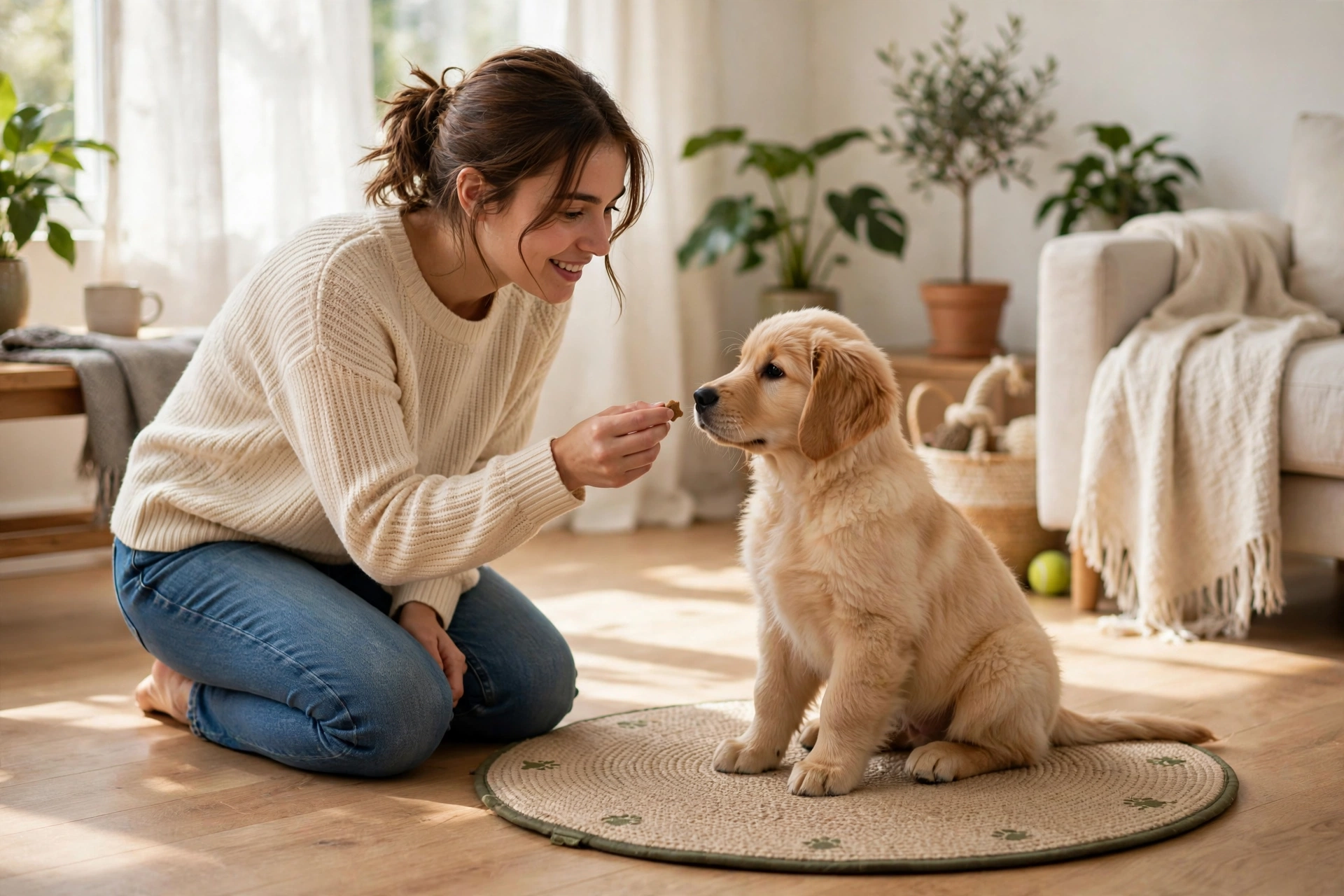
6. Stop Accidentally Training Clinginess
Audit your own habits for a day. Do you talk to, pet, or treat your puppy every single time they press against you? Try this instead: give affection when you initiate it, and stay neutral (not cold — just calm) when your puppy demands it by shadowing. You’re not withdrawing love; you’re just no longer paying a salary for following.
The Bottom Line
Your puppy follows you everywhere because, from their point of view, you’re the best thing in their world — the source of safety, food, fun, and love. For most puppies, it’s a phase layered on top of instinct, and it softens as confidence grows.
Enjoy the shadow while it lasts — one day you’ll miss tripping over it. Just keep an eye on the line between devotion and distress, build independence gradually, and you’ll end up with the best of both: a dog who adores you and can handle life when you’re not in the room.
Frequently Asked Questions
Why does my puppy follow me everywhere and not my partner?
Puppies tend to shadow the person who provides the most — the one who feeds, trains, walks, and plays the most. It’s not about loving one person more; it’s about who has become the puppy’s primary caregiver and source of good things. The pattern can shift if someone else takes on more of the daily care.
Is it normal for a 3-month-old puppy to follow me everywhere?
Completely normal. At 3 months, puppies are in peak imprinting phase and have almost no independence skills yet. Shadowing at this age is textbook developmental behavior and usually eases as the puppy matures and gains confidence — often noticeably by 6 months.
Should I let my puppy follow me everywhere?
For a young puppy, yes — within reason. Constant shadowing in the early weeks is normal bonding. But it’s smart to simultaneously build small independence skills (brief alone time, rewarding solo settling) so the habit doesn’t harden into a puppy who can’t cope without you.
Why does my puppy follow me to the bathroom?
Because you got up, and getting up might mean something interesting. Bathrooms are also small, enclosed spaces — some puppies find that cozy, and the closed door makes your absence very obvious. It’s one of the most commonly reported (and joked about) puppy behaviors, and it’s harmless.
How do I know if my puppy has separation anxiety or is just clingy?
Watch what happens when you leave. A clingy puppy may whine briefly then settle; a puppy with separation anxiety panics — persistent howling, destructive behavior at exits, inability to eat or rest alone, and distress cues (panting, drooling, pacing) when they sense you’re leaving. If you’re seeing panic rather than preference, consult a trainer or vet.
Will my velcro puppy grow out of it?
Mostly, yes — with help. The intense shadowing of early puppyhood typically fades as puppies mature, gain confidence, and learn independence skills. Puppies who are never taught to be alone, or whose clinginess is constantly rewarded, are more likely to stay velcro adults. Gentle independence training now pays off for years.
Related reads
- Puppy Training Schedule: What to Teach by Age
- How Much Exercise Does a Puppy Need? Age Rule
- Puppy Blues: Is It Normal to Regret Getting a Puppy?

