
You are walking your puppy down a quiet street, everything is going fine — and then another dog appears at the far end of the sidewalk. In about two seconds your sweet, wiggly puppy turns into a barking, lunging tornado at the end of the leash. People stare. You smile awkwardly and apologize. If you have been Googling why does my puppy bark at other dogs after one of these embarrassing walks, take a breath: you are dealing with one of the most common puppy behaviors on the planet, and it has a name, an explanation, and a fix.
Trainers call it leash reactivity. It sounds serious, but in most puppies it is simply big feelings expressed very loudly. Your puppy is not being “bad,” stubborn, or dominant — he is frustrated, excited, or nervous, and barking is the only tool he has. The good news: puppies are incredibly trainable at this age, and those explosive walks can turn into calm ones. This guide explains what is going on in your puppy’s head, the mistakes that make it worse, and a step-by-step plan to fix it.
What Leash Reactivity Actually Is
Leash reactivity is an over-the-top reaction — barking, lunging, whining, or spinning — that happens when a dog sees a trigger (most often another dog) while on leash. The key word is on leash. Many puppies who explode on walks are perfectly friendly, polite greeters when they are off leash in a safe, enclosed space. That difference is the biggest clue that this is not about your puppy’s personality being “wrong.”
Think of the leash as removing all of your puppy’s choices. Off leash, a dog can approach a new dog in a curve, sniff, pause, or walk away if things feel weird. Dogs have a whole body language for polite greetings, and it depends on freedom of movement. On leash, your puppy is tethered. He cannot choose the distance, the angle, or the escape route. When a strong emotion hits — excitement, frustration, or fear — and there is nowhere to put it, it comes out as barking and lunging.
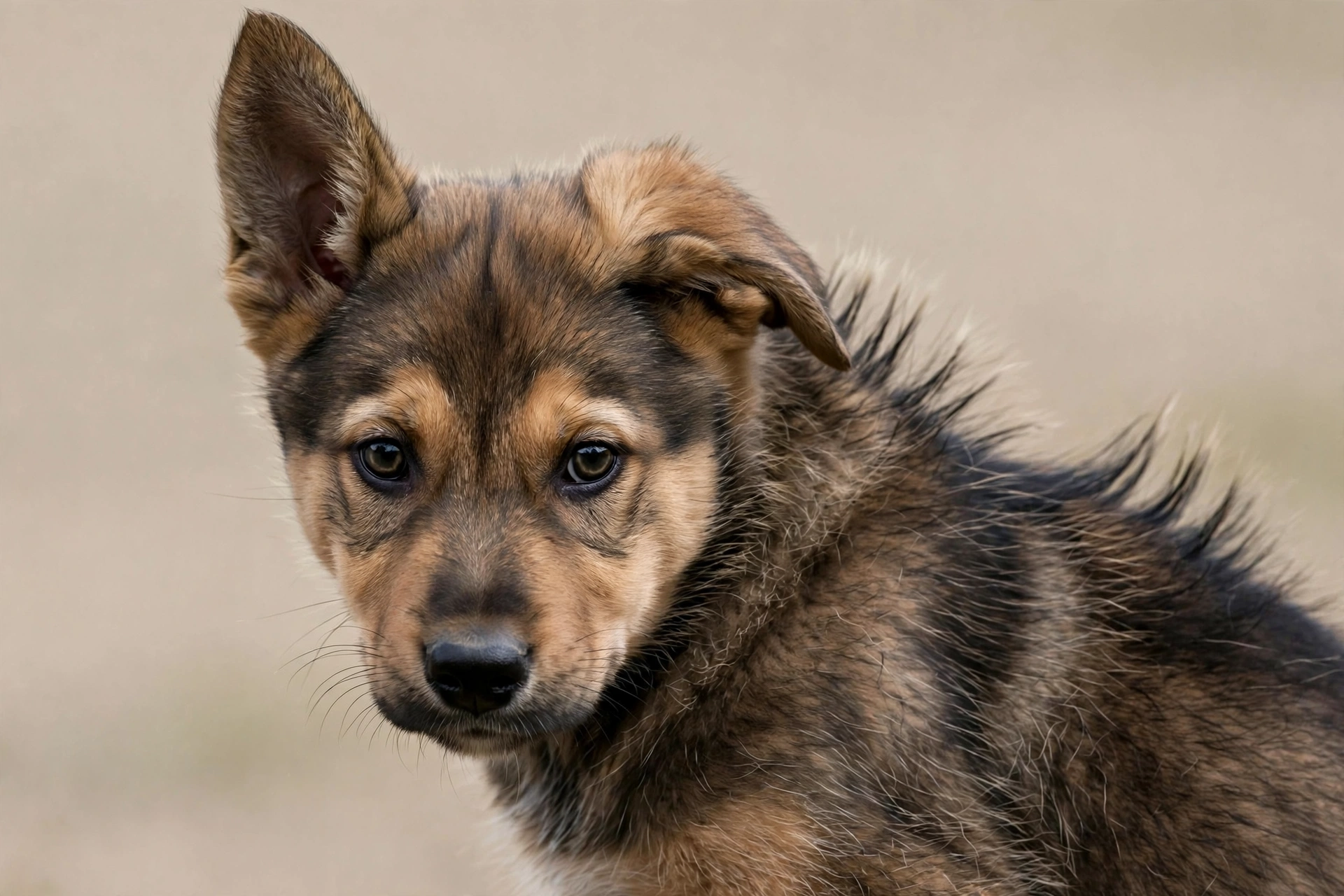
Reactivity Is Not Aggression
This is the single most important thing to understand. Reactivity is an emotional overreaction; aggression is an intent to cause harm. They can look similar from across the street, but they are driven by completely different things. Most barking puppies are what trainers call “frustrated greeters” — they actually want to get closer to the other dog, not drive it away. True aggression in young puppies is rare.
That said, loud behavior still needs training. A 30-pound puppy lunging and screaming at another dog is stressful for everyone, including your puppy. And rehearsing this behavior walk after walk can turn a temporary phase into a lasting habit. So take it seriously — but do not panic, and definitely do not label your puppy aggressive.
Why the Leash Changes Everything
Three things happen on leash that do not happen off leash. First, the leash itself creates tension — when your puppy pulls toward the other dog and hits the end of the leash, that pressure raises arousal and strengthens the reaction. Second, owners instinctively tighten the leash and tense up when they see another dog coming, and puppies read our body language brilliantly. Your tension becomes his tension. Third, there is no option to retreat. A slightly nervous puppy off leash might just arc away; on leash, barking feels like the only available strategy.
So when you wonder why does my puppy bark at other dogs on walks but plays politely off leash, the leash itself is the biggest part of the answer. You are not trying to “correct” a bad dog — you are teaching an overwhelmed puppy a calmer way to handle a situation that genuinely feels hard for him.
Why Does My Puppy Bark at Other Dogs? 7 Reasons Explained
Not every barking puppy is barking for the same reason. Figuring out your puppy’s reason matters, because it shapes how you train. Watch your puppy closely on the next few walks and see which of these sounds most familiar.
1. Frustration: He Wants to Say Hi and the Leash Says No
This is the number one reason puppies bark at other dogs, and it is actually the friendliest one. Your puppy sees a dog, wants to run over and play, and the leash stops him mid-wish. That blocked desire builds up like steam in a kettle, and the barking is the whistle. Trainers call it barrier frustration, and it is incredibly common in social, playful puppies between 3 and 8 months old.
The clue that frustration is the driver: your puppy’s body looks bouncy and wiggly rather than tense. He may play-bow, wag his whole back end, or whine in between barks. He wants to get closer, not farther away. The fix for a frustrated greeter focuses on teaching him that calm behavior — not barking — is what earns greetings and rewards.
2. Excitement and Over-Arousal
Some puppies are simply running too hot. Puppies have terrible impulse control — their brains are still developing the “calm down” circuitry — so a walk that already has them buzzing with smells, sounds, and movement can push them over the edge the moment a dog appears. The barking is excitement spilling out with nowhere to go.
Over-aroused puppies often cannot respond to cues they know perfectly well at home. If your puppy “forgets” his name the second another dog appears, that is not disobedience; his thinking brain has been temporarily hijacked by his emotional brain. Training for these puppies starts with lowering the overall excitement level of walks before asking for calm around other dogs.
3. Fear or Insecurity
On the other end of the spectrum, some puppies bark because the other dog genuinely worries them. Barking makes most things back away — people cross the street, owners turn around — so a nervous puppy quickly learns that barking works as a “keep your distance” signal. This is defensive behavior, not confidence.
Fear-based barkers often show stress signals before the explosion: ears pinned back, tucked tail, lip licking, yawning, or freezing for a split second. Their barking tends to sound sharper and more frantic, and their body leans away from the other dog even as they lunge. These puppies need patience and distance most of all — pushing them closer to what scares them will only confirm that other dogs are a threat.
4. Under-Socialization
Puppies go through critical learning windows in their first months, and positive, controlled exposure to other dogs during that time teaches them that strange dogs are normal and boring. A puppy who missed out — perhaps he came from a home with no other dogs, or his vet advised keeping him home until vaccinations were complete — may simply have no idea how to process the sight of another dog.
Under-socialized puppies often react with a mix of fascination and alarm: intense staring, then barking. The good news is that careful, gradual exposure at this age can still build those social skills. The key word is gradual — flooding a worried puppy with dog encounters will backfire.
5. Learned Behavior: Barking Worked Before
Dogs repeat what works. If your puppy barked at a dog once and the other dog walked away (which happens naturally — the other owner just kept walking), your puppy may have concluded: “My barking made that dog leave. Barking works!” Similarly, if you turned around and left when he barked, he learned that barking controls the walk.
This is not manipulation — it is just how learning works. But it means every walk where barking “succeeds” strengthens the habit. The training plan below is designed to break this cycle by rewarding the behavior you want instead: noticing the other dog and staying calm.
6. Trigger Stacking: The Walk Was Already Too Much
Sometimes the other dog is just the last straw. A puppy who has already dealt with a loud truck, a skateboarder, and a squirrel chase is carrying a backpack full of stress. Trainers call this trigger stacking — each stressful event adds arousal, and the puppy’s threshold for coping drops with each one. This explains why your puppy can pass a dog calmly at the start of a walk but explodes near the end. Shorter, calmer walks with fewer surprises often fix this on their own.
7. Mimicking and Protective Instinct Around You
Puppies learn by watching. If your household has an older dog who barks at passing dogs, your puppy may simply be copying the resident expert. Puppies also pick up on your patterns — if you tense up, shorten the leash, and mutter “oh no” every time a dog approaches, your puppy learns that other dogs are a big deal before he has even formed his own opinion.
Some puppies also bark from a protective impulse toward their owner, especially as they enter adolescence. It usually comes from insecurity rather than genuine guarding instinct at this age, but it is worth noting: the more confident and relaxed you act on walks, the calmer your puppy will be.
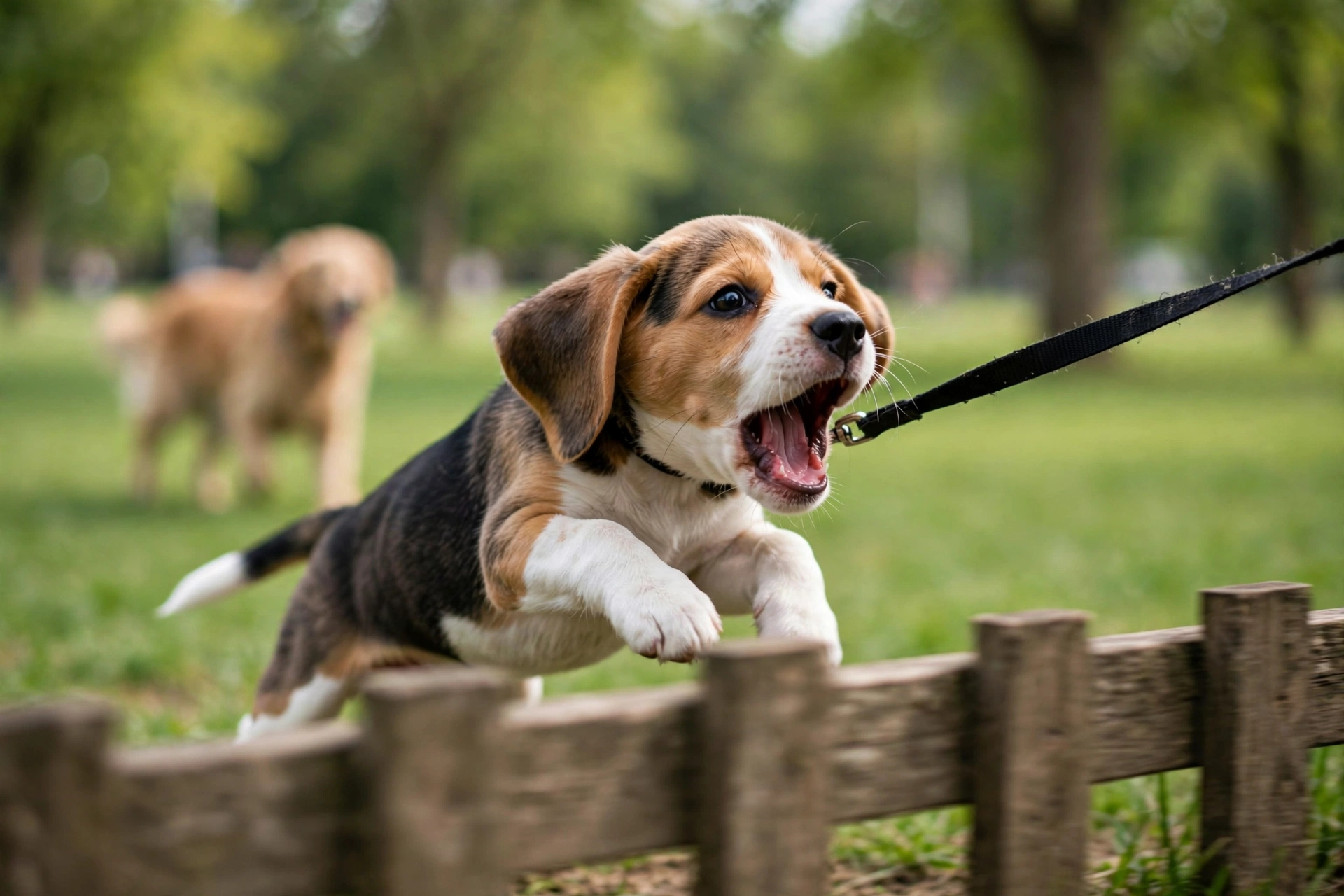
What NOT to Do: Mistakes That Make Reactivity Worse
When your puppy is barking his head off on a walk, the instinct is to do something — fast. Unfortunately, the most common reactions are the ones that make leash reactivity worse over time. Here is what to avoid and why.
Do not yank the leash. A sharp leash pop adds pain and startle to a moment your puppy is already struggling with. At best, it suppresses the barking for a second without changing how he feels; at worst, he connects the pain with the sight of the other dog, and now other dogs predict pain. That is how you turn frustration into fear.
Do not yell at him to stop. From your puppy’s perspective, you are now barking too — which can confirm that this is indeed a barking situation. Yelling raises the arousal of the whole scene. A calm, quiet owner is one of the most powerful training tools you have.
Do not use prong collars, shock collars, or other aversive tools. This one matters enough to say clearly: punishment-based tools may quiet a puppy in the moment, but they do not teach calm feelings, and the research points the other way. A 2026 Frontiers in Veterinary Science study interviewed 35 U.S. dog trainers and found that every reward-based trainer in the group had personally switched away from aversive tools like prong and shock collars, citing empathy for dogs and education in positive reinforcement. The consistent finding across the field is that aversive tools tend to suppress behavior without resolving the underlying emotion — and with reactivity, suppressing the bark while the fear or frustration grows is how problems escalate. If anyone tells you your puppy needs a “correction” for barking at dogs, get a second opinion from a trainer who works with positive reinforcement.
Do not force greetings to “get him used to it.” Dragging a barking puppy up to another dog to prove dogs are friendly is called flooding, and it routinely backfires. A puppy over threshold cannot learn; he can only panic. Calm exposure happens at a distance where your puppy can still think.
Do not punish the warning signs. Growling, freezing, and even barking are communication. If you punish a puppy for communicating discomfort, you do not remove the discomfort — you remove the warning. Always work on the feeling underneath, not the noise on top.
The Calm-Walk Fix: A 6-Step Training Plan
Here is the part you came for. Once you understand why does my puppy bark at other dogs — big feelings, no choices, a leash in the way — the fix becomes straightforward: reward your puppy for noticing other dogs without reacting, and manage the environment so he stays under his emotional threshold while he learns. It takes consistency, not perfection, and most owners see real improvement within a few weeks of daily practice.
Step 1: Find Your Puppy’s Threshold Distance
Every puppy has a distance at which he can see another dog and still think — and a closer distance where his brain switches off and the barking starts. Your first job is to find that line. On your next walk, watch carefully: at what distance does your puppy notice a dog but stay relatively relaxed? That might be across a wide street, half a block, or even farther. That distance is your starting point for all training. Everything happens at or beyond threshold distance until he is ready for more.
Step 2: Manage Distance First — Cross the Street, Make U-Turns
Before your puppy learns anything new, you need to stop rehearsing the old behavior. Every explosive bark-fest strengthens the habit, so your immediate goal is to engineer walks where barking does not happen. See a dog ahead? Cross the street early. Duck behind a parked car. Turn around cheerfully and walk the other way. There is zero shame in avoidance during training — it is strategy, not surrender. Management is what gives training a chance to work.
Step 3: Reward Calm Noticing — The “Look at That” Game
This is the core exercise. At threshold distance, the moment your puppy notices another dog — ears perk, eyes lock — mark it with a cheerful “yes!” and deliver a high-value treat (real chicken, cheese, whatever makes his eyes go wide). You are building a new association: other dog appears → good things happen → I look back at my owner. Over many repetitions, the sight of another dog becomes a cue to check in with you instead of exploding. This is sometimes called the “engage-disengage” or “look at that” game, and it is the backbone of most professional reactivity programs. Keep sessions short: five to ten calm repetitions beat one long, stressful one.
Step 4: Teach a Rock-Solid “Let’s Go” U-Turn Cue at Home
You need an emergency exit for moments when a dog appears too close, too fast. At home, with no distractions, teach a U-turn: say “let’s go!” in a happy voice, lure your puppy around with a treat, and reward generously when he spins with you. Practice until it is automatic and joyful — then bring it to quiet streets, then to real walks. A well-trained U-turn lets you create distance before your puppy goes over threshold, which means fewer reactions to undo.
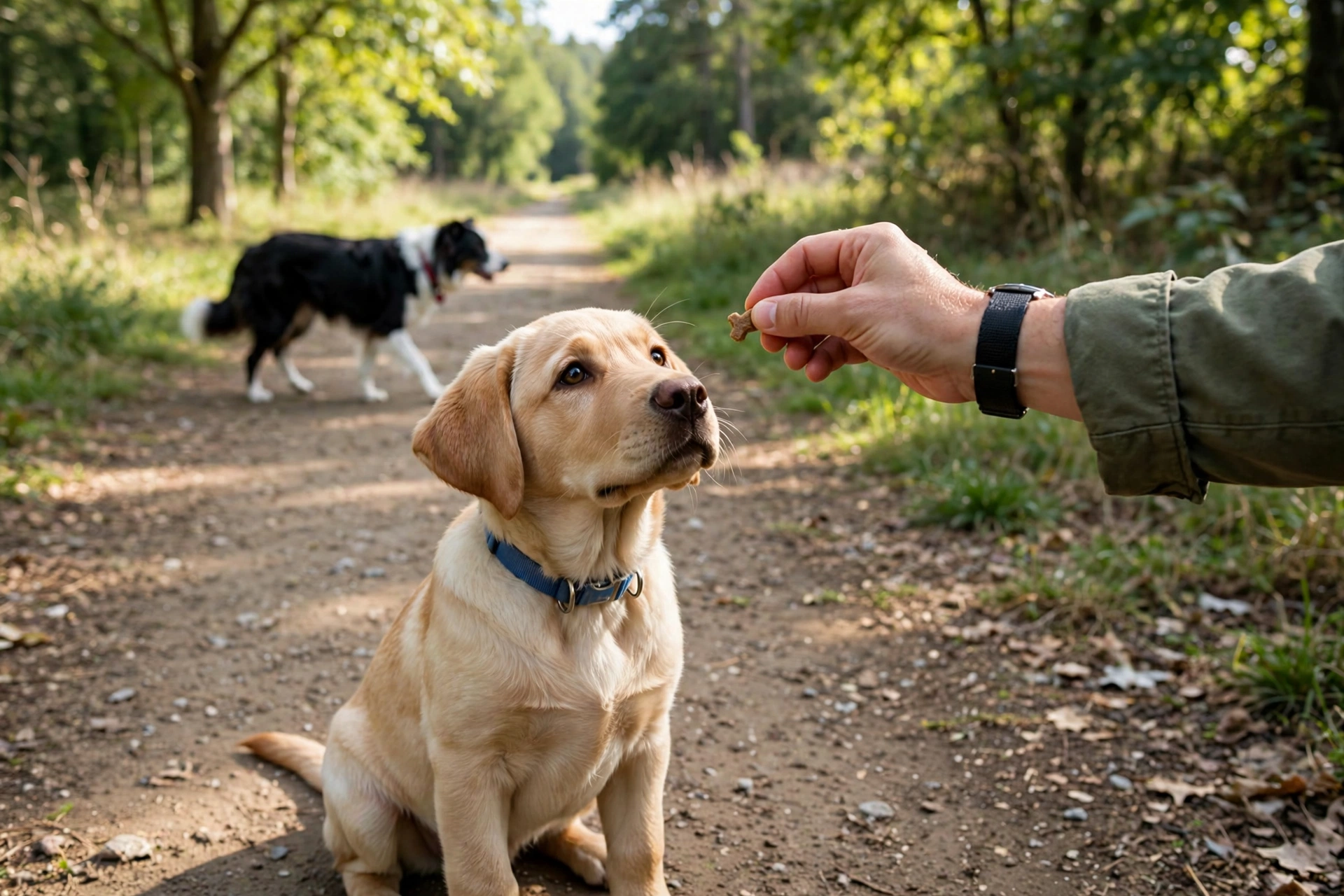
Step 5: Keep Practice Sessions Short and Structured
Do not try to fix this on a single epic walk. Ten focused minutes — a few calm repetitions of the “look at that” game at a good distance — beats an hour-long walk full of reactions. Separate “training walks” (short, structured, in a quiet area with good sightlines) from “exercise walks” (sniffy, relaxed, at off-peak times). Short sessions keep your puppy under threshold and keep you both from burning out.
Step 6: Decompress After — Sniffy Walks, No More Triggers
After a training session, give your puppy a cooldown. Let him sniff freely on a long leash in a quiet area, with no dogs in sight. Sniffing is naturally calming for dogs — it lowers heart rate and gives the thinking brain a chance to come back online. Think of it like a cool-down lap after a workout. Puppies who get regular decompression time recover faster from the stress of training and make steadier progress week to week.
The golden rule: train the puppy you have today, not the one you wish you had. If he can only handle dogs at 50 feet this week, that is your starting line — not a failure. Distance is your best friend, and it shrinks naturally as his confidence grows.
Walk Management While You Train
Training is the long game; management is what keeps your walks livable right now. Set yourself up for success with a few practical changes.
- Switch to a front-clip harness. A harness that clips at the chest gives you steering without neck pressure, and it removes the choking sensation that can spike arousal. It will not train your puppy by itself, but it makes every walk calmer and safer while training does its work.
- Carry high-value treats on every walk. Your puppy’s regular kibble will not cut it when another dog appears. Bring the good stuff — small pieces of cooked chicken, cheese, or freeze-dried meat — in an easy-access treat pouch. You want to be the most interesting thing on the walk.
- Walk at quiet times. Early mornings and late evenings usually mean fewer dogs on the street. Fewer surprise encounters means more successful training repetitions and less trigger stacking.
- Scout your routes. Choose streets with wide sidewalks, good visibility, and easy escape routes. Avoid narrow paths with blind corners where a dog can appear suddenly inside your puppy’s threshold distance.
- Advocate for your puppy’s space. It is completely okay to body-block, cross the street, or tell a stranger “we’re training, please give us space.” You are your puppy’s guardian on walks. Protecting his space is not rude — it is responsible ownership.
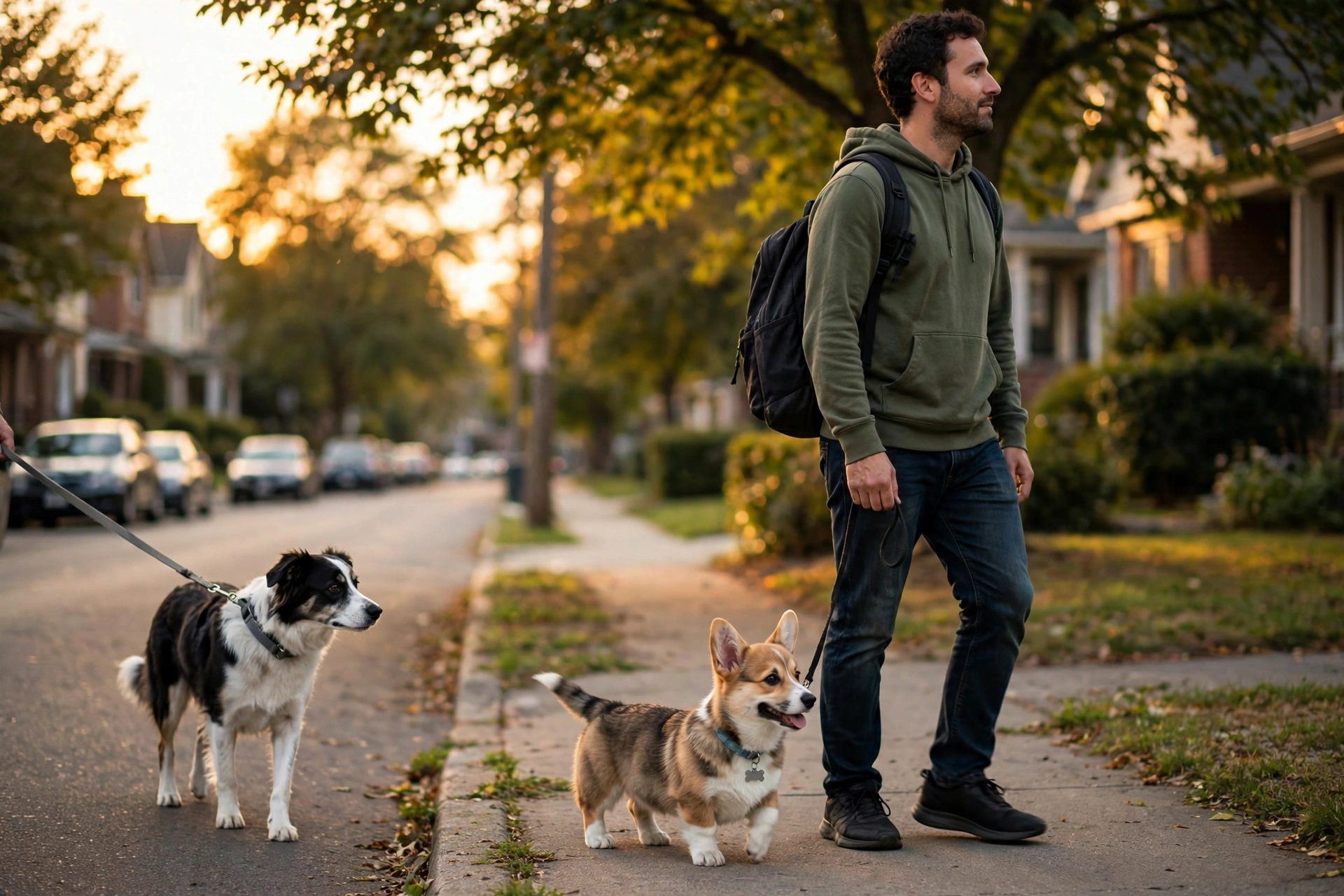
Red Flags: When to Call a Professional
Most leash reactivity in puppies improves with consistent training, but some situations need expert eyes sooner rather than later. Contact a qualified, positive-reinforcement-based trainer or a veterinary behaviorist if you notice any of these:
- Bite attempts. If your puppy is snapping at or making contact with people or dogs — not just barking and lunging — do not wait. That needs professional assessment.
- He cannot recover. A puppy who stays shaking, panting, or shut down long after the other dog is gone is telling you the experience overwhelmed him. Training plans need adjusting when recovery takes that long.
- It is getting worse, not better. If you have been training consistently for two to three weeks — managing distance, rewarding calm — and the reactions are intensifying or starting at greater distances, something in the plan needs a professional’s eye.
- Fear so severe he shuts down. A puppy who freezes, tries to bolt, or goes completely flat (not just barking, but total shutdown) is experiencing genuine distress. That is beyond DIY training.
When choosing a trainer, look for credentials like CPDT-KA or IAABC membership and a clear commitment to reward-based methods. Ask directly: “Do you use prong, shock, or choke collars?” If the answer is anything but no, keep looking.
Frequently Asked Questions
Is it normal for puppies to bark at other dogs?
Yes — extremely normal. Barking at other dogs on leash is one of the most common puppy behaviors trainers see. Most of the time it comes from frustration, excitement, or nervousness rather than anything wrong with your puppy. It is a training issue, not a character flaw.
Will my puppy grow out of leash reactivity?
Sometimes, but do not count on it. Mild cases in very young puppies can fade as impulse control develops — but unaddressed reactivity often becomes a stronger habit with rehearsal. Training it now, while your puppy is young and flexible, is far easier than undoing a year of practiced barking later.
Should I let my puppy greet every dog on walks?
No. On-leash greetings are one of the trickiest social situations for dogs — the leash restricts natural body language and both dogs can feel trapped. Letting your puppy greet every dog also teaches him that every sighting means an exciting interaction, which fuels frustration barking. Keep greetings rare, brief, and only with calm, known dogs.
Does barking on leash mean my puppy is aggressive?
Almost certainly not. The vast majority of barking puppies are frustrated greeters, over-excited adolescents, or nervous pups using barking to create distance. True aggression in puppies is rare. That said, if you ever see snapping or bite attempts, treat it seriously and consult a professional.
How long does it take to fix leash reactivity?
There is no fixed timeline, and anyone who promises one is selling something. With consistent daily practice, many owners notice real improvement within two to four weeks, and steady progress over two to three months is typical for meaningful, lasting change. Young puppies often progress faster than adult dogs because the habit is newer. Consistency matters more than speed.
Can an older puppy still learn to walk past dogs calmly?
Absolutely. Puppies remain highly trainable well into adolescence and beyond — dogs of any age can learn new emotional responses with patient, reward-based training. An older puppy (8–12 months) may need a bit more time if the habit is well rehearsed, but the same plan applies: manage distance, reward calm, and build up gradually.
Related Reads
- Puppy Fear Periods: Why Is My Puppy Suddenly Scared of Everything? — if fear is driving the barking, this explains the developmental fear stages every puppy goes through.
- Why Does My Puppy Follow Me Everywhere? — understand the bond behind the behavior, and why your puppy takes emotional cues from you on walks.
- Puppy Training Schedule: What to Teach by Age — the full age-by-age training roadmap so reactivity work fits into a bigger plan.

