
You planted the flowers on Saturday. By Sunday afternoon, your garden looked like a construction site — craters everywhere, a puppy with mud caked up to his elbows, and one very proud little face staring back at you without a shred of remorse. If you have ever asked yourself why does my puppy dig holes with such joyful, unstoppable dedication, you are not alone — and no, your puppy is not broken, spiteful, or “bad.” He is doing exactly what dogs have done for thousands of years.
Here is the truth most frustrated owners need to hear first: digging is not a behavior problem. It is a dog behavior — as natural as barking, sniffing, and stealing your socks the second you look away. The goal was never to erase it from your puppy’s personality. The goal is to understand it, then channel it somewhere that does not destroy your flowerbeds.
This guide walks through the 7 real reasons puppies dig — from ancient instinct to pure, muddy joy — and then gives you a practical, punishment-free plan to redirect the digging to a place everyone can live with. No scolding, no weird gadgets, no guilt. Just a plan that works with your puppy’s nature instead of against it.
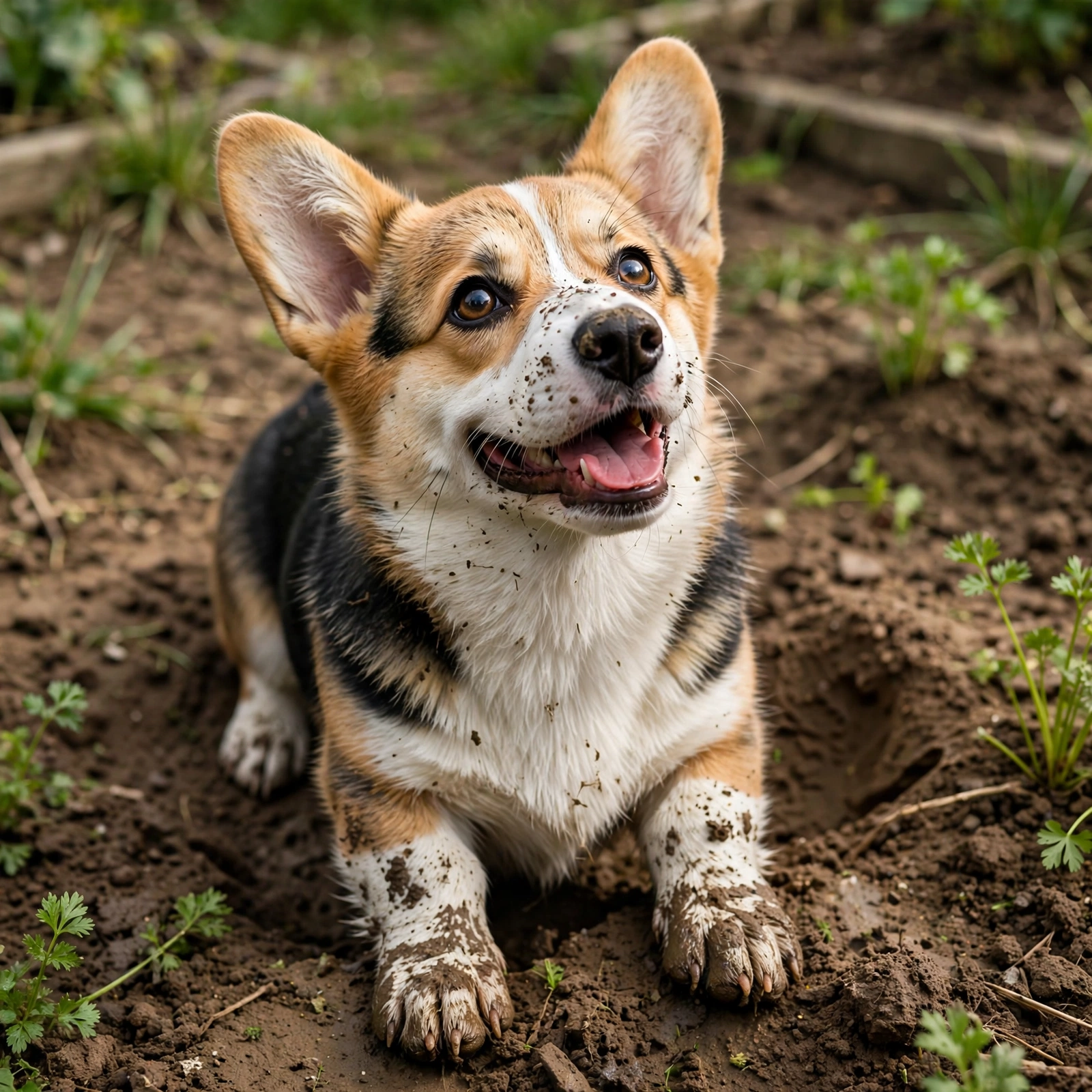
Why Does My Puppy Dig Holes? 7 Reasons
Before you can fix the digging, you have to understand the digger. Puppies rarely dig for just one reason — most of the time it is a cocktail of instinct, energy, boredom, and sheer opportunity. Read through these seven reasons and see which ones sound like your puppy. Odds are you will recognize at least two.
Reason #1: It Is Pure Instinct
Digging is written into your puppy’s DNA, and for some breeds it is practically a job description. Terriers were literally bred to dig — the word “terrier” comes from terra, the Latin word for earth. Dachshunds were designed to dig their way into badger dens. Huskies and malamutes dig sleeping hollows into snow. But even breeds with no digging profession carry the ancient programming: wild canids dig dens to raise their pups, and they bury surplus food to hide it from scavengers.
So when your ten-week-old puppy — who has never seen a badger, a burrow, or a wilderness in his life — starts excavating your petunias with total professional commitment, he is not being naughty. He is running software that is thousands of years old. You cannot train instinct out of a dog any more than you can train the wag out of a tail. What you can do is give that instinct a legal outlet, which is exactly what the dig-pit plan in the next section does. Fighting instinct is a losing battle; employing it is a strategy.
Reason #2: He Is Bored and Full of Energy
This is the number-one driver behind most destructive digging, and it is also the most fixable. A puppy who is not getting enough exercise and mental stimulation does not just sit quietly and reflect on his choices — he invents his own entertainment. And digging is spectacular entertainment: it is physical, it engages the nose, it makes interesting sounds, the ground literally changes shape under his paws, and every scoop reveals new smells. From a boredom standpoint, it is a five-star activity with endless replay value.
Think of it this way: every puppy has a daily budget of energy and curiosity, and it will be spent somewhere. If you do not spend it on walks, play, training games, and sniffy adventures, he will spend it on your lawn — with interest. The puppies who dig the most ambitious holes are very often simply the puppies with the fullest unspent energy tanks. The good news is that this reason responds fast: add real exercise and brain work to the day, and the crater production usually drops within a week. It is the first step of the plan below for exactly that reason.
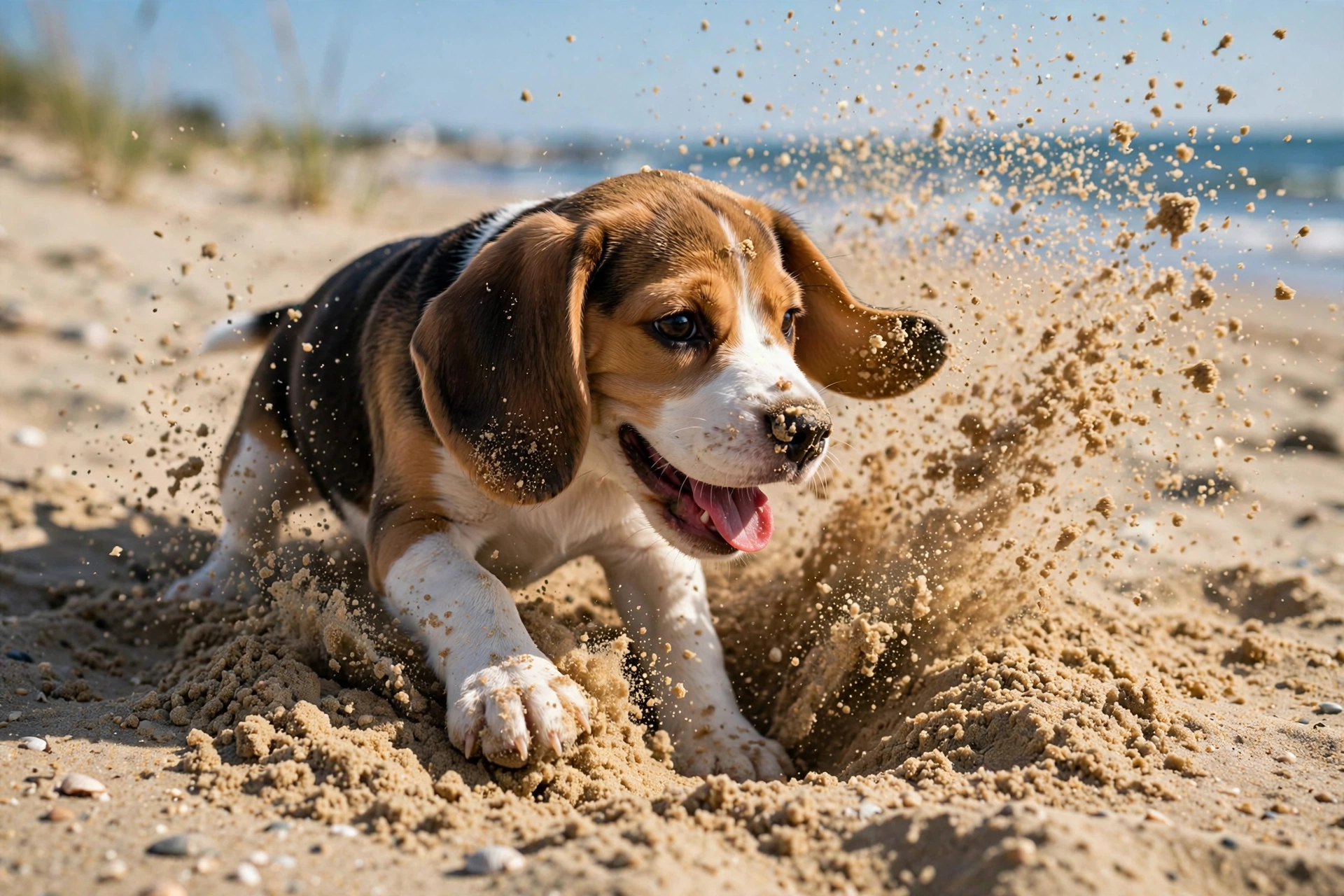
Reason #3: He Is Cooling Off
Watch when your puppy digs, and you will often catch this one in the act. On warm days, dogs dig down to the cooler earth beneath the sun-baked surface, then flop into the hollow they have made with a deep sigh of satisfaction. It is natural air-conditioning — the same reason desert canids dig shallow resting scrapes. If your puppy’s favorite excavation project sits in the shadiest corner of the yard and ends with him lying in it like a king in a bathtub, you are looking at a cooling strategy, not a landscaping complaint.
This reason matters because it completely changes the solution. A puppy who digs to cool off does not need more training — he needs shade, fresh water, and a cool place to rest. Give him a shady spot with a raised cooling bed or a shallow kiddie pool, and the “cooling holes” often stop on their own within days. Punishing a dog for trying not to overheat would be unfair twice over, and it would not work anyway — the relief of cool earth will always beat the memory of a scolding.
Reason #4: He Is Burying Treasure
Did your puppy ever receive a bone or a favorite toy, trot off with great ceremony, and then start digging with intense, focused purpose? Congratulations — you witnessed caching, one of the oldest survival behaviors in the canid playbook. Wild dogs and wolves bury surplus food to hide it from competitors and save it for leaner times. Your puppy, presented with a high-value chew he cannot finish in one sitting, does the logical ancestral thing: he saves it for later.
The funny part is that most modern puppies are terrible at the “later” part. He buries the treasure with great seriousness, forgets the location within the hour, and then digs three brand-new holes looking for it. If the digging clusters around wherever he receives treats, chews, or new toys, you are watching a tiny food-security program run its course on your lawn. It is genuinely hard to be mad at a puppy for planning ahead — even if his filing system desperately needs work.
Reason #5: He Is Hunting
Sometimes the digging has a target, and your puppy knows exactly what he is doing. Puppies have noses that put ours to shame — they can smell earthworms and grubs moving underground, hear the faint rustle of insects in the soil, and notice the tiny soil disturbances that betray something living below the surface. When prey drive switches on, the paws follow automatically. This is the same drive that made terriers legendary ratters, just pointed at your lawn’s earthworm population.
You will recognize hunting digs by their intensity and focus: the puppy zeroes in on one spot, digs frantically with total concentration, and may whine, bark, or shove his whole snout into the hole. He is not messing around — he is working. Dogs bred for high prey drive, like terriers, beagles, and dachshunds, are the most enthusiastic underground hunters, but any puppy can catch the bug on a warm evening when the soil is alive with interesting smells. The digging is the point, and the “prey” is very often just a deeply confused earthworm.
Reason #6: He Is Anxious or Lonely
This is the one reason on this list that deserves your full attention rather than a laugh. When digging concentrates along fence lines, under gates, or near the door you walked out of — especially when the puppy is left alone — it can be an escape attempt driven by separation anxiety or loneliness. The puppy is not trying to ruin the fence. He is trying to get back to you, the most important thing in his world.
Look for the context clues before you decide: does the digging happen mainly when he is alone? Is it paired with barking, whining, drooling, or destructive chewing? Does he seem frantic and distressed rather than playful? If so, the digging is a symptom, not the disease — and punishment will only pour fear on top of the anxiety that caused it. An anxious digger needs company, gradual alone-time training, and sometimes professional guidance, never scolding. Be honest with yourself about this one. It is the least funny reason on this list, and the most important one to get right.
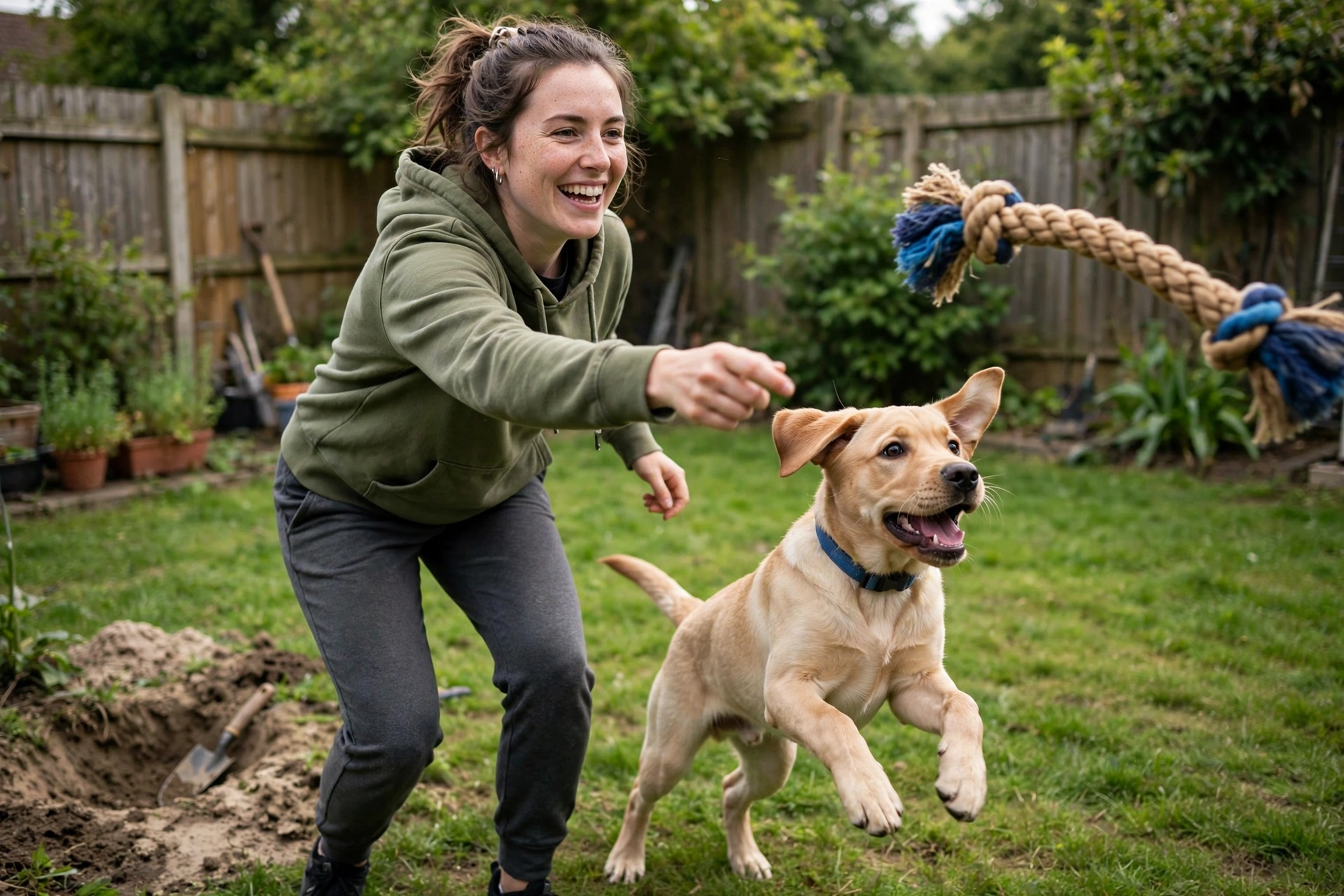
Reason #7: It Just Feels Amazing
Here is the simplest reason on the list, and in many ways the most important one to truly understand: digging is inherently, gloriously self-rewarding. The cool soil between the toes. The rich cocktail of smells released with every scoop. The satisfying scritch-scritch of claws on earth. The visible, instant, dramatic result of effort — a hole where there was no hole! For a puppy, digging hits every pleasure button at once, which is precisely why it is so resistant to punishment.
This is the key insight behind the entire plan in the next section: you cannot punish away something that feels this good, because the behavior pays for itself every single time it happens. Scolding a puppy for digging is like scolding a child for enjoying ice cream — the joy will always outweigh the lecture. The only strategy that genuinely works is redirection: keep the joy, change the location. Give him a place where digging earns cheers instead of groans, and most puppies happily take the deal within days. Work with the pleasure, not against it.
How to Stop Your Puppy Digging (Without Punishment)
Let us be crystal clear about the goal before we start: we are not trying to delete digging from your puppy’s personality. That would be like trying to delete wagging. We are redirecting it — same joy, legal location. Here is the five-step plan that actually works, in order of importance.
Step 1: Drain the tank first. Exercise and mental stimulation are the foundation that everything else stands on. A puppy who has had a good walk, a short training session, and a sniffy adventure in the morning is dramatically less interested in excavating the yard by afternoon. Under-exercised puppies do not just dig more — they dig with the frantic, obsessive energy of the unspent. Before you try anything else on this list, make sure the basics are genuinely covered: age-appropriate physical exercise plus brain work like training games, puzzle feeders, and scent games. A tired puppy is a non-digging puppy far more often than frustrated owners expect. This single step solves more digging problems than all the others combined.
Step 2: Supervise and redirect, calmly. When you catch him starting to dig in a forbidden spot, do not yell, do not drag him away, and do not make it dramatic — drama is exciting, and exciting things are worth repeating. Instead, interrupt calmly and cheerfully (a bright “uh-oh!” or his name in a happy tone), then immediately redirect to something better: a quick game of tug, a toss of a favorite toy, a two-minute training burst with tasty treats. You are teaching him a beautifully simple equation: digging in the wrong place makes the fun stop; playing with you makes the fun continue. Consistency matters far more than intensity here. Ten calm redirects beat one loud scolding every time.
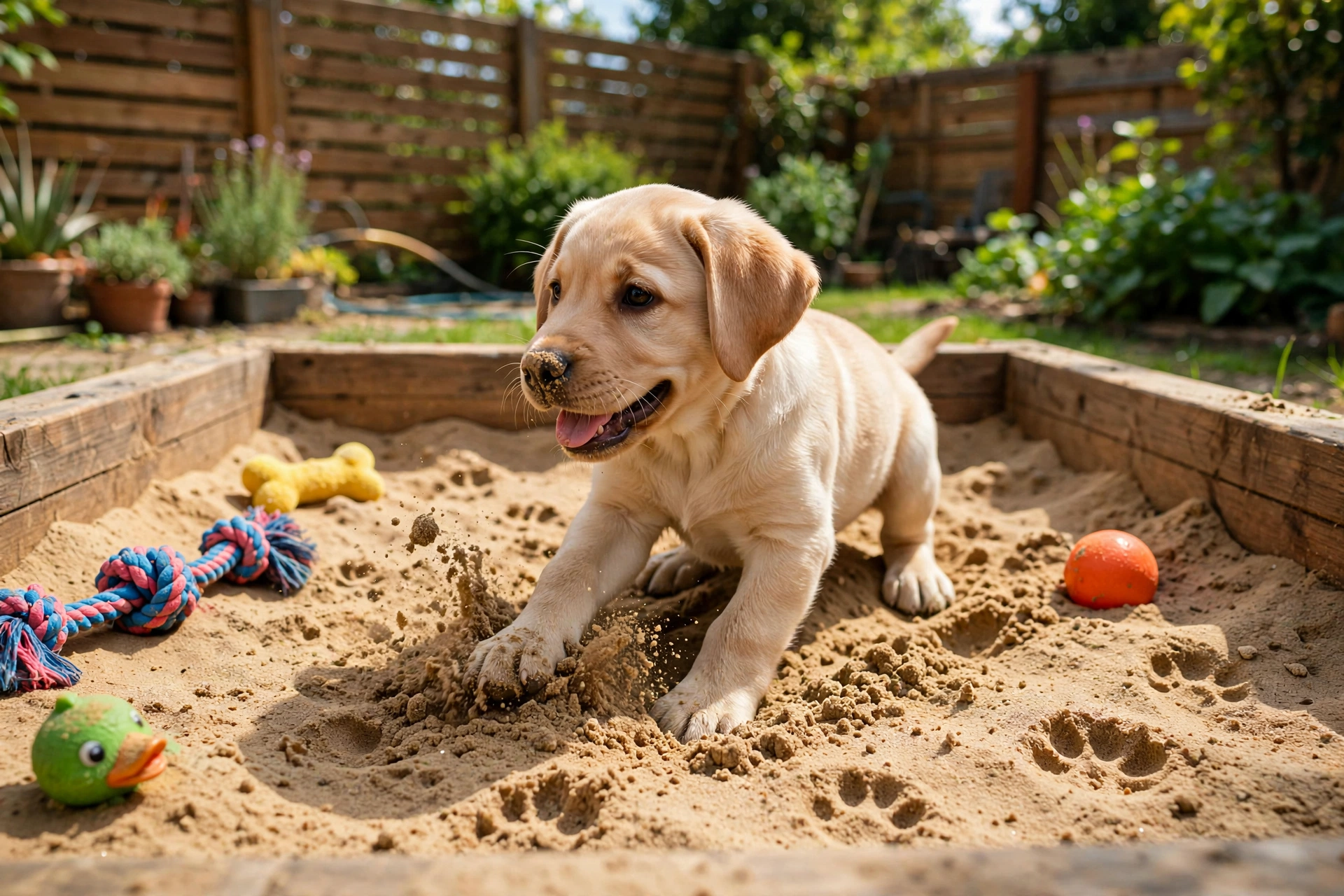
Step 3: Build a legal dig zone. This is the heart of the whole plan, and it is the step most owners skip — then wonder why nothing works. Get a children’s sandbox, a rigid kiddie pool filled with play sand or loose soil, or rope off a corner of the yard with landscape timbers, and make it the single best digging spot on the entire property. Bury toys and treats just under the surface so every dig pays off immediately. Take him to the pit when he is in a diggy mood and help him “find” the buried treasure. When he digs there, throw a genuine party: praise, treats, real delight. Most puppies crack the code within days: this hole gets applause, those holes get a calm redirect. You are no longer fighting a thousand-year-old instinct — you are employing it, and it will work for you instead of against you.
Step 4: Manage the environment. While the new habits are forming, make the forbidden spots less appealing and less accessible — there is no shame in this; it is what every good professional trainer does while training catches up. For chronic fence-line diggers, lay chicken wire flat just under the soil surface along the fence line: paws dislike the texture, it is completely harmless, and grass grows right through it. Fill in existing holes promptly, because a puppy will always happily re-excavate a starter hole. Temporarily place large rocks or heavy potted plants over favorite digging spots. In summer, add shade and a genuinely cool resting area so the cooling-digs lose their purpose. Management buys you the quiet weeks you need for the training to take root.
Step 5: Never punish after the fact. This one is non-negotiable. If you come home to a cratered yard and scold the puppy, he does not think, “I should not have dug those holes three hours ago.” He thinks, “my human is unpredictable and scary when they walk through the door.” Dogs live almost entirely in the present — punishment only connects to a behavior if it lands within a couple of seconds, and even then it teaches fear rather than understanding. Decades of learning science all point the same way: punishment suppresses the dog, while redirection teaches the dog. Protect the trust between you two. It is worth infinitely more than any flowerbed ever planted.
The realistic expectation: most puppies reduce forbidden digging dramatically within two to three weeks of consistent redirection plus a legal dig zone — but the instinct itself never fully leaves, and that is completely fine. A dog who happily excavates his own sandbox pit at age five is a success story, not a training failure.
Frequently Asked Questions
Why does my puppy dig holes in the yard?
Usually a mix of instinct, boredom, and opportunity. Digging is ancient, natural canid behavior — for denning, cooling off, burying food, hunting smells underground, or simply pure fun — and an under-exercised puppy with access to a big yard will almost always choose digging as entertainment. Figure out which reason fits your puppy from the list above, then redirect the behavior instead of punishing it.
Will my puppy grow out of digging?
Partly. The frantic adolescent digging phase usually calms down as energy levels mature and training takes hold — most owners see a big improvement by 12 to 18 months with consistent redirection and a legal dig zone. But the underlying instinct never fully disappears, especially in digging breeds like terriers and dachshunds. Think “managed happily for life,” not “cured forever.”
Should I punish my puppy for digging?
No. Punishment after the fact simply does not work — your puppy cannot connect a scolding now with digging he did an hour ago, so he only learns to be wary of you. Even in-the-moment punishment merely suppresses behavior through fear without teaching any alternative. A calm interruption plus redirection to an approved dig zone works better, faster, and keeps your bond intact.
Why does my puppy dig at blankets and the couch indoors?
Same instinct, softer venue. This is nesting behavior — wild canids circle and paw at ground cover to shape a comfortable den, and your puppy is running the domestic version of that program on your couch cushions. It is also self-soothing: many puppies “dig” their bedding for a minute before curling up to sleep. It is completely normal and harmless — give him a blanket of his own to arrange to his heart’s content and everyone stays happy.
What breeds dig the most?
Terriers of all kinds (bred to dig prey out of the earth), dachshunds (bred to dig into badger dens), huskies and malamutes (dig resting hollows), and beagles (follow their remarkable noses underground). But any breed — and any enthusiastic mix — can become a dedicated digger, especially as a bored adolescent. Breed tells you the odds; the individual puppy in front of you tells you the truth.
How do I make a dig pit for my dog?
Get a children’s sandbox, a rigid kiddie pool, or frame off a corner of the yard with landscape timbers, and fill it with play sand or loose, stone-free soil. Bury toys and treats just under the surface at first so that every single dig pays off. Take your puppy to the pit when he is in a digging mood, praise every scoop like he just won a prize, and keep the “treasure” restocked for the first few weeks. Once the economics are clear — applause here, calm redirect there — most puppies choose the pit over the flowerbeds within days.
Related Reads
- How Much Exercise Does a Puppy Need? — a tired puppy digs far less; get the daily exercise right first and half the digging problem solves itself.
- Puppy Training Schedule: What to Teach by Age — channel all that energy and curiosity into training with an age-by-age roadmap of what to teach and when.
- 10 Puppy Training Mistakes New Owners Make (And How to Fix Them) — including why punishment backfires, the same reason scolding a digger never works.

