
You say his name. Nothing. You say it louder, with that edge creeping into your voice. Still nothing — he is very busy sniffing a patch of grass like it contains the secrets of the universe. You clap. You whistle. You do the embarrassing kissy-noise. He glances at you for half a second, then goes right back to the grass. And the thought slides in, uninvited: does my puppy even like me?
If you have ever wondered why does my puppy ignore me, here is the first thing you need to hear: it is almost never personal. Puppies do not ignore their people out of spite, stubbornness, or some dramatic grudge. They ignore us for reasons that are far more ordinary — and far more fixable. He did not learn it yet, or the world is simply more interesting than you right now (rude, but true), or — and this one stings a little — we accidentally taught him that ignoring us works just fine.
This guide covers the 7 real reasons puppies tune their owners out, then gives you a 5-step plan to become someone worth listening to. No yelling, no punishment, no alpha nonsense. Just an honest look at what is actually happening in that little head — and how to fix it the way dogs actually learn.
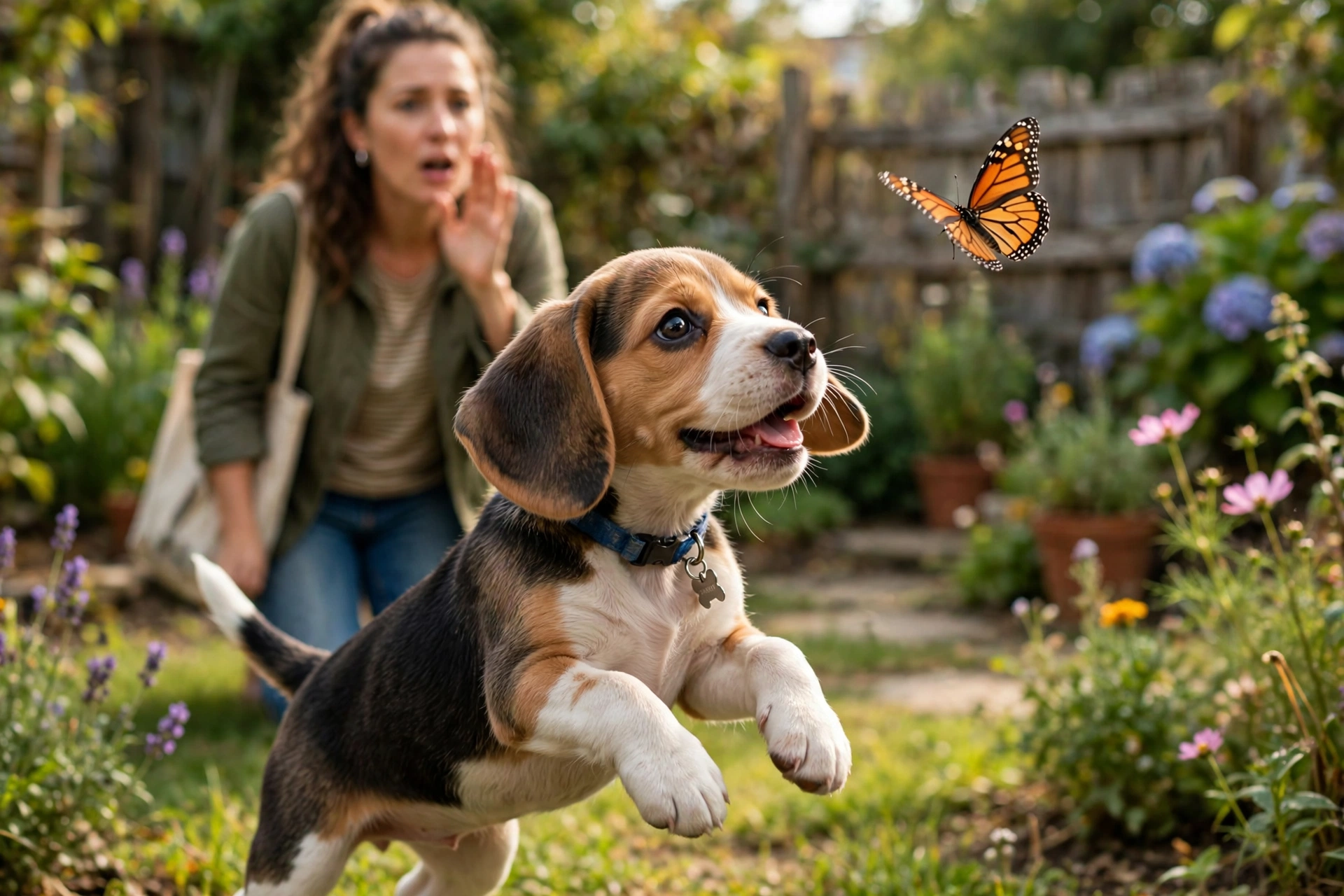
Why Does My Puppy Ignore Me? 7 Reasons
Here is the uncomfortable truth most training advice skips: “ignoring you” is not one behavior. It is a symptom with several very different causes, and the fix depends entirely on which one you are dealing with. Find your puppy below.
Reason #1: He Never Actually Learned It
This is the number-one reason, and the one owners resist most. We assume that because we said “sit” fifty times, the puppy knows sit and is choosing to disobey. But dogs do not learn words the way we do. A puppy “knows” a cue only when he has performed it successfully, been rewarded for it, dozens of times, in multiple places, with gradually increasing distraction. Most puppies have practiced “come” in the living room about six times and never once near a squirrel. Then we are shocked when the squirrel wins.
Think of it like this: if someone taught you five French words in a quiet classroom and then quizzed you at a rock concert, you would fail too — and nobody would call you stubborn. Your puppy is not defying you. He is undertrained for the situation you put him in. The gap between “sort of knows it on the couch” and “does it at the park” is enormous, and almost nobody trains across that gap deliberately. That gap has a name — it is called proofing — and it is where reliable listening is actually built.
Reason #2: You Accidentally Trained Him to Ignore You
Ouch. But read this one carefully, because it describes about half of all “my puppy ignores me” cases. Here is the classic sequence: you say “come.” He does not come. You say “come” again, louder. Then “COME!” Then his name three times. Then you walk over and get him yourself. Congratulations — you just taught him that the first four versions of the cue are meaningless noise, and only the fifth one (or your feet moving toward him) counts. Dogs are brilliant pattern-matchers. He learned exactly what you taught: wait it out, she will repeat herself.
The same trap works in reverse with rewards. If “come” sometimes earns a treat, sometimes earns nothing, and sometimes earns being dragged inside (fun over!), the cue becomes a lottery ticket — and dogs stop playing lotteries they keep losing. Every time you repeat a cue without enforcing it, or call him for something unpleasant, you make a small deposit in the “ignoring works” account. This is one of the most common training mistakes new owners make, and the good news is that it is entirely reversible once you see the pattern.
Reason #3: The World Is More Interesting Than You
Be honest for a second: what does listening to you usually earn him? A dry biscuit, maybe. A pat on the head. Now what does ignoring you earn him? The most fascinating smell he has encountered all day, a potential new dog friend, a chip wrapper with actual food residue. From a pure economics standpoint, your puppy is making a completely rational choice. You are offering minimum wage; the environment is offering a jackpot.
This is not a character flaw — it is a reinforcement problem. Dogs repeat whatever pays best. If you want to win against squirrels, smells, and other dogs, you cannot compete with boring. You have to become the most exciting thing in his environment, at least during training. High-value rewards (real meat, cheese, the good stuff — not the dusty biscuits), delivered with genuine enthusiasm, delivered fast. Many owners discover their puppy’s “stubbornness” evaporates the day they upgrade the paycheck. He was never ignoring you. He was just doing the math.
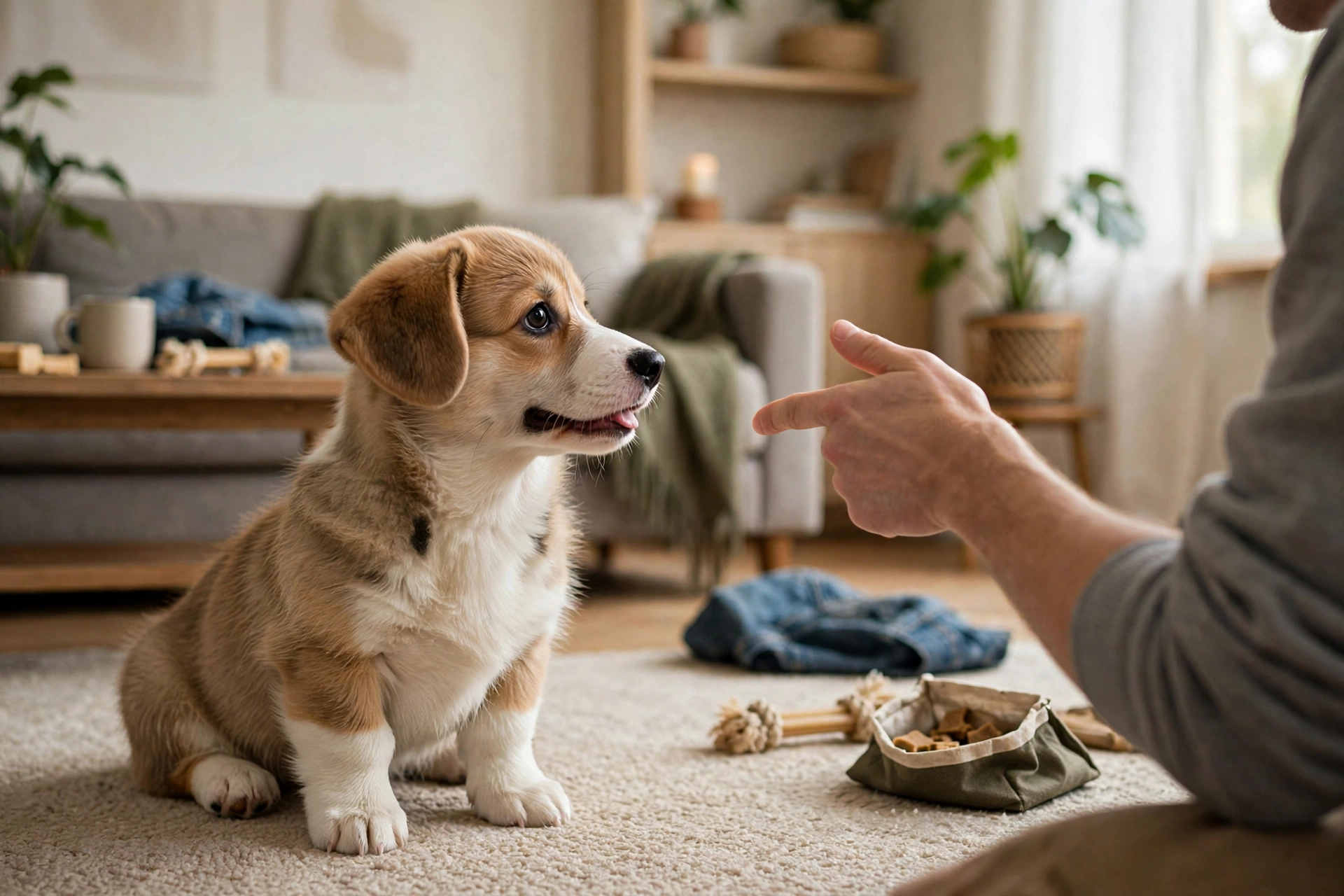
Reason #4: He Is Scared or Shut Down
Not all ignoring is cheerful distraction. Some puppies go quiet and blank — they freeze, avoid eye contact, or simply stop responding — because they are frightened or overwhelmed. A puppy who was yelled at for not coming, or dragged toward something scary, may learn that the sound of his name predicts bad things. So he does the only logical thing: he tunes it out. This is not defiance. This is self-protection.
You can spot the difference by the body language. A distracted puppy is loose, wiggly, happy — just busy. A shut-down puppy is still, with tucked tail, flattened ears, lip licking, or whale eye. If your puppy’s “ignoring” comes with that body language, stop all training pressure immediately. He does not need stricter obedience; he needs to feel safe first. Rebuild the association with his name and your voice using treats and play, with zero demands attached, until his tail wags when he hears you again. Trust first, training second — always in that order.
Reason #5: His Brain Is Full (Overtired or Overstimulated)
Puppies have the attention span of a goldfish at a fireworks show, and it gets worse — not better — when they are tired or overstimulated. An overtired puppy does not listen worse; he functionally cannot listen. His little brain is flooded, his impulse control (which was already minimal) drops to zero, and cues bounce off him like rain off a roof. The witching-hour zoomies, the post-park deafness, the evening training session that goes nowhere — same cause.
This is also why “he was perfect this morning” means nothing about the afternoon. Puppies, like toddlers, have a limited daily budget of focus, and exciting environments spend it fast. If your puppy ignores you reliably at the same time or place — end of walks, busy parks, puppy class week three — you are not looking at a training failure. You are looking at an empty tank. Shorter sessions, more naps (puppies need 18–20 hours of sleep, and almost none of them get it), and training before the big exciting thing rather than after it will change this picture dramatically.
Reason #6: He Is a Teenager Now
Was your puppy an angel at four months and a menace at eight? Welcome to adolescence — roughly 6 to 18 months depending on breed — when previously learned behaviors fall apart like a sandcastle at high tide. Trainers call it the “teenage phase,” and it is completely normal. The brain is rewiring itself, hormones are surging, independence is blooming, and cues that used to work suddenly… do not.
The cruel part is that owners interpret this as the puppy “knowing better and choosing not to.” He does not know better right now — his brain is literally under construction. Adolescent regression is not a training emergency; it is a developmental stage. The fix is boring but effective: go back to basics, reward like he is eight weeks old again, keep expectations low, and ride it out. Most dogs emerge from the teenage phase with their training intact if the owner kept reinforcing through it instead of concluding the dog was broken.
Reason #7: He Genuinely Cannot Hear You (Check This First)
Last on the list but first in importance: rule out the medical. Puppies can have partial hearing loss — especially in one ear, which is easy to miss — and some are born deaf (this is more common in predominantly white dogs and certain breeds like Dalmatians). A puppy who “ignores” you specifically when he cannot see you, startles when touched unexpectedly, or sleeps through loud noises deserves a vet check, not a training plan.
Even without deafness, consider the physics: a soft voice across a windy park, competing with traffic and other dogs, may simply not reach him. And some breeds were literally designed to work at a distance from humans and think independently (livestock guardians, hounds, terriers) — they are not broken, they are just wired less for “hang on my every word” than a border collie is. Know your dog’s hardware before you judge his software.
It’s not personal — it’s training. Almost every “he ignores me” story ends the same way once the owner stops taking it personally and starts looking at it like a trainer: the puppy was never giving attitude. He was undertrained, overfaced, overtired, or accidentally taught that listening was optional. All of those are fixable — and none of them mean he does not love you. If this one hit you in the feelings, you are not alone; the puppy blues hit most new owners at some point, and they pass.
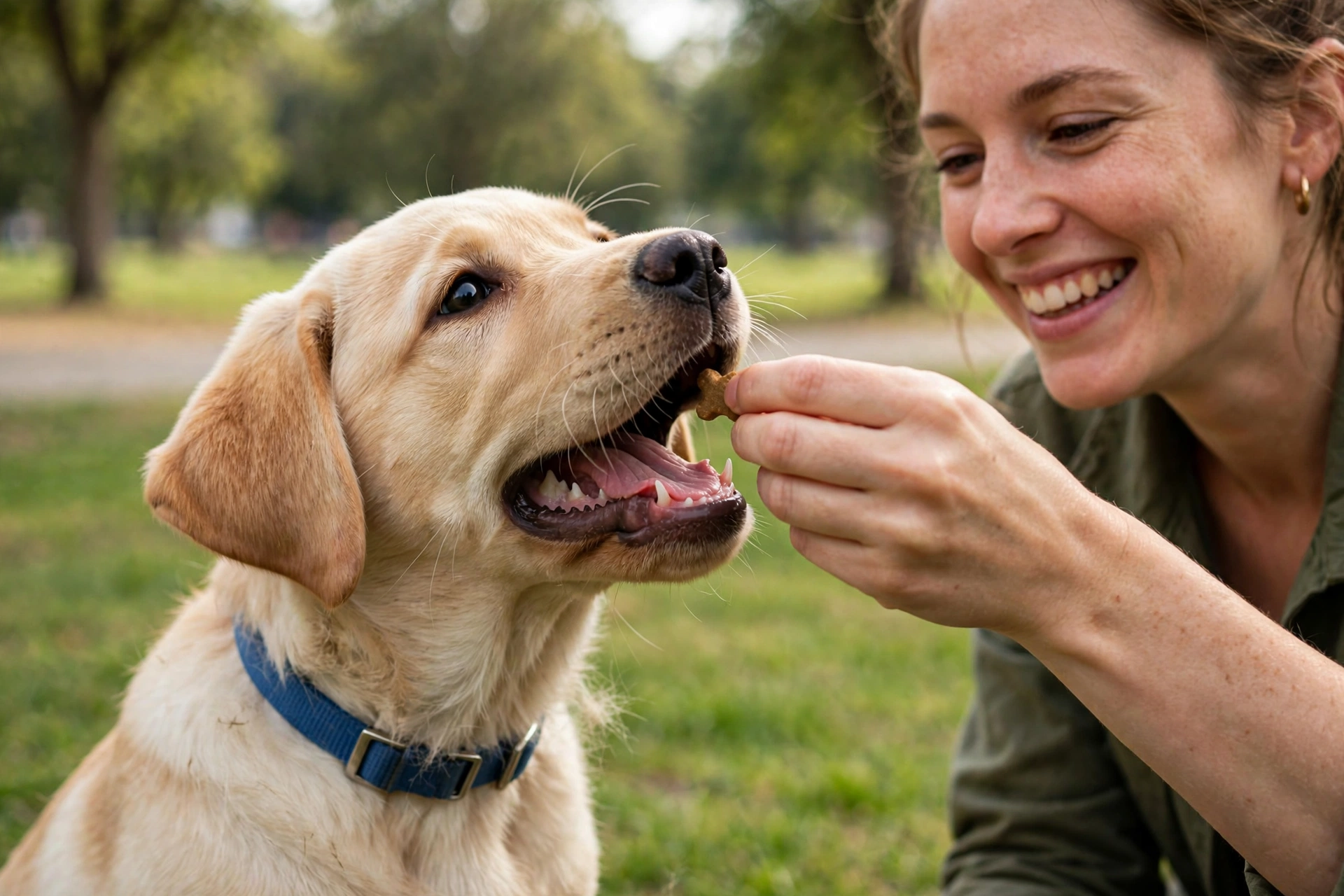
How to Get Your Puppy to Actually Listen: 5 Steps
Now the practical part. These five steps are in order — each one builds on the last, and skipping ahead is why most “listen to me” plans fail.
Step 1: Rule out the medical, then reset your expectations. Quick vet check if there is any doubt about hearing (Reason #7). Then get honest about where your puppy actually is: what does he do reliably, in what places, with what distractions? Write it down if you have to. Most owners discover their puppy reliably “sits” in exactly one room with zero distractions — which means he does not know “sit” yet, he knows “sit-in-the-kitchen.” And check what is realistic for his age — a training schedule by age keeps expectations honest, because a 12-week-old and a 10-month-old are running very different hardware.
Step 2: Become worth listening to. Before you ask for more obedience, build your reinforcement history. For one week, reward your puppy for choosing you: checking in on walks, looking at you voluntarily, coming close on his own. Carry the good treats everywhere. Be the person who predicts wonderful things, not the person who only appears to issue commands and end fun. Dogs do not listen to people they find boring or unpredictable — they listen to people who pay well and consistently. This step feels like doing nothing. It is actually the foundation everything else stands on.
Step 3: Train in layers — boring first, exciting later. Here is the proofing ladder most owners skip: teach the cue indoors with zero distractions, then add mild distraction (another room, a toy on the floor), then the yard, then the quiet street, then the park at a dull hour, then the park on a Saturday. Only move up when he succeeds about 8 times out of 10 at the current level. If he fails twice in a row, you climbed too fast — drop back down. This is slow, unglamorous work, and it is the entire secret of dogs who “just listen.” For recall specifically — the cue owners care about most — our full recall training guide walks through the same ladder with games that make coming back the best part of his day.
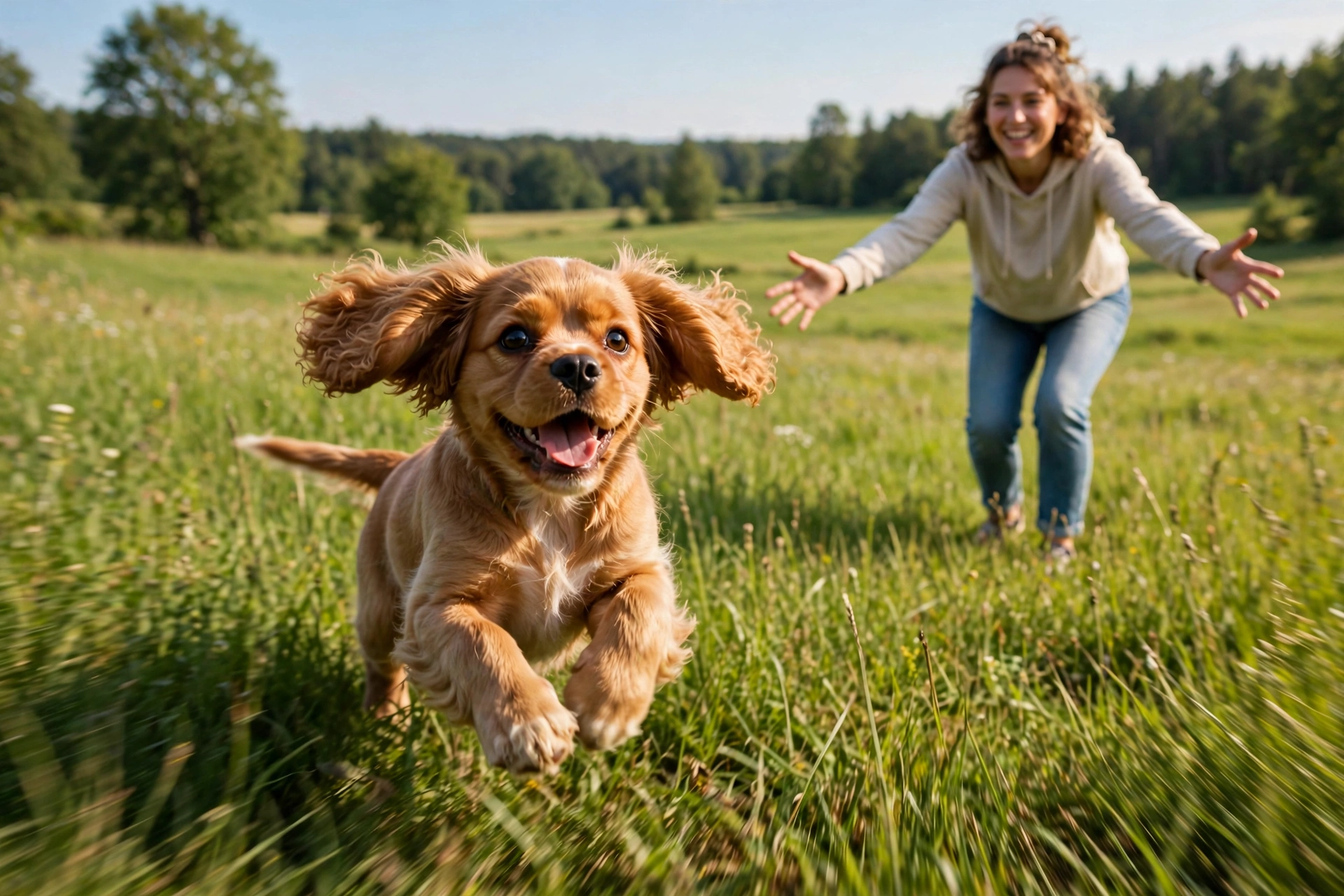
Step 4: Say it once. From today: every cue gets said exactly one time. If he does not respond within three seconds, do not repeat it — instead, help him succeed (lure, reduce distance, reduce distraction) and then reward. Repeating a cue you cannot enforce is how cues die; saying it once and making it work is how cues become reliable. This will feel deeply unnatural for about a week, because most of us were raised on “sit… SIT… SIT!” But watch what happens: within days, the first ask starts working, because the first ask is now the only ask. One clean cue beats ten shouted ones every time.
Step 5: Keep it short, end on wins, and ride out adolescence. Five minutes of sharp training beats thirty minutes of fading focus — always quit while you are ahead, with a success and a party. If he is in the teenage phase, lower the bar without lowering the rewards: go back to basics cheerfully, as if he were young again, and do not take the regression personally. Consistency through adolescence is what separates the dogs who “used to know it” from the dogs who actually keep it. The puppy who ignores you at nine months, trained kindly through it, becomes the two-year-old who listens like he was born to it.
Frequently Asked Questions
Why does my puppy ignore me?
The honest answer to why does my puppy ignore me is usually one of these: he never fully learned the cue, you accidentally trained him that the first ask does not count, the environment is more rewarding than you are, he is scared or shut down, he is overtired, he is an adolescent, or — rarely — he cannot hear well. Match your puppy to the seven reasons above; the fix is completely different for each.
Does my puppy ignoring me mean he doesn’t love me?
No — and this is the question that hurts the most, so hear it clearly. Ignoring is a training and motivation issue, not a love issue. Puppies show love through proximity-seeking, soft body language, and choosing to be near you — not through obedience. A puppy who ignores your cues but follows you room to room adores you; he just has not learned to listen yet. Do not confuse a skill gap with a broken bond.
Why does my puppy listen indoors but ignore me outside?
Because “sit in the kitchen” and “sit at the park” are, to a dog’s brain, two almost entirely different behaviors. Dogs do not generalize well — every new environment, distraction level, and distance is a fresh challenge. This is the proofing gap from Reason #1. The fix is the training ladder in Step 3: rebuild each cue level by level as distractions increase, instead of expecting kitchen performance at the dog park.
Why does my puppy suddenly ignore me all of a sudden?
Sudden ignoring in a puppy who used to listen usually means one of three things: adolescence (6–18 months, the teenage regression), a fear period making him shut down, or something in the environment changed and became more interesting or scary. Check timing first — if he is 7–10 months old, it is almost certainly the teenage phase. Ride it out with cheerful basics (Step 5) rather than escalating pressure.
Should I punish my puppy for ignoring me?
No. Punishment for ignoring teaches the puppy that coming to you / responding to you is risky — which makes future ignoring worse, not better. Think about it from his side: if “come” sometimes ends in scolding, ignoring starts looking like the smart move. Every punishment-based shortcut trades a moment of compliance for long-term damage to your recall and your relationship. Reward the listening you want; manage the situations where he cannot succeed yet.
At what age do puppies start listening better?
Most owners see a real turning point between 12 and 18 months, as the adolescent brain finishes rewiring and impulse control matures — if training stayed consistent through the teenage phase. But “better with age” is not automatic: an untrained two-year-old is just a bigger puppy who ignores you. Age helps; training decides. The dogs who listen beautifully at two are the ones whose owners kept rewarding through the chaos of months 6–12.
Related Reads
- How to Train Your Puppy to Come When Called — the full recall deep-dive: games and proofing ladders that make coming back his favorite part of the day.
- Why Does My Puppy Stare at Me? — the flip side of ignoring: what all that intense eye contact actually means (spoiler: it is usually love, or lunch).
- How to Train a Puppy to Sit — back to basics done right: one clean cue, proofed properly, the foundation every other behavior stands on.

